Olive Edis's Diary, March 1919
A film about France and Flanders in March 1919, from Olive Edis's diary and photographs.
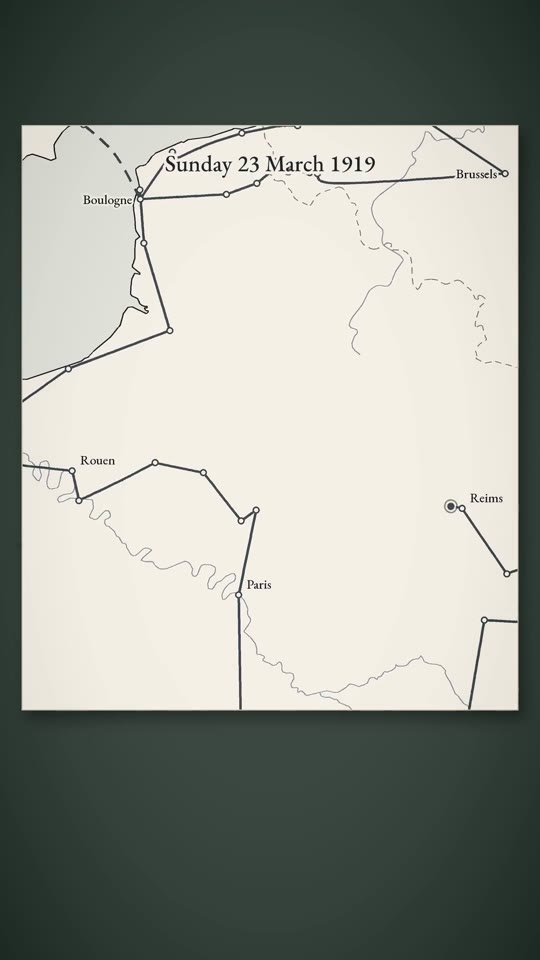
In March 1919 the fighting had stopped, but there was no peace treaty yet. The dead lay in new graves across France and Flanders. Women still served there, and some were starting to go home.
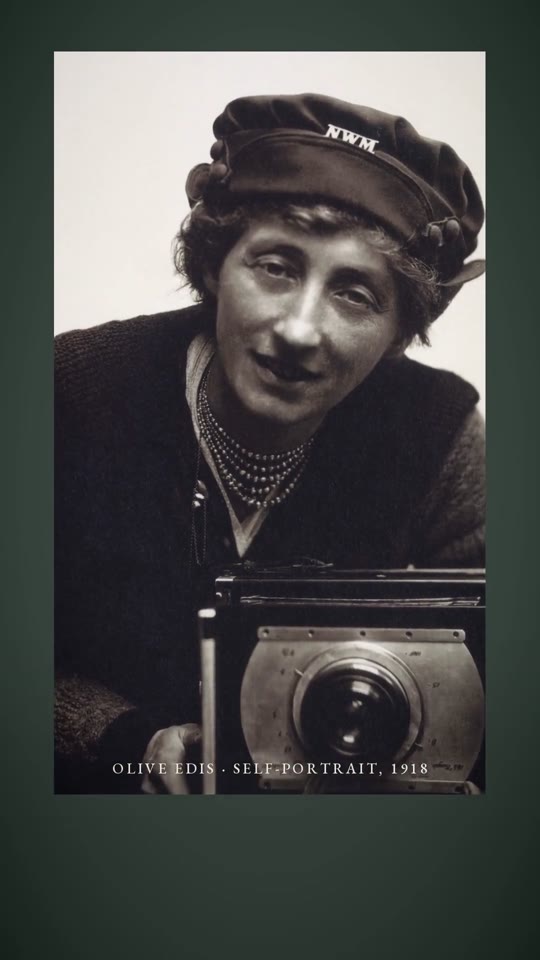
A new national museum wanted a record of what women had done in the war. It sent a photographer, Olive Edis, to France and Flanders for the month, and she kept a diary.
We made this film from her diary and her photographs, to see what it was like to walk through that world a few months after the fighting stopped.
Glass-plate negatives, 10 by 8 inches, France and Flanders, March 1919. Imperial War Museum, London.
Download the film (MP4, 113 MB) and its captions (WebVTT). The work is in the public domain: its page on Wikimedia Commons.
In the film
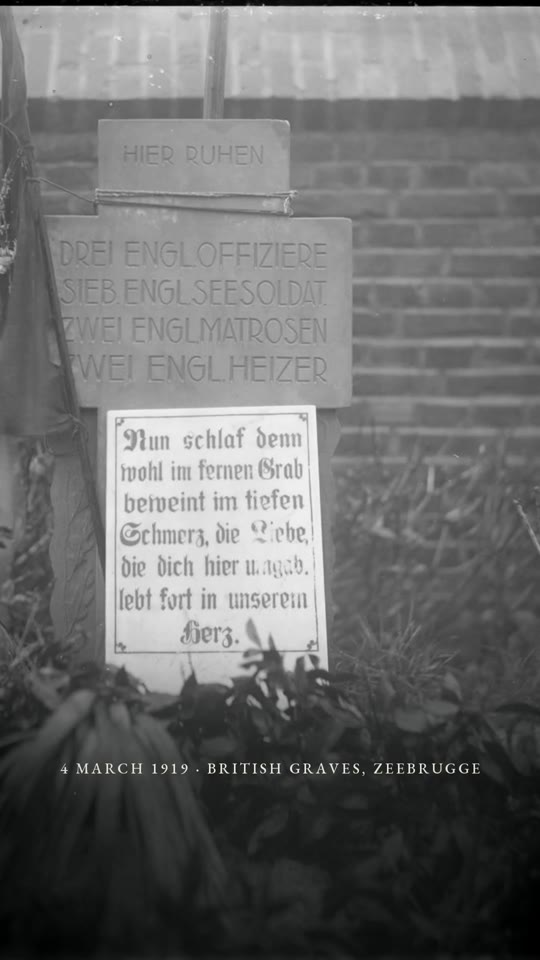
“Seven German sailors died here the same night.”
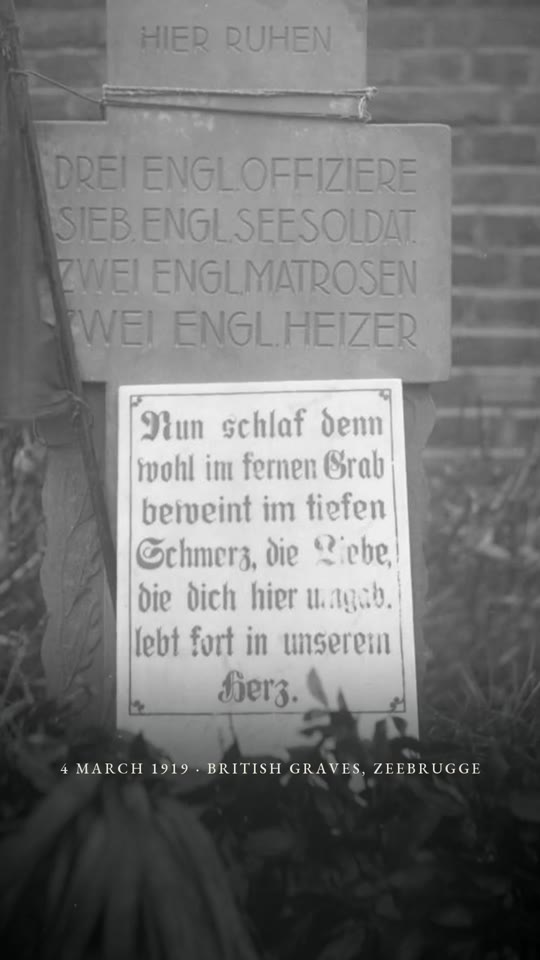
“At Zeebrugge, fourteen British men lie in one grave.”
“At Pervyse, two women ran a dressing station in this cottage.”
“In Brussels they meet Mrs McDougall, who runs the FANY there.”
“I realise that patriotism is not enough.”
“In September 1917, German aircraft bombed a hospital at Saint-Omer and killed four nurses.”
Notes and sources
Each note takes a line from the film and gives its source. How we checked all 120 claims in the film.
-
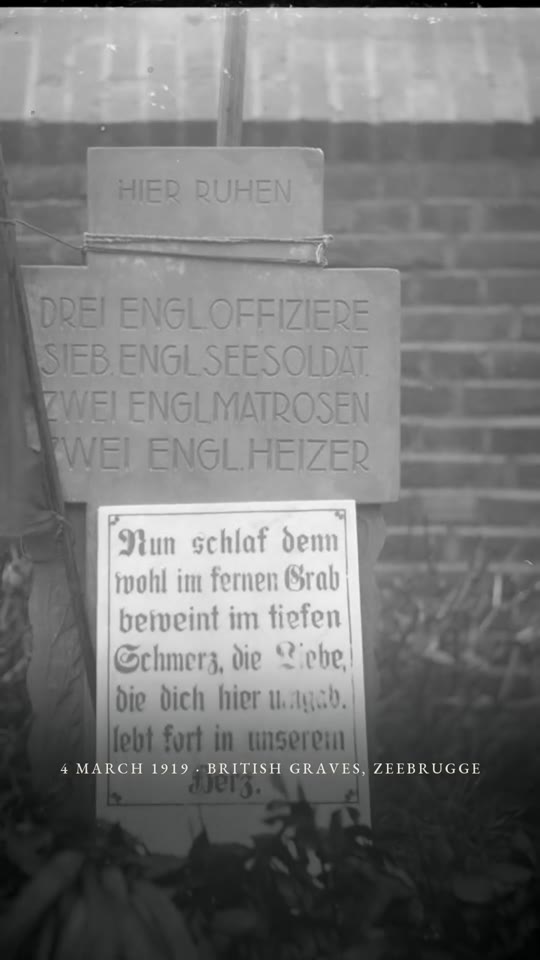
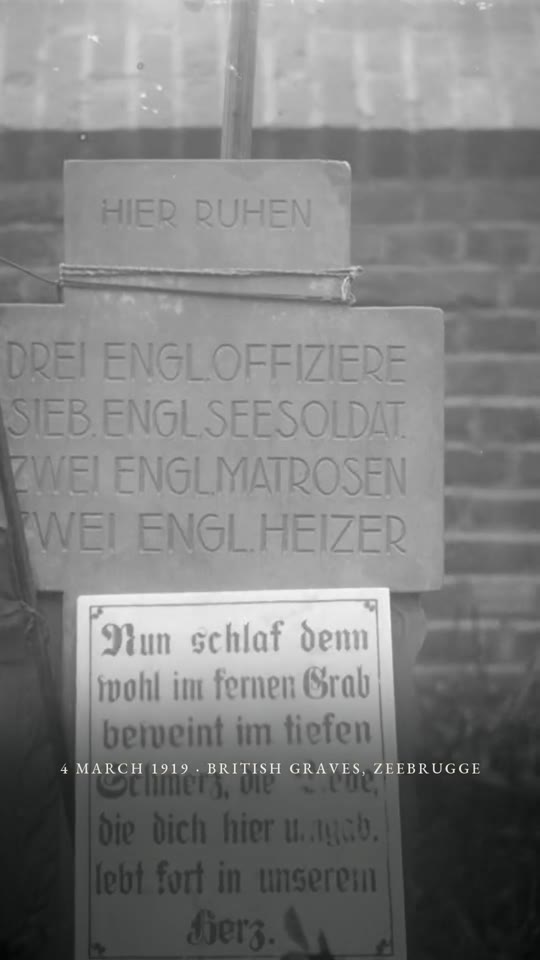
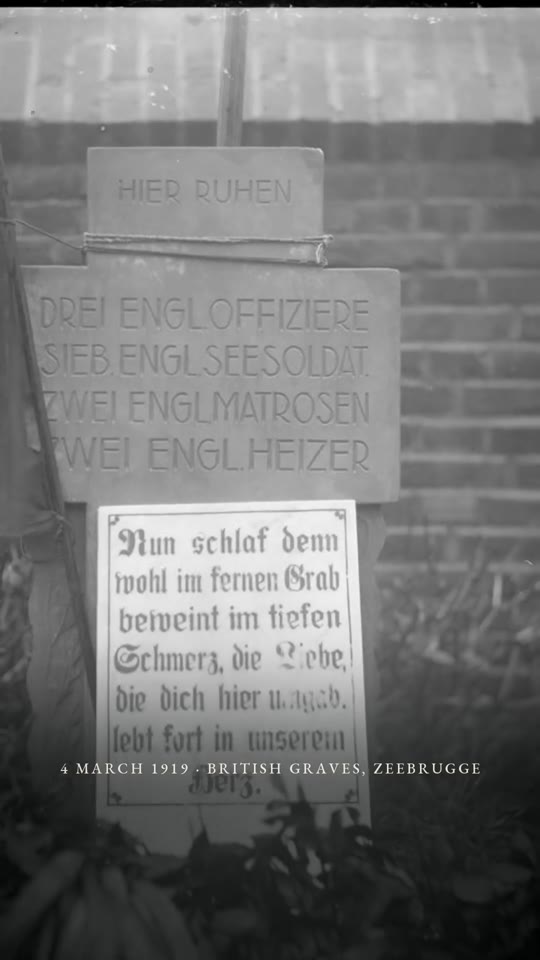
“At Zeebrugge, fourteen British men lie in one grave.”
In her diary she puts the grave at Blankenberghe, the next town along the coast. Michelin’s guide of 1920 shows the same cross in Zeebrugge churchyard, with the same German words on it.
-
“The Germans buried them.”
Her diary, 4 March 1919: “Here they had buried the fourteen of our British men who fell in the great fight at Zeebrugge.”
Olive Edis, The Record of a Journey, 4 March 1919, Olive Edis Project, Cromer Museum
-
“On the cross the Germans wrote: here rest three English officers, seven English marines, two English sailors and two English stokers.”
Michelin’s guide of 1920 gives the German inscription in English: “Three English officers, seven English marines, two English sailors, two English stokers”.
-
“One of the officers is Captain Charles Tuckey of the Royal Marines, a wine merchant’s only son.”
He was born in 1895 and went to King’s College School, Wimbledon. He joined the Royal Marines in 1913 and served at Antwerp and Gallipoli.
-
“Seven German sailors died here the same night.”
The Commission’s register for the churchyard names them: Otto Bauer, Erich Hagemann, Hermann Künne, Otto Kuhn, Joseph Miltze, Georg Rau and Berthold Schulz.
Zeebrugge Churchyard, A Street Near You, from the Commission's records
-
“Seven German sailors died here the same night.”
The German navy says eight Germans died in the raid, and that they lie in this churchyard.
-
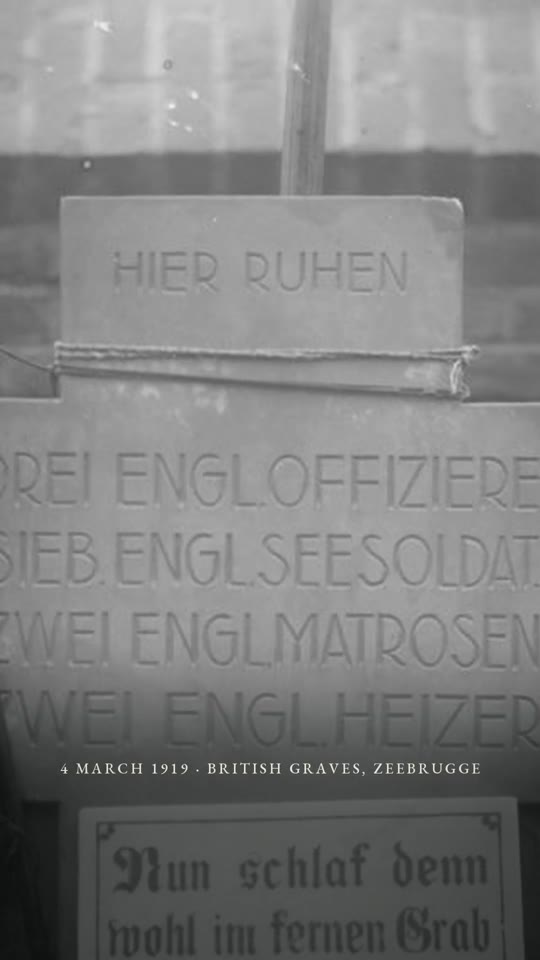
“Three Englishwomen stand at the grave in the rain.”
Olive photographed the grave “from two points of view”, she wrote, “in pouring rain”.
Olive Edis, The Record of a Journey, 4 March 1919, Olive Edis Project, Cromer Museum
-
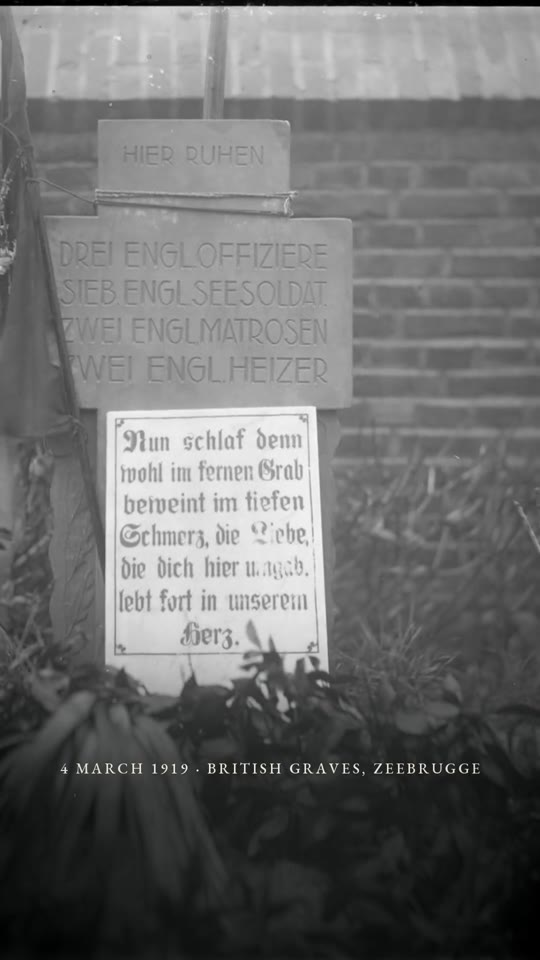
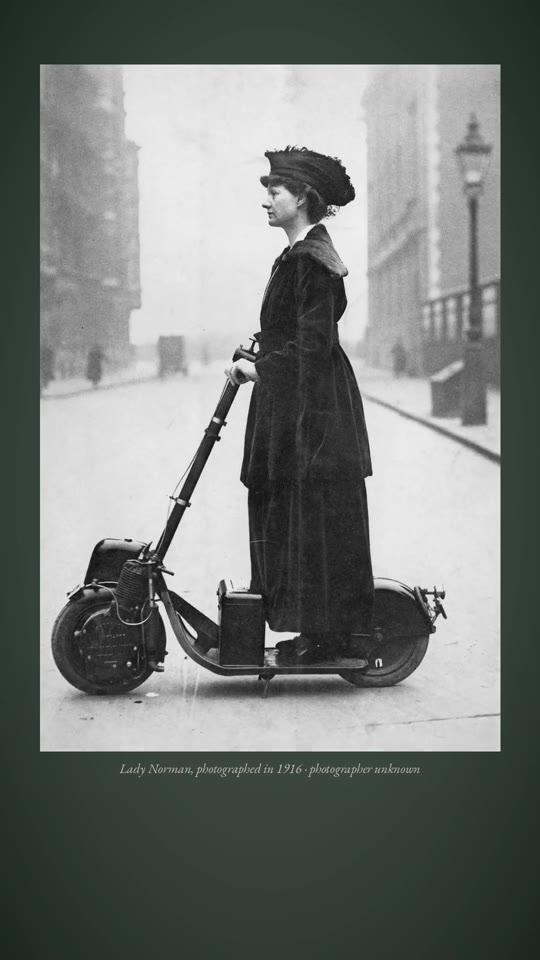
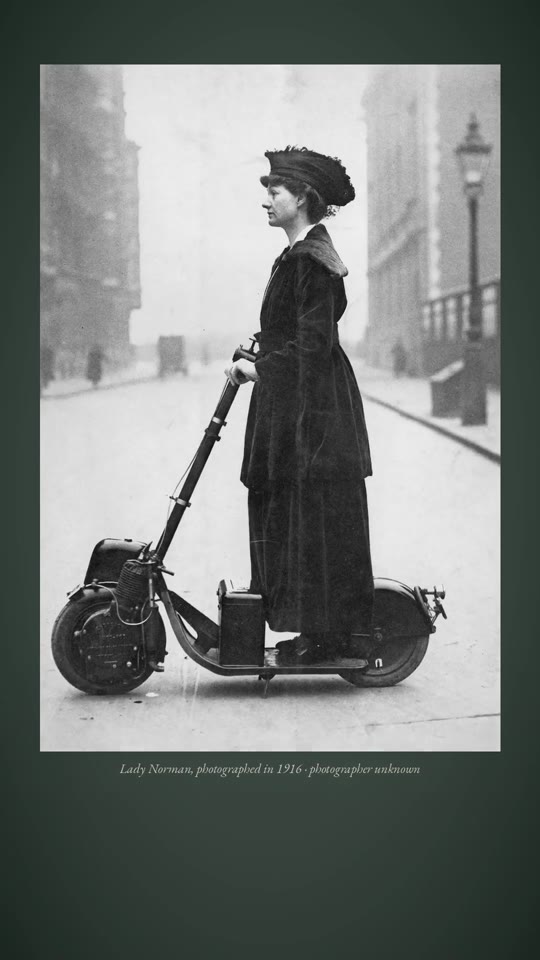
“Lady Norman writes on her card, and the other two sign it.”
Her diary: Lady Norman wrote “a tribute from three English women”, “which Miss Conway and I signed, and left it on the grave”.
Olive Edis, The Record of a Journey, 4 March 1919, Olive Edis Project, Cromer Museum
-
“Next week, at Étaples, she will look for one grave among thousands.”
Her diary, 10 March 1919: “I soon found Bettie Stevenson’s grave and singled it out for a special photo.”
Olive Edis, The Record of a Journey, 10 March 1919, Olive Edis Project, Cromer Museum
-
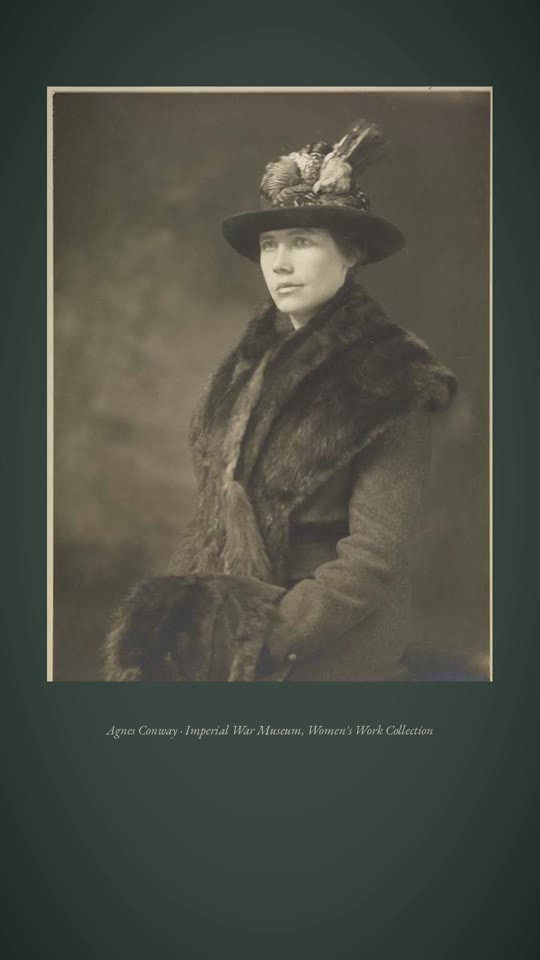
“Five months earlier, in October 1918, Agnes Conway writes to Olive from the Imperial War Museum.”
Olive Edis replied the next day, 20 October. She offered to work unpaid, “as it is for a national collection”.
-
“The War Cabinet set up the museum in March 1917, in the middle of the war.”
The War Cabinet approved Sir Alfred Mond’s proposal on 5 March 1917. For the first time in Britain, a national museum would be given to one war, and would record what every part of society did in it.
The creation of IWM, Imperial War Museum, UK Government Web Archive
-
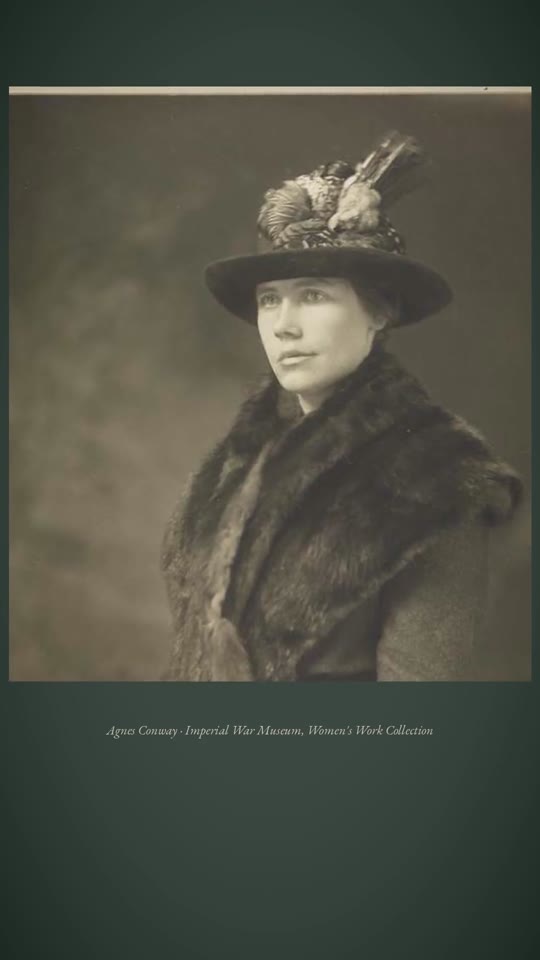
“Agnes and Lady Norman run the museum’s women’s work committee.”
In December 1914 The Sketch reported that Sir Henry and Lady Norman had “one hundred wounded soldiers in the hospital under their control at Wimereux”. Three weeks before, the paper said, the hospital had been a hotel.
-
“Agnes and Lady Norman run the museum’s women’s work committee.”
Lady Norman chaired the museum’s Women’s Work Sub-Committee, and Agnes Conway was its honorary secretary. Wikipedia’s page on Agnes Conway calls her the chair.
-
“At Pervyse, two women ran a dressing station in this cottage.”
Olive names them: “Baroness T’Sercles and Miss Chisholm”. The museum’s caption under her photograph spells the name T’Serclaes.
Olive Edis, The Record of a Journey, 4 March 1919, Olive Edis Project, Cromer Museum
-
“They left a year ago, after a gas attack.”
Her diary: “They started in Pervyse in 1914 and continued till they were gassed out in March 1918”.
Olive Edis, The Record of a Journey, 4 March 1919, Olive Edis Project, Cromer Museum
-
“On Wednesday they drive on through Belgium, through empty villages, to Brussels.”
Her diary, 5 March 1919, on the villages: “no fowls, no dogs, no cats, no people.”
Olive Edis, The Record of a Journey, 5 March 1919, Olive Edis Project, Cromer Museum
-
“In Brussels they meet Mrs McDougall, who runs the FANY there.”
They “had a long hunt to track down Mrs McDougall, head of the FANYs”, and found her at “their garage and headquarters”.
Olive Edis, The Record of a Journey, 5 March 1919, Olive Edis Project, Cromer Museum
-
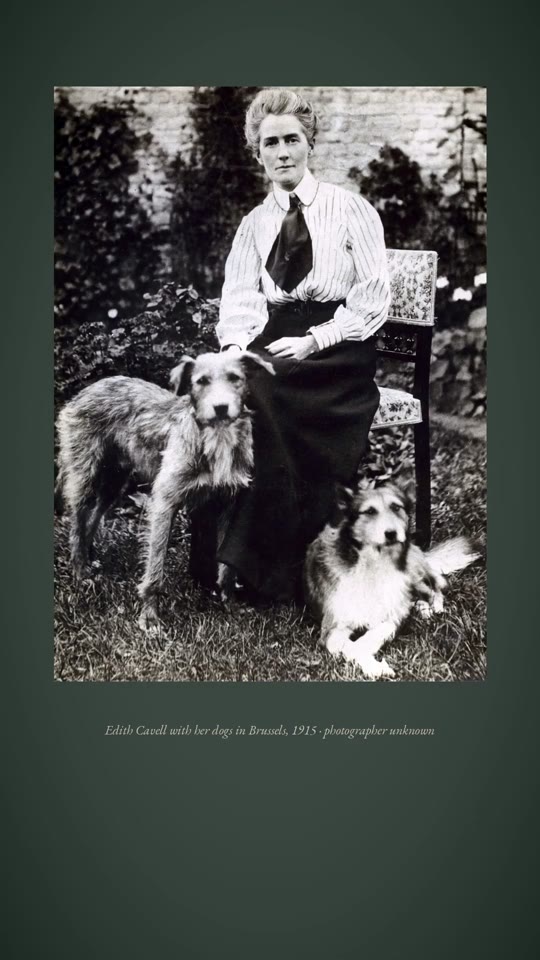
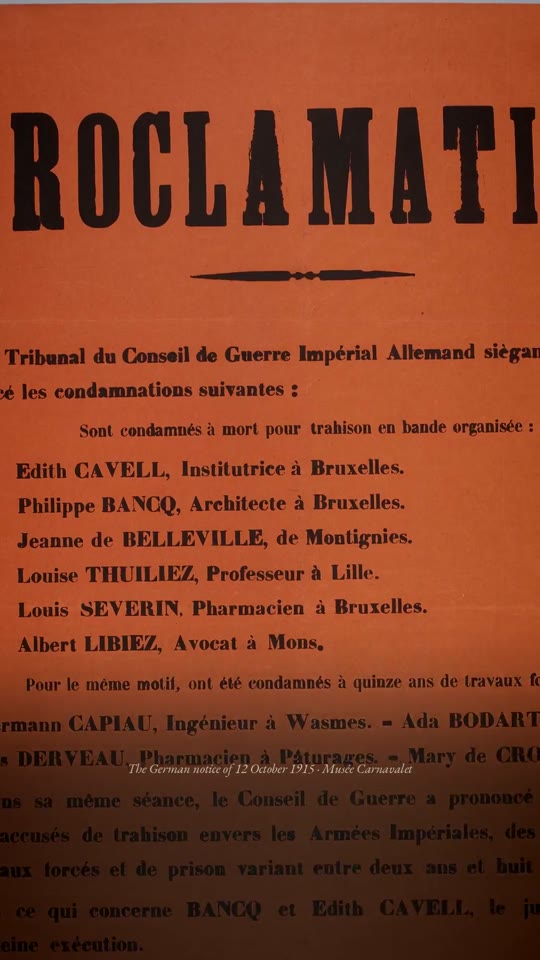
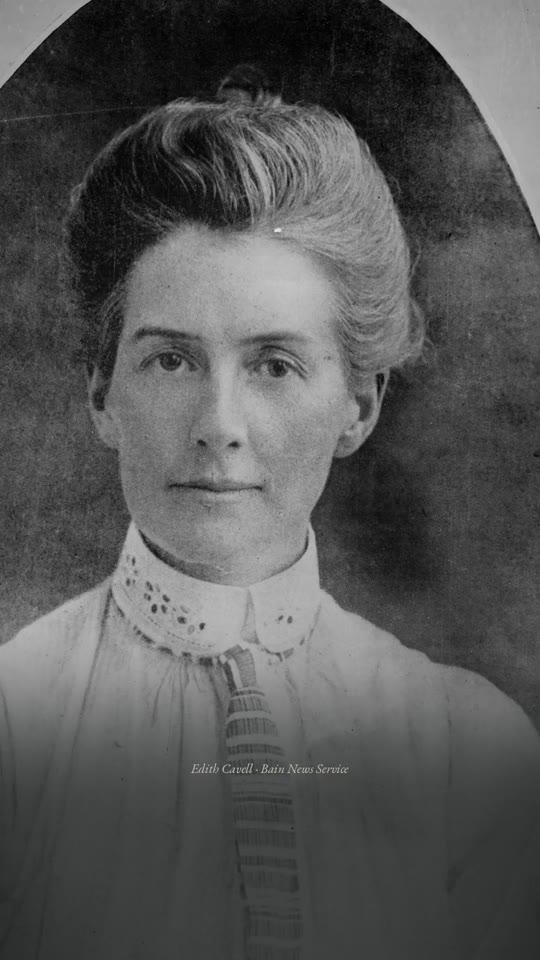
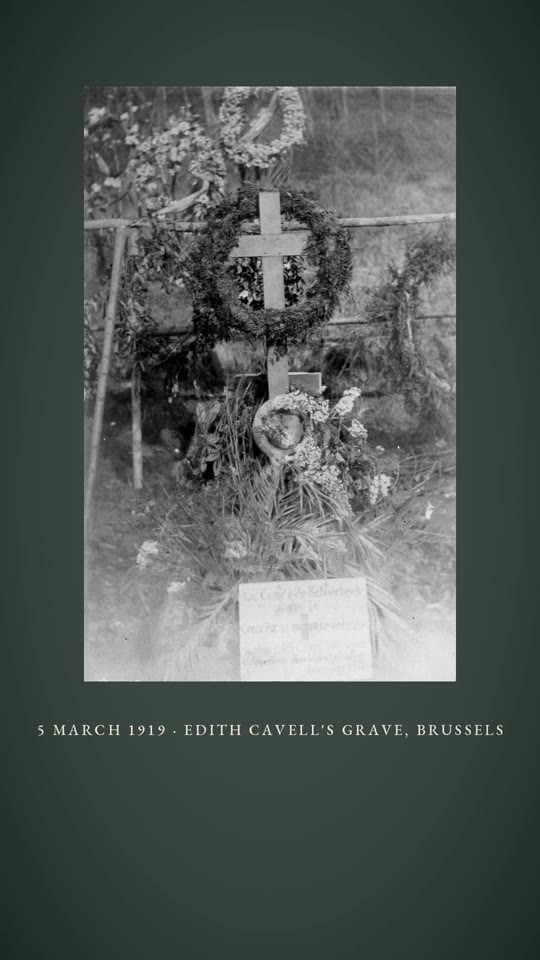
“Mrs McDougall takes them to the place where the Germans shot the British nurse Edith Cavell, in 1915.”
Olive wrote: “A square white stone marked the place where she fell.”
Olive Edis, The Record of a Journey, 5 March 1919, Olive Edis Project, Cromer Museum
-
“Edith Cavell ran a nursing school in Brussels.”
She was born at Swardeston, near Norwich, on 4 December 1865. The Germans arrested her on 5 August 1915. They shot her on 12 October 1915.
-
“In August 1915 the Germans arrested her.”
Hugh Gibson, of the American legation in Brussels, wrote that the court tried her under paragraph 58 of the German Military Code. The trial began on 7 October 1915 and ended the next day.
Hugh Gibson, A Journal from Our Legation in Belgium, 1917, Internet Archive
-
“She told their court she had helped the men escape so the Germans would not shoot them.”
Hugh Gibson, of the American legation, wrote in 1917 that she told the court “she had assisted these men to escape into Holland because she thought that if she had not done so they would have been seized and shot by the Germans”.
Hugh Gibson, A Journal from Our Legation in Belgium, 1917, Internet Archive
-
“She had nursed German wounded too.”
Brand Whitlock, in his memoir of Belgium: “She had nursed wounded soldiers, she had even nursed German wounded at the beginning of the war”.
Brand Whitlock, Belgium: A Personal Narrative, volume 2, Internet Archive
-
“I realise that patriotism is not enough.”
These are her words as a typewritten account of the chaplain’s visit gives them. The chaplain was Stirling Gahan. In a letter to her family, in his own hand, he wrote them down differently: “I know now that patriotism is not enough. It is not enough to love one’s own people: one must love all men and hate none.” The Norfolk Record Office holds both.
-
“Her grave lies in a cabbage patch by the rifle butts.”
The Germans shot 35 people at the Tir National during the war. After the war, the bodies went to their families or to the lawn of honour at Schaerbeek cemetery.
-
“Around her lie others the Germans shot here.”
Olive counted “a group of about 40 graves of others who had been shot”.
Olive Edis, The Record of a Journey, 5 March 1919, Olive Edis Project, Cromer Museum
-
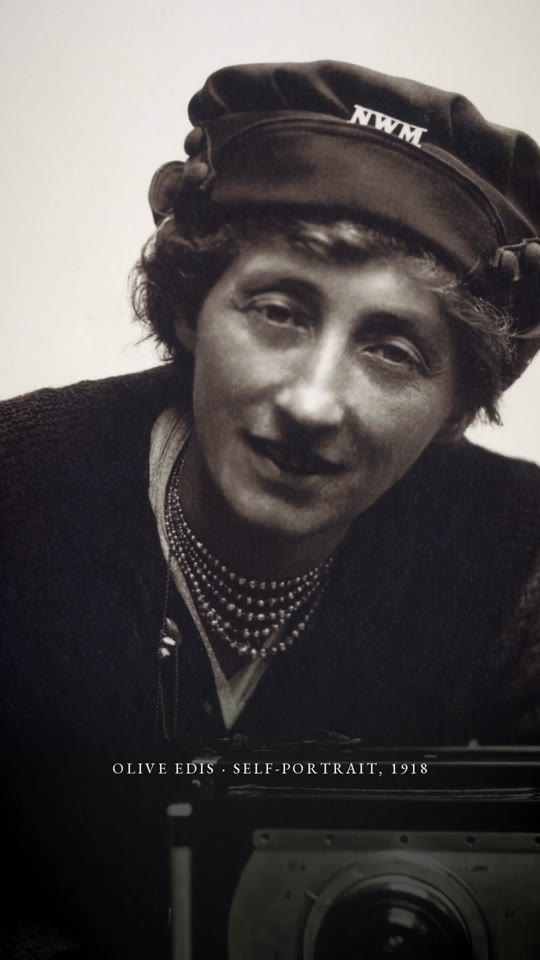
“The sun comes out after a morning of rain.”
Her diary, 6 March 1919: “The sun was beginning to gleam after a long morning of rain and I found several fine pictures of the historic road against the light.”
Olive Edis, The Record of a Journey, 6 March 1919, Olive Edis Project, Cromer Museum
-
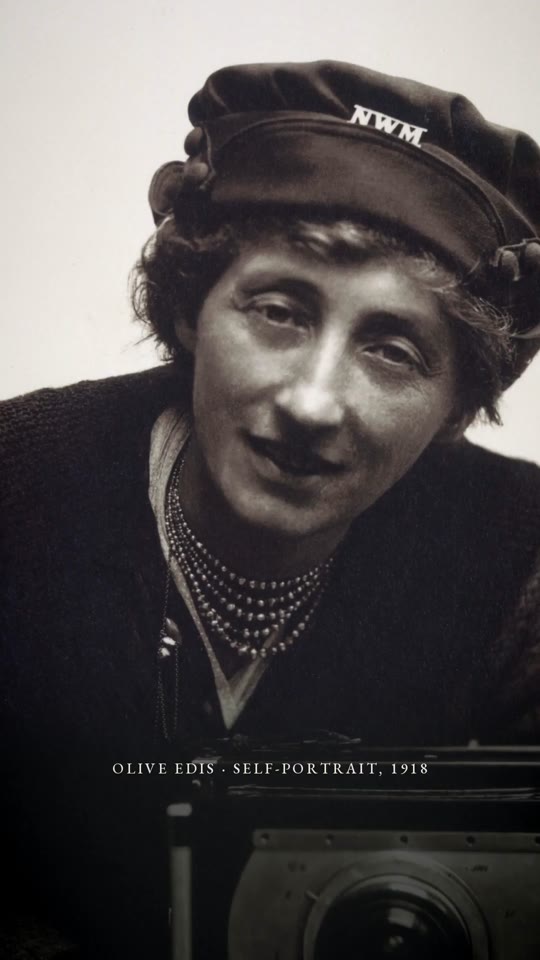
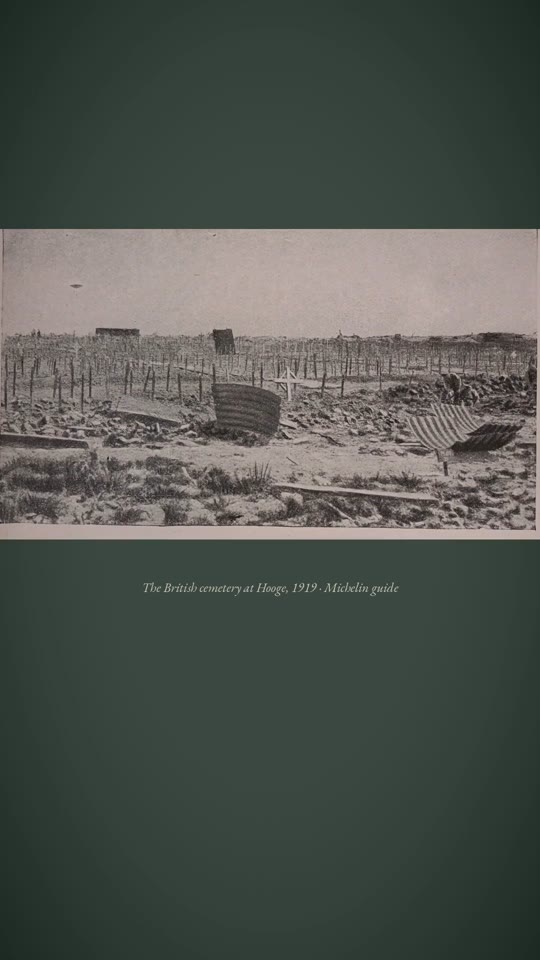
“At Hooge, by the Menin Road, salvage workers are still bringing in the dead from the shell holes.”
This was most likely Hooge Crater Cemetery. The Commission says it “was begun by the 7th Division Burial Officer early in October 1917”. It grew after the Armistice, “when graves were brought in from the battlefields of Zillebeke, Zantvoorde and Gheluvelt”. 5,916 servicemen of the First World War lie there, and 3,570 of the burials are unidentified.
-

“Two men lie in every grave.”
At Hooge she saw “the tiny white crosses packed close together, two men in every grave, and a path of duck boards to slide on”.
Olive Edis, The Record of a Journey, 6 March 1919, Olive Edis Project, Cromer Museum
-
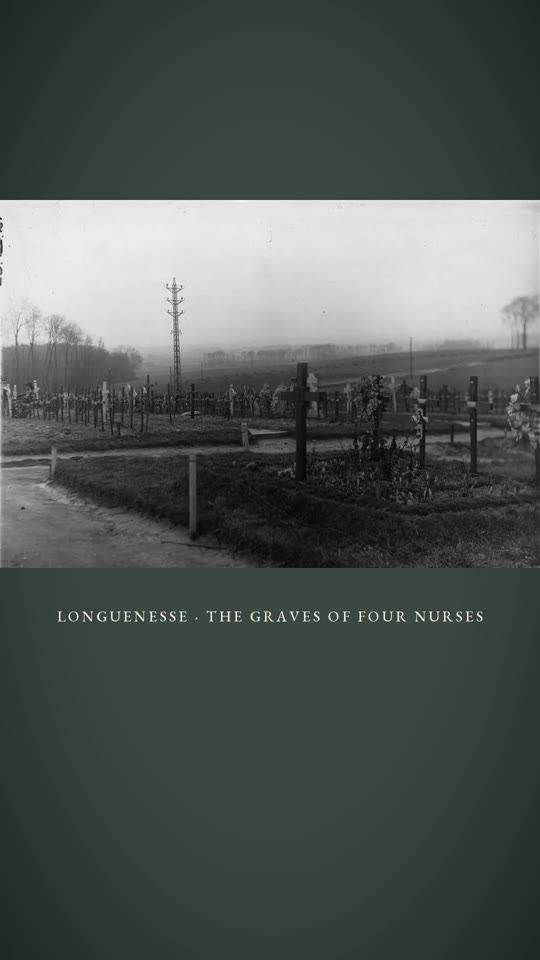
“In September 1917, German aircraft bombed a hospital at Saint-Omer and killed four nurses.”
The raid hit No. 58 (Scottish) General Hospital on 30 September 1917. In its caption to another print of her view, the Imperial War Museum names the four nurses.
Q 108207, the nurses' graves at Longuenesse, Imperial War Museum
-
“On Monday, at Étaples, women of the Army Auxiliary Corps tend the graves in the military cemetery.”
Her diary: “Some WAAC girls always tended the graves, and a few of them came down and grouped at work for me to photograph them.”
Olive Edis, The Record of a Journey, 10 March 1919, Olive Edis Project, Cromer Museum
-
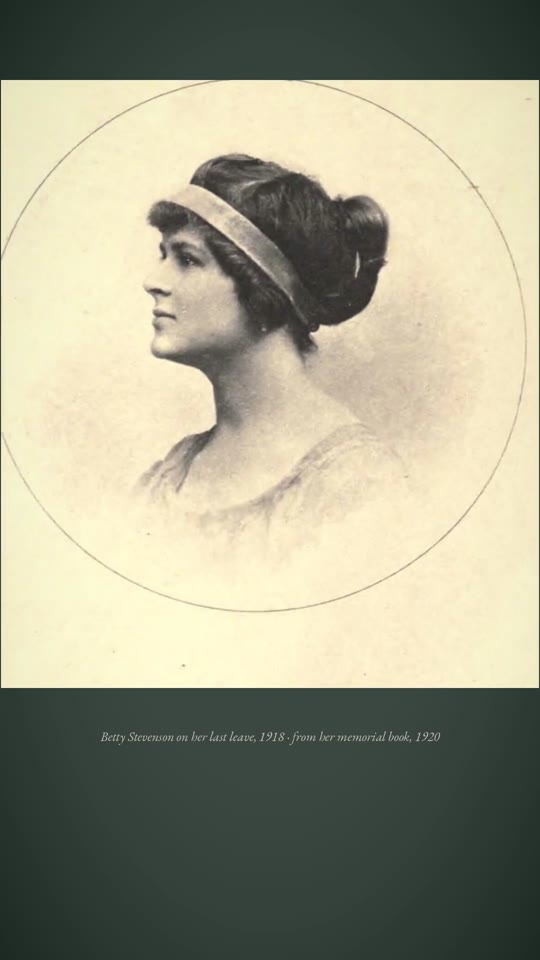
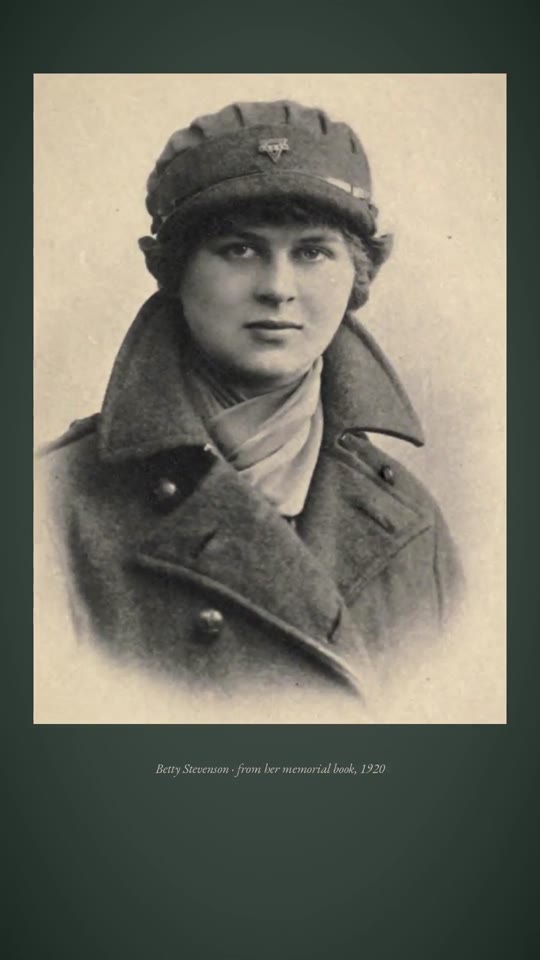
“Betty Stevenson was born in York in 1896. From 1917 she drove for the YMCA here.”
In 1920 her family published her letters and diaries as a book, with four portraits of her. The film uses three of them.
Betty Stevenson, Y.M.C.A., Longmans, Green, 1920, Internet Archive
-
“She called her car Archie.”
She wrote: “Archie, my blighted Ford van, is off the road for repairs, and I am driving a horse and cart round the camp with stores!”
Betty Stevenson, Y.M.C.A., Longmans, Green, 1920, Internet Archive
-
“Last May, German aircraft bombed Étaples and killed her.”
The raid was on the night of 30 May 1918. She and her party had taken shelter under a road bank. France awarded her the Croix de Guerre avec Palme.
Betty Stevenson: The Happy Warrior, Western Front Association
-
“She was twenty-one.”
The ww1cemeteries.com list for Étaples gives her as Bertha Gavin Stevenson, of the YMCA, died 30 May 1918, aged 21. The words “The Happy Warrior” are on her headstone.
-
“On Thursday, at Harfleur, the biggest camp in France, a young woman drives their ambulance.”
Her diary, 13 March 1919: “She had been on duty since 10 in the morning, and after taking us round was going straight on at 7 for night duty until 7 in the morning.”
Olive Edis, The Record of a Journey, 13 March 1919, Olive Edis Project, Cromer Museum
-
“At the Air Force workshops at Pont de l’Arche, women repair engines and weld metal.”
Her diary, 14 March 1919: she also photographed groups “of machinery, electric deposits and acetyline welding”, in her spelling.
Olive Edis, The Record of a Journey, 14 March 1919, Olive Edis Project, Cromer Museum
-
“They have their own hairdresser.”
Olive called it “a barber’s regular Bond St. establishment with Miss Button as coiffeuse”.
Olive Edis, The Record of a Journey, 14 March 1919, Olive Edis Project, Cromer Museum
-
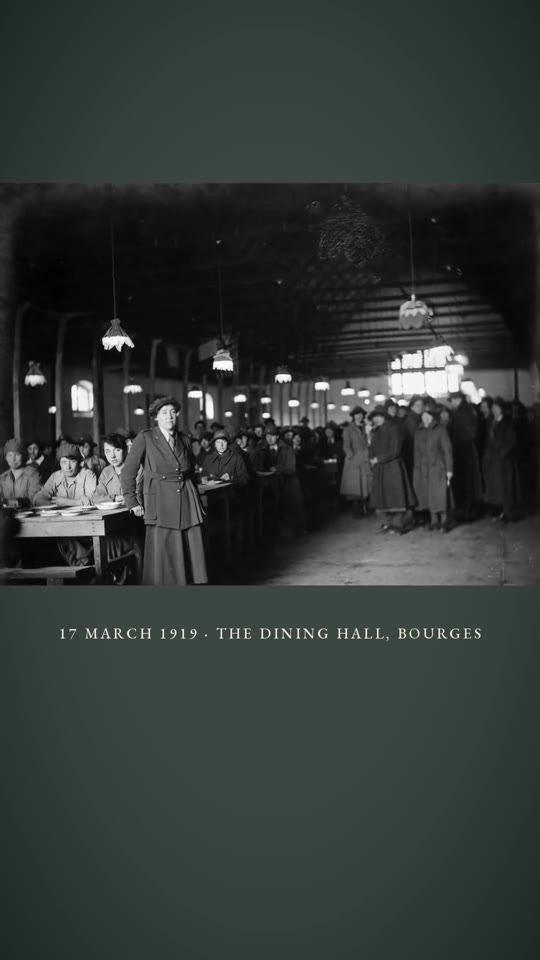
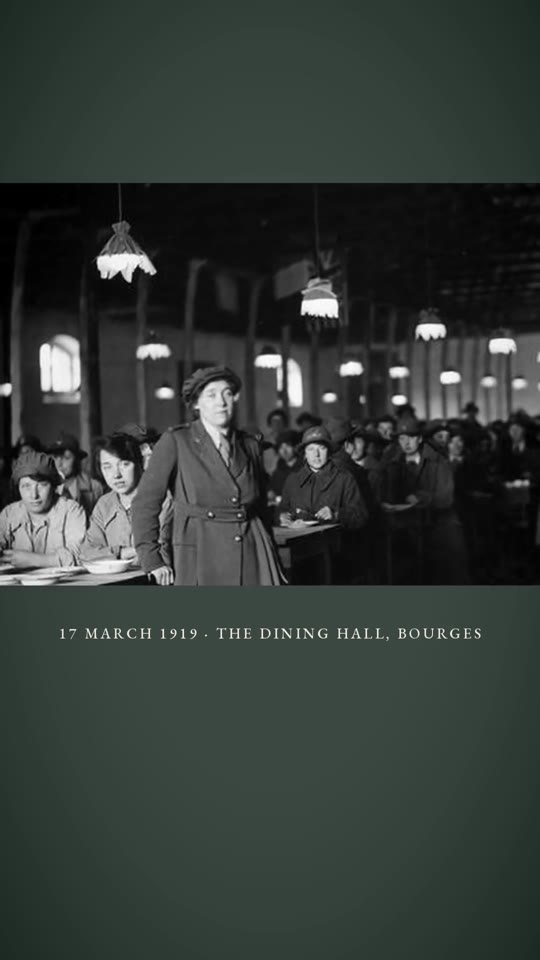
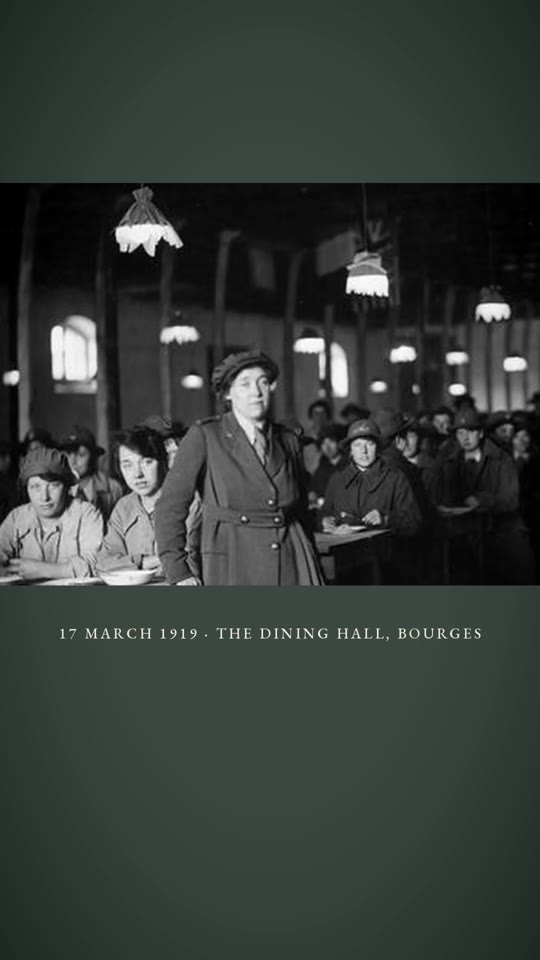
“On Monday, at Bourges, the biggest camp of the Army Auxiliary Corps in France, Olive photographs nearly four hundred women at dinner.”
Her diary, 17 March 1919: “I did a group of nearly 400 in the great dining hall, many lined up in a queue to fetch their dinner.”
Olive Edis, The Record of a Journey, 17 March 1919, Olive Edis Project, Cromer Museum
-
“In December, some women in Britain voted for the first time.”
Women got the vote on the same terms as men in 1928.
Representation of the People (Equal Franchise) Act 1928, legislation.gov.uk
-
“In December, some women in Britain voted for the first time.”
Women could vote for town councils long before 1918. Helen Blackburn’s handbook of 1881 says: “Women vote in Municipal Elections”. The Municipal Franchise Act of 1869 gave them that right.
Helen Blackburn, A Handbook for Women Engaged in Social and Political Work, 1881, Internet Archive
-
“A man can vote at twenty-one, or at nineteen if he has served in the war.”
Section 5 of the Representation of the People Act 1918 gave the vote at 19 to a man who had served in the war.
-
“So a woman of twenty-five in the army here has no vote.”
The War Office’s own figures for Queen Mary’s Army Auxiliary Corps: “No woman under 20 years of age is accepted for service Overseas”.
-
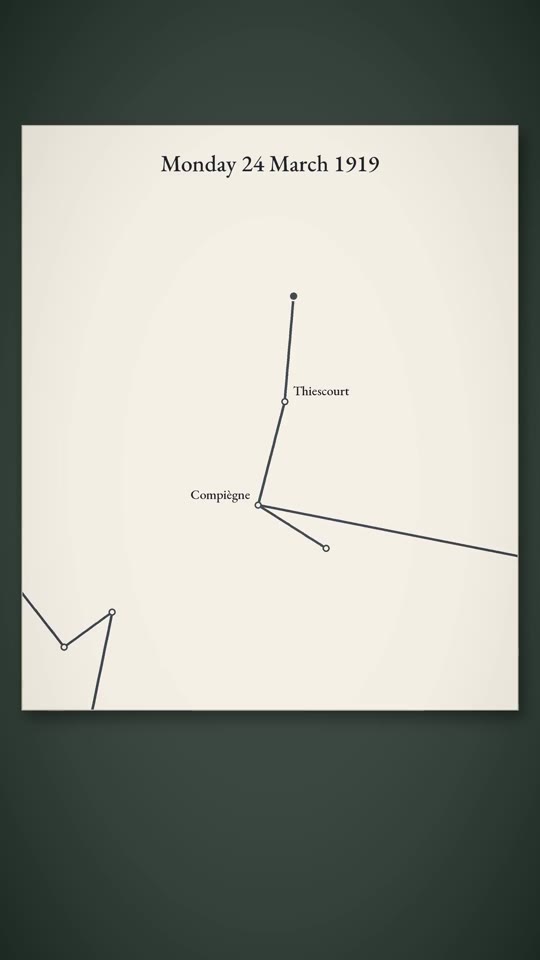
“In her diary she looks back over the month.”
Her diary is a typescript of about 88 pages, The Record of a Journey to Photograph the British Women’s Services Overseas, now at the Imperial War Museum. Cromer Museum’s Olive Edis Project posted it a day at a time in 2016.
-
“The mud is too deep for the big camera, and her small camera has no film left.”
Her diary, 24 March 1919: “it was hopeless to think of getting a large camera down [into the mud], and my Kodak films were at an end”.
Olive Edis, The Record of a Journey, 24 March 1919, Olive Edis Project, Cromer Museum
-
“In April, the French government will buy the worst of this ground, too ruined to farm, and mark it in red on a map.”
The law of 17 April 1919 let the state buy land judged beyond recovery. Most of it went back to farming by 1927. Around Verdun it is forest, and six villages were never rebuilt.
Célébrer et commémorer, Chemins de mémoire, French Ministry of the Armed Forces
-
“Near Péronne the little graves are German.”
Her diary: “I noticed a few with cement borders and one indeed had a polished granite headstone”.
Olive Edis, The Record of a Journey, 24 March 1919, Olive Edis Project, Cromer Museum
-
“In her diary she thinks back to the grave at Zeebrugge, twenty days ago.”
On 24 March she wrote that where the Germans had held the ground for some time, “they took pains about the decent burial of their men”.
Olive Edis, The Record of a Journey, 24 March 1919, Olive Edis Project, Cromer Museum
-
“On Tuesday, at Cambrai, she finds herself in an influenza ward.”
Her diary, 25 March 1919: “We had managed up to this time to avoid Influenza wards, but I was here plunged into one before I knew, and took a plate of the patients.”
Olive Edis, The Record of a Journey, 25 March 1919, Olive Edis Project, Cromer Museum
-
“On Saturday morning it snows.”
Her diary, 29 March 1919: “We woke to a heavy snow-storm and a keen wind.”
Olive Edis, The Record of a Journey, 29 March 1919, Olive Edis Project, Cromer Museum
-
“German prisoners carry stretchers onto the hospital ship St Andrew.”
Her diary: “Stretcher after stretcher was carried from the train on to the boat by German prisoners”.
Olive Edis, The Record of a Journey, 29 March 1919, Olive Edis Project, Cromer Museum
-
“Olive photographs the stretcher lift by flashlight, and the flash is slow to fire.”
Her diary: “The flash was slow to fire, and Major Kendall looked down the shaft and roared to the orderlies not to stop for anything, which meant me.”
Olive Edis, The Record of a Journey, 29 March 1919, Olive Edis Project, Cromer Museum
-
“At the quay, army nurses are going home for good.”
Her diary: “the demobilized Army Sisters had already gone onto the boat, but I much preferred taking them there”.
Olive Edis, The Record of a Journey, 29 March 1919, Olive Edis Project, Cromer Museum
-
“That evening, Olive sails for home.”
Her diary: “Lady Norman looked in and said good-bye, for she was off by the 11 o’clock boat, whilst I had plenty to do until the sailing of the 5pm.”
Olive Edis, The Record of a Journey, 29 March 1919, Olive Edis Project, Cromer Museum
-
“In June, the Allies give Germany five days to agree to the treaty, or the armistice will end.”
Clemenceau wrote to the German delegation on 16 June 1919. Without Germany’s answer, he wrote, “The said armistice will then terminate”.
-
“The museum receives a hundred and seventy-one of her photographs from the month.”
The King opened the museum at the Crystal Palace on 9 June 1920. The Illustrated London News printed a photograph of the opening on 19 June.
The Illustrated London News, 19 June 1920, page 1066, Internet Archive
-
“The museum receives a hundred and seventy-one of her photographs from the month.”
The museum paid her expenses for the tour, but no salary. Its letters about the tour run from October 1918 to April 1920.
-
“At the opening, Sir Alfred Mond, the minister who proposed the museum, speaks to the King.”
His words: the war’s sacrifices had, “as we all hope, laid firm and deep the foundations of a new and better world”. The King answered: “It was a democratic victory, the work of a nation in arms”.
Supplement to the London Gazette, 3 August 1920, pages 8071 and 8072
-
“Today the fourteen men the Germans buried lie under fourteen British headstones, in the same churchyard at Zeebrugge.”
The churchyard is in Sint-Donaaskerkstraat, 8380 Zeebrugge. From the ferry terminal, the Commission says, go north along the N34a for 1.5 km, and turn right at the church.
-
“Today the fourteen men the Germans buried lie under fourteen British headstones, in the same churchyard at Zeebrugge.”
In 1920 the British Salvage Section put up a memorial cross in the churchyard for the dead of St George’s Day.
Zeebrugge Churchyard met het Zeebrugge Memorial, Inventaris Onroerend Erfgoed