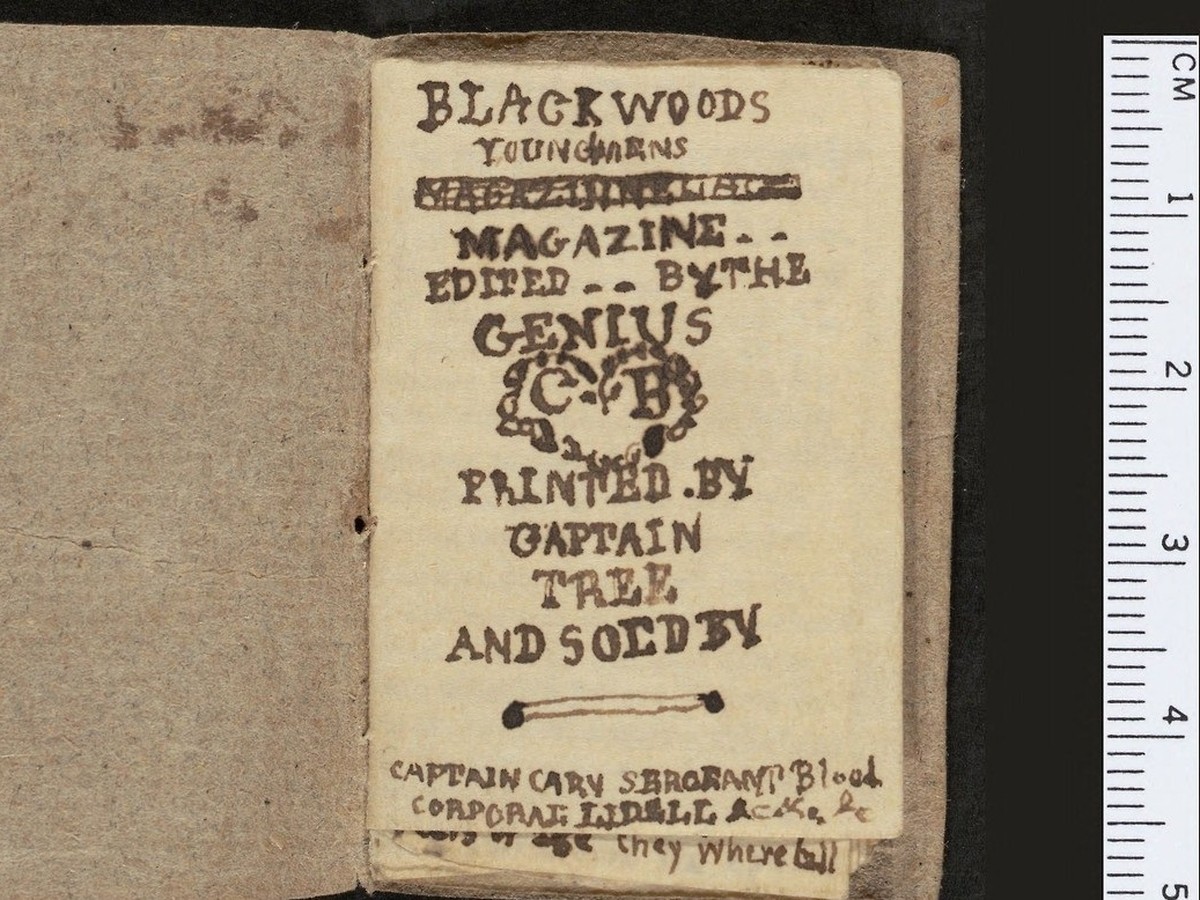
Rembrandt's Lost Musketeer
A film about Jan Brugman, the musketeer cut from Rembrandt's Night Watch.
In 1715 the city of Amsterdam cut a strip off the left side of Rembrandt’s Night Watch, so that it would fit between two doors. On that strip Rembrandt had painted two men and a child, on a bridge.
One of the men was Jan Brugman, a cloth merchant. Nobody has found the strip since, but a copy of the painting still shows his face.
We made this film from the paintings, a map and the papers of the time, to find out who he was and how we know.
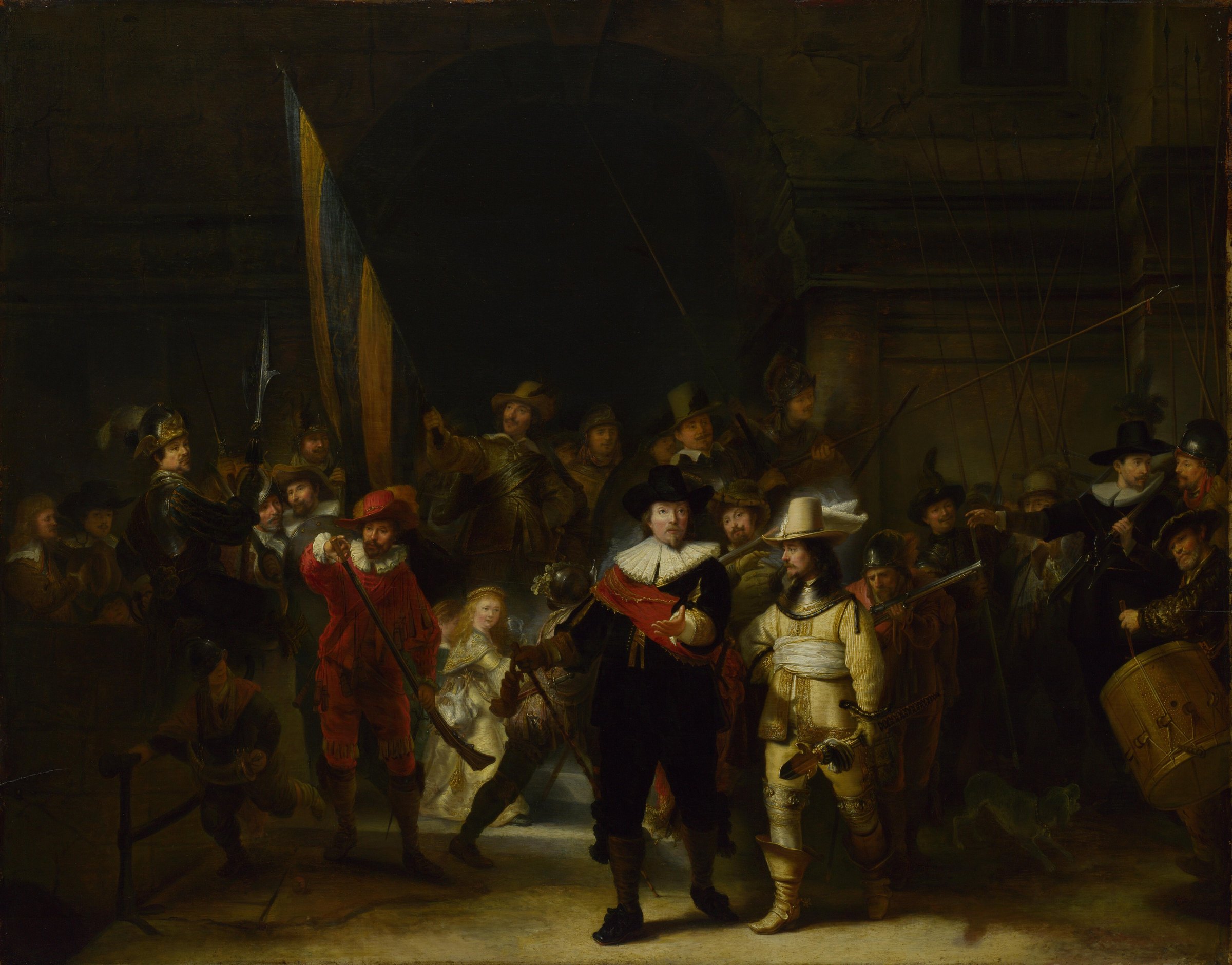
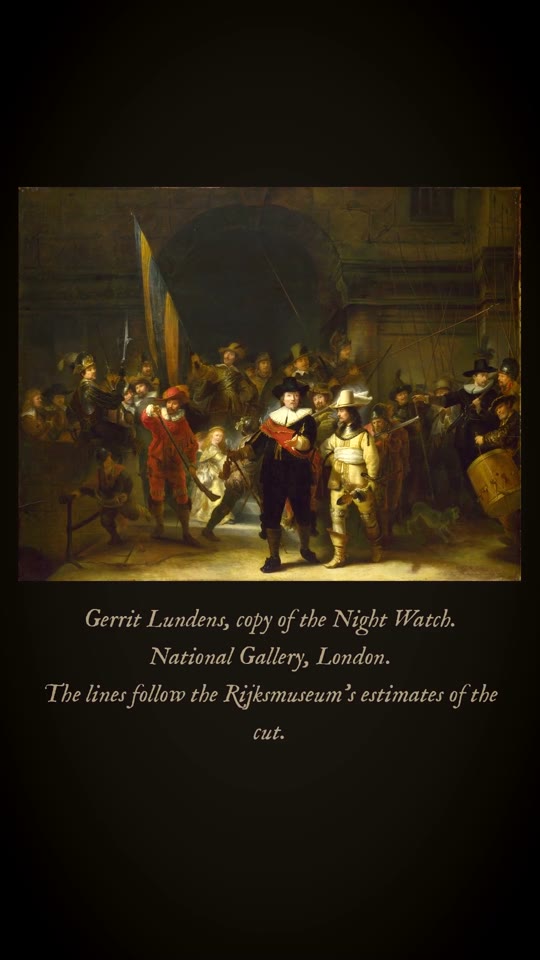
Rembrandt, the Night Watch, oil on canvas, 1642. Rijksmuseum, Amsterdam, on loan from the City of Amsterdam. Gerrit Lundens, copy of the Night Watch, oil on oak, after 1642. National Gallery, London.
Download the film (MP4, 105 MB) and its captions (WebVTT). The work is in the public domain: its page on Wikimedia Commons.

In the film
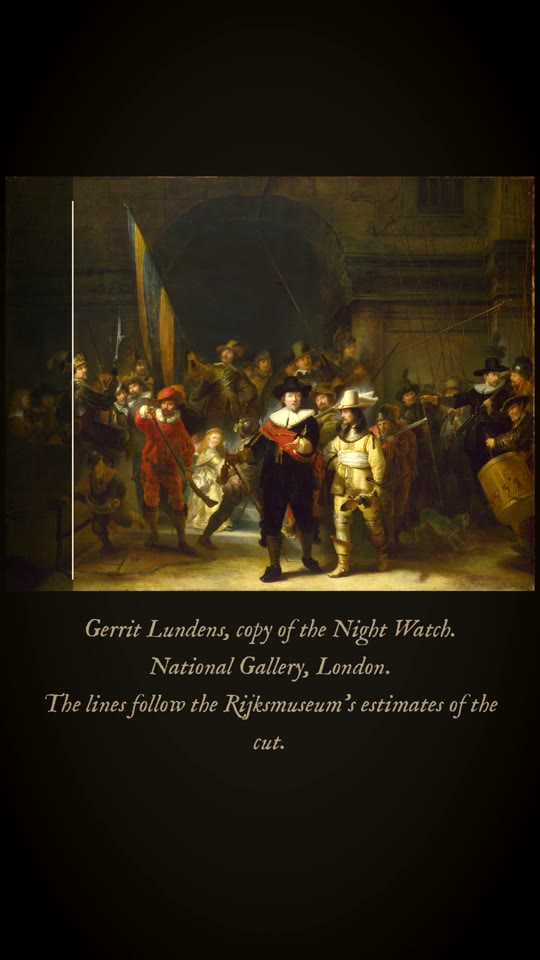
“So the city has it cut down: sixty-four centimetres off the left side, twenty-three off the top, eleven off the bottom and seven off the right.”
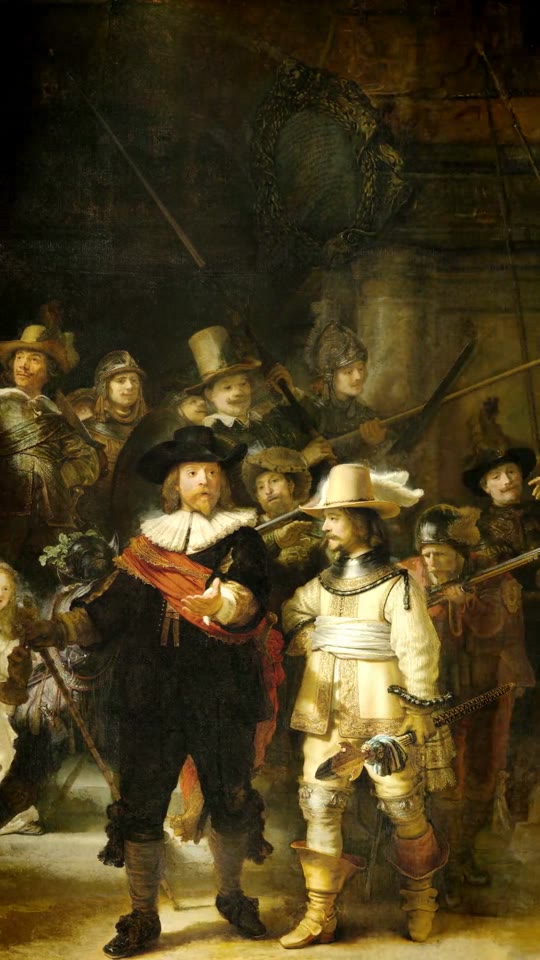
“The painting has thirty-four figures, all of them life-size.”
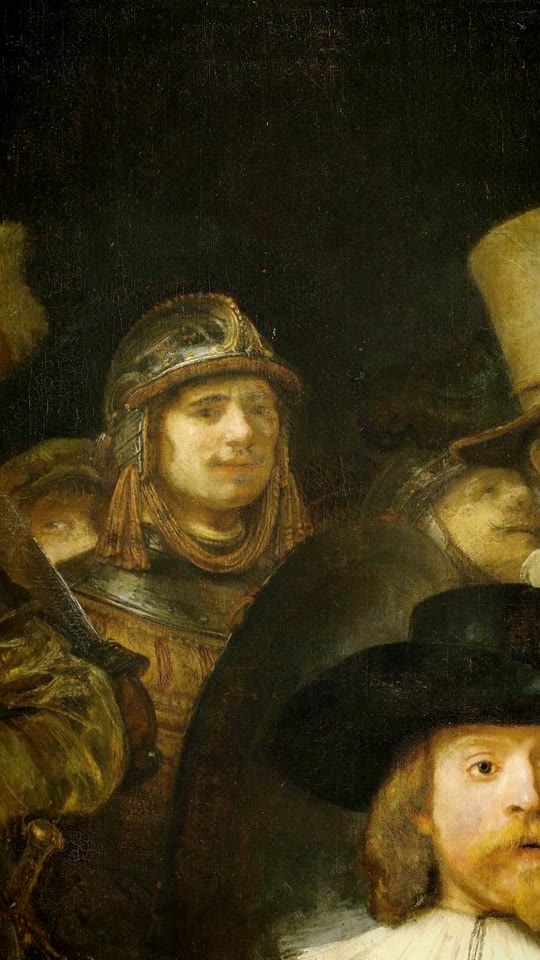
“One of them, Jan Pietersz Bronckhorst, has the least prominent place in the painting.”
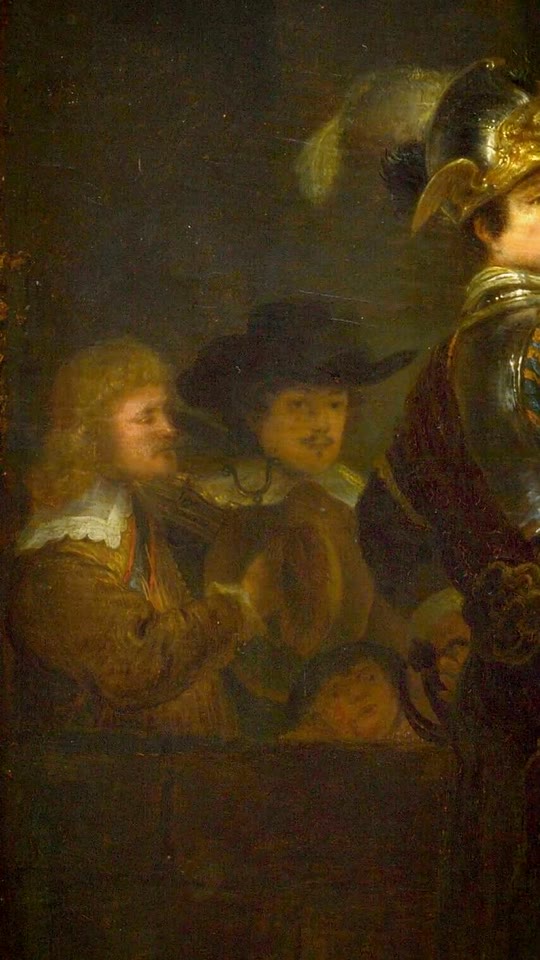
“Rembrandt paints Brugman as a musketeer, with a musket over his shoulder.”
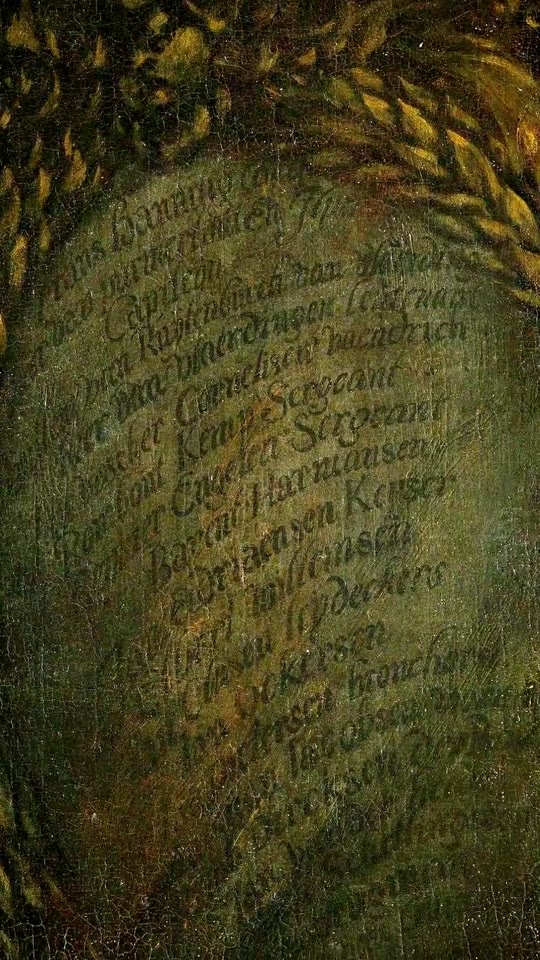
“In 2009 the historian Bas Dudok van Heel matches the names on the shield to the men in the painting.”
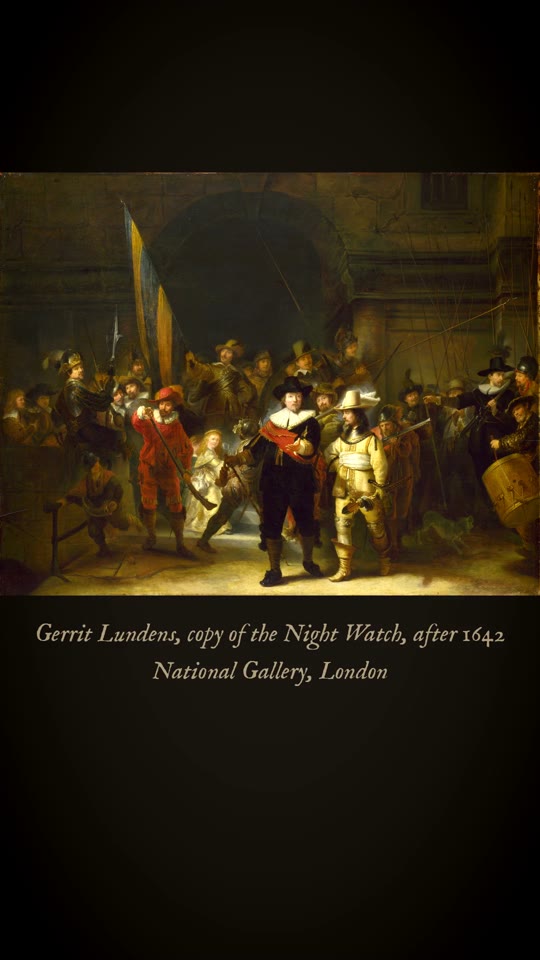
“The National Gallery in London owns the copy, and has lent it to the Rijksmuseum since 1958.”
Notes and sources
Each note takes a line from the film and gives its source. How we checked all 109 claims in the film.
-
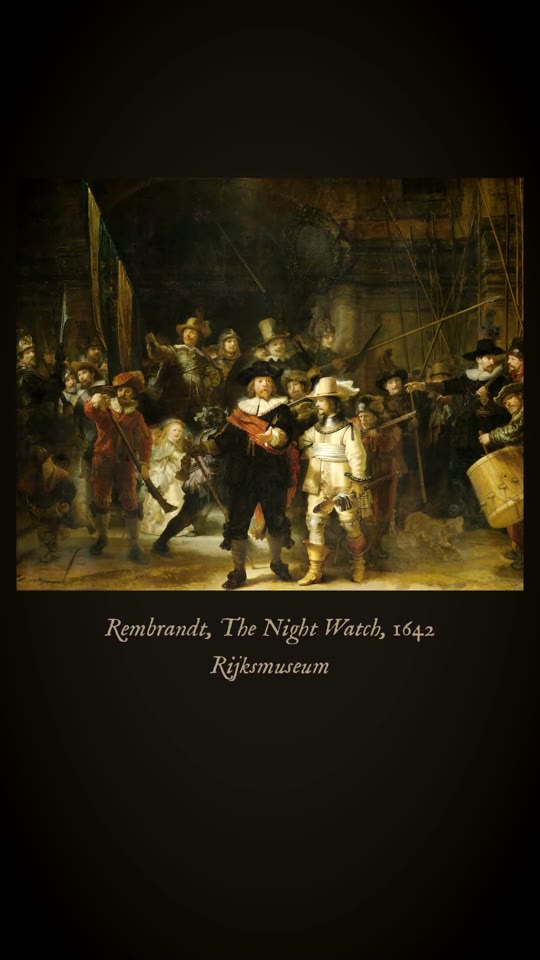
“He pays about a hundred guilders to be in a painting by Rembrandt.”
Nobody recorded what Brugman paid. In 1659 Jan Pietersz Bronckhorst told a notary that, as far as he remembered, the sixteen men each paid about a hundred guilders, a little more or a little less by their place in the painting.
-
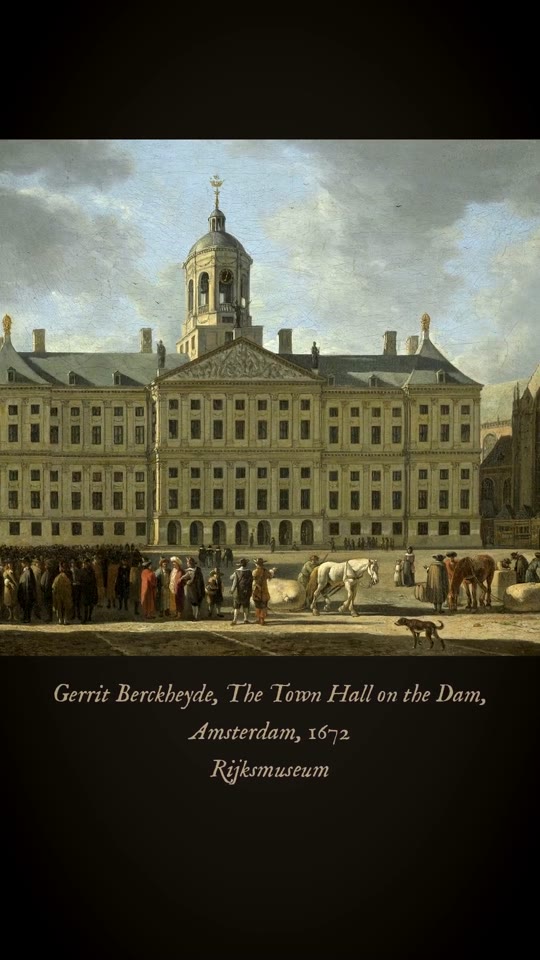
“In 1715 the city of Amsterdam moves the painting into its Town Hall on the Dam.”
On 23 May 1715 the city treasurers ordered the painting to be cleaned and placed in the “Kreygsraats kamer”, the War Council room, of the Town Hall. The Rembrandt Research Project says this was the room of the Small War Council, on the top floor. The Town Hall is now the Royal Palace.
-
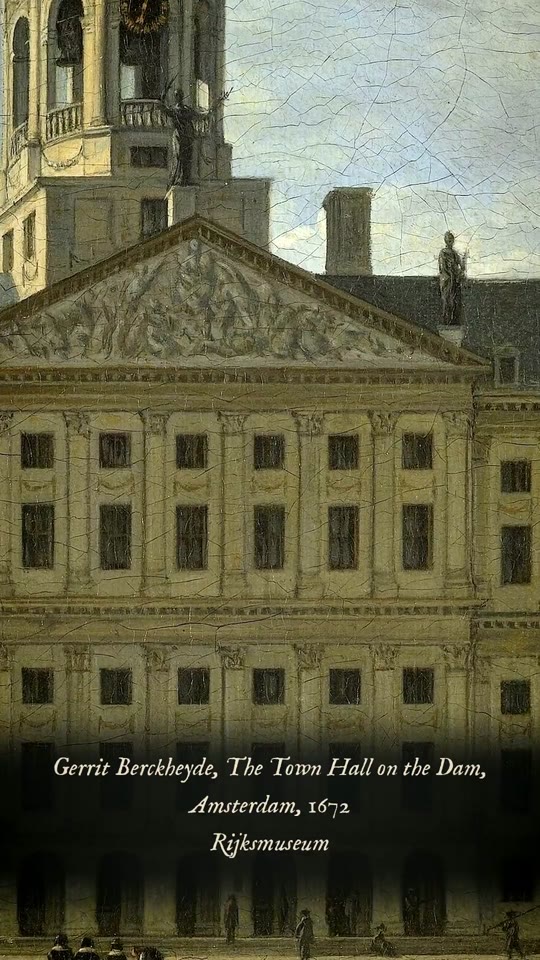
“The painting has to hang between two doors, in the small war council room.”
The Rijksmuseum says the painting had to fit between two doors. In 2025 one of the researchers, Jean van Dijk, told NL Times that the Town Hall’s plans show only one door there. He asked why the painting was cut.
Rembrandt did not paint Night Watch outdoors, NL Times, 25 February 2025
-
“The canvas is nearly four metres high and just over five metres wide.”
These are the Rijksmuseum’s figures for the painting before the cut, 393.1 by 507.4 centimetres. Nobody knows the original size exactly. The Rembrandt Research Project lists earlier estimates from 358.7 to over 410 centimetres high, and from 479 to 523 centimetres wide. It thinks the height was just under 420 centimetres.
-
“So the city has it cut down: sixty-four centimetres off the left side, twenty-three off the top, eleven off the bottom and seven off the right.”
The Rijksmuseum’s 2021 reconstruction puts the four strips at 64.4, 23.3, 11.3 and 7 centimetres, and the whole painting at 393.1 by 507.4 centimetres. The strips are lost, so the museum estimated these sizes. The museum’s page for the Lundens copy says the painting was cut down on three sides.
-
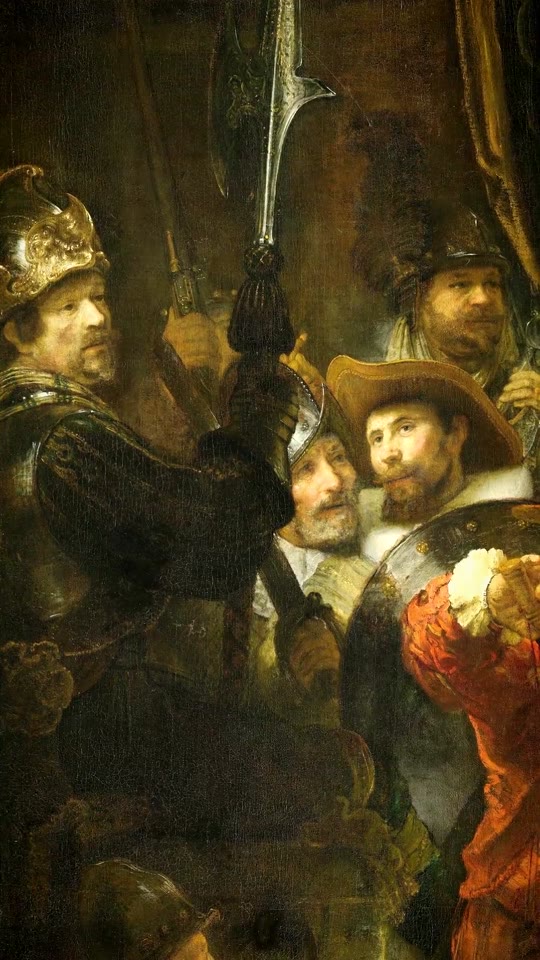
“Nobody has found that strip since.”
The Rijksmuseum, in 2021: “These pieces have never been found.”
-
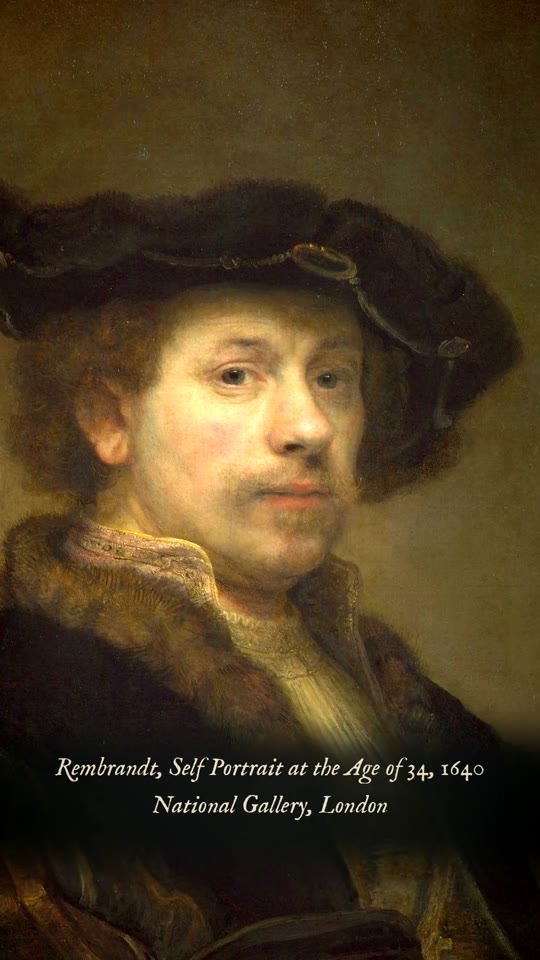
“In 1639 the Prince of Orange pays him six hundred guilders each for two paintings.”
The Prince was Frederik Hendrik. His payment order of 17 February 1639 comes to 1,244 guilders: 600 each for the Entombment and the Resurrection, and 44 for the frames and the crate.
Frederik Hendrik's payment order, 17 February 1639, the Rembrandt Documents, Huygens Institute
-
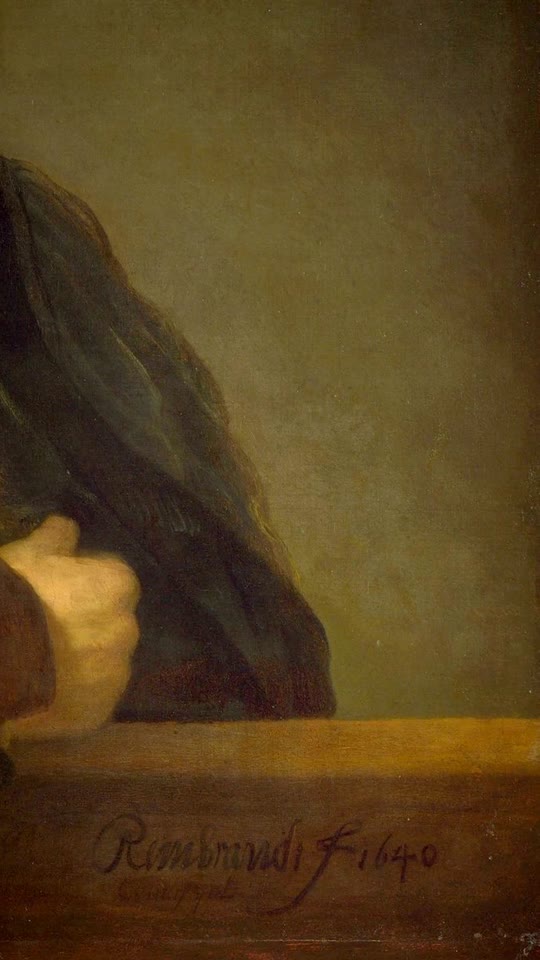
“Orlers calls him one of the most celebrated painters of the century.”
Orlers wrote it in Dutch, on page 375 of his second edition: “een vande tegenwoordighe vermaertste Schilders van onse eeuwe”. The translation is ours.
Jan Orlers, Beschrijvinge der Stadt Leyden, 1641, the Rembrandt Documents, Huygens Institute
-
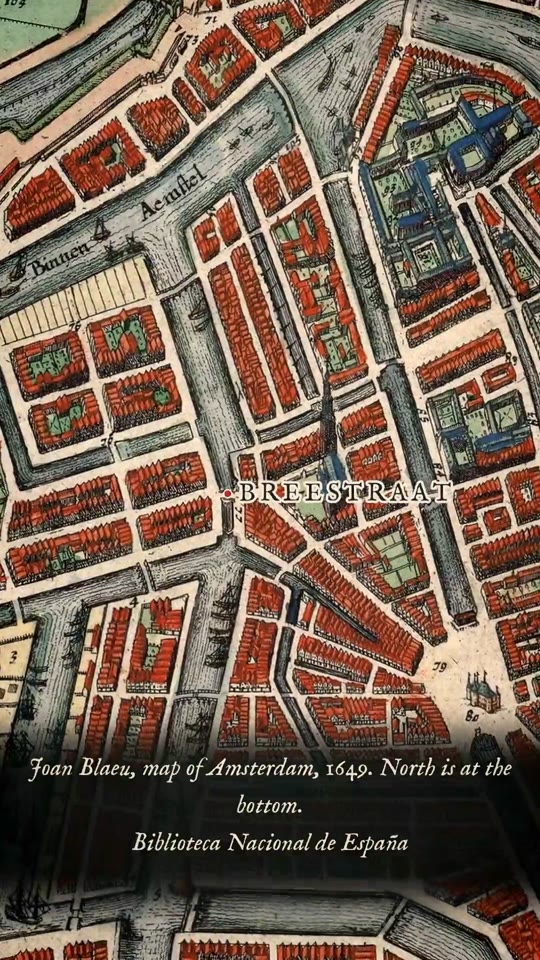
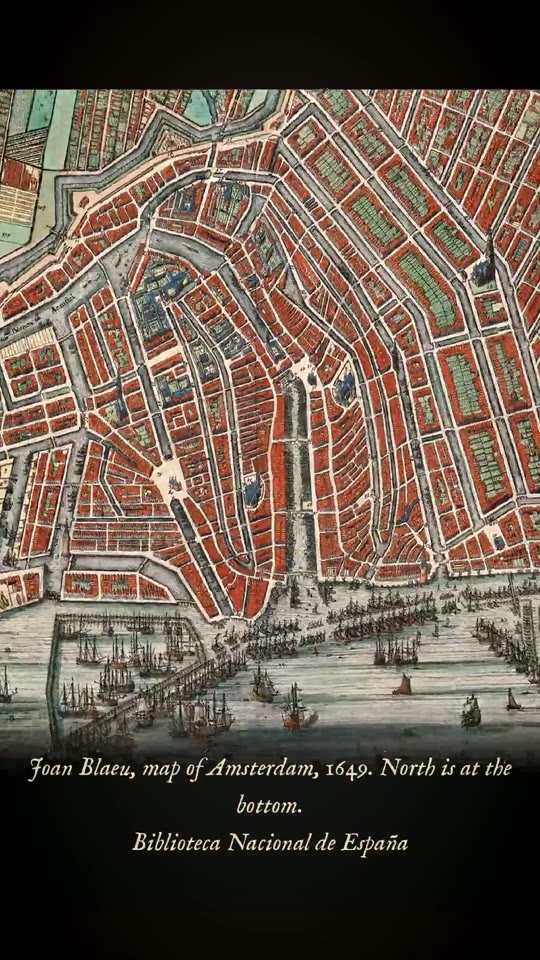
“Rembrandt lives in Amsterdam, in a large house on the Breestraat.”
Rembrandt bought the house on 5 January 1639 for 13,000 guilders. The deed puts it “on the southerly side of Breestraat”. The Rembrandt House Museum says he sold it in 1658. Its address today is Jodenbreestraat 4.
-
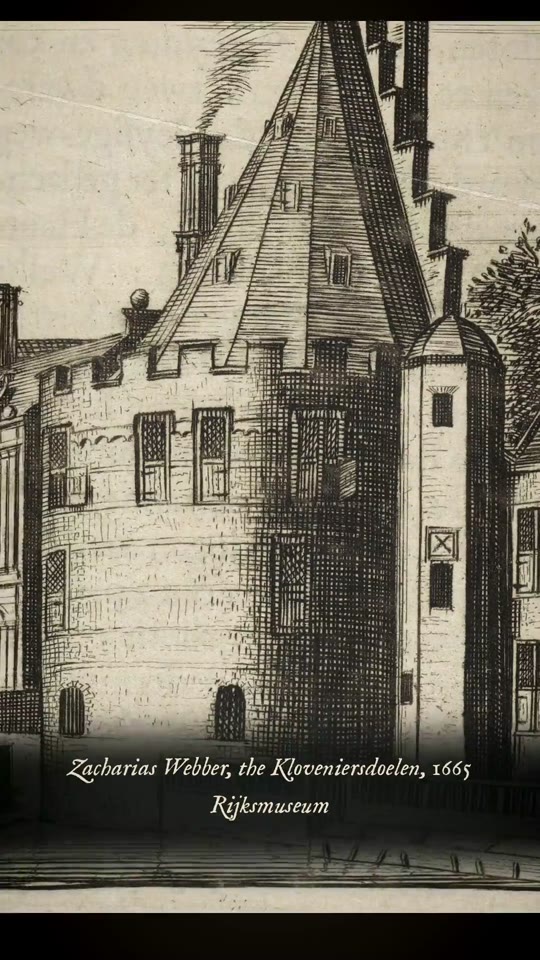
“Its new wing has a great hall.”
Dudok van Heel thinks the new building was finished in about 1627. He quotes the notes of Hans Bontemantel: the steward did “such good trade that the great hall was built on”. Earlier writers dated the hall to 1638. A map of 1713 gives the room as about 18 metres by 9.
-
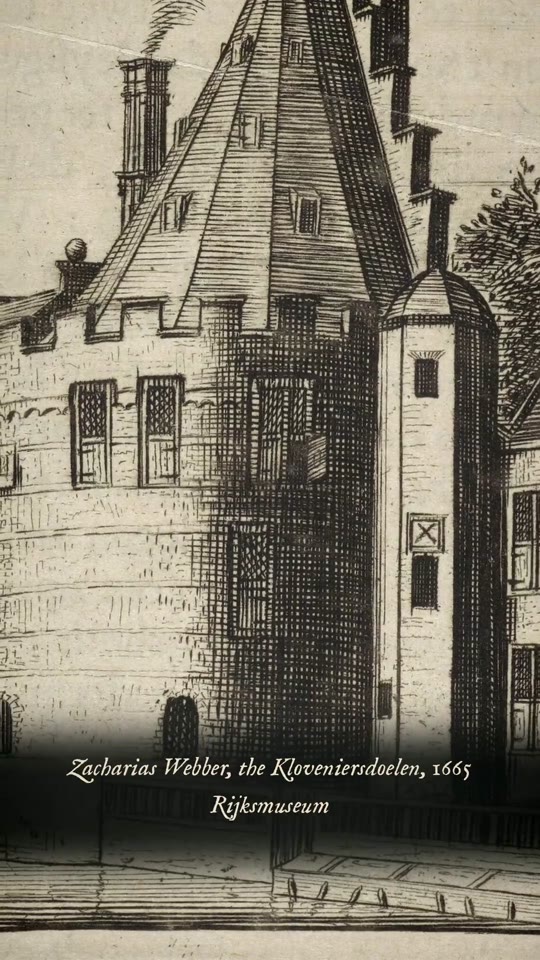
“Between 1640 and 1645, each of their six companies has its portrait painted for the hall.”
The six painters were Sandrart, Flinck, Rembrandt, Pickenoy, Backer and Van der Helst.
-
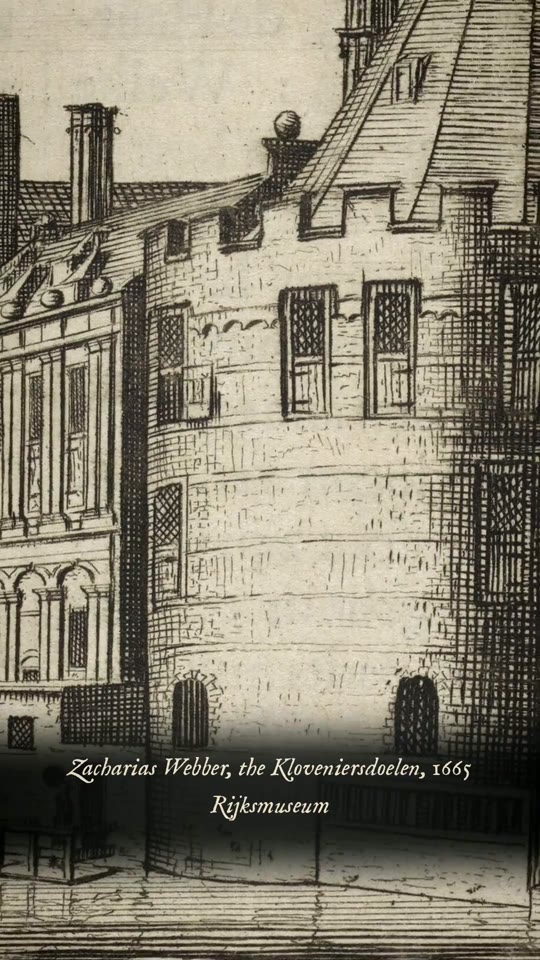
“The company from District Two chooses Rembrandt.”
Dudok van Heel: District Two was “an area on the west side of the city between Damrak and Singel”.
-
“The company from District Two chooses Rembrandt.”
Nobody knows who chose Rembrandt. Dudok van Heel thinks the governors of the Kloveniersdoelen commissioned the paintings for its great hall. He asks whether the commission reached Rembrandt through Joannes Wtenbogaert, who was in touch with Rembrandt in 1639.
-
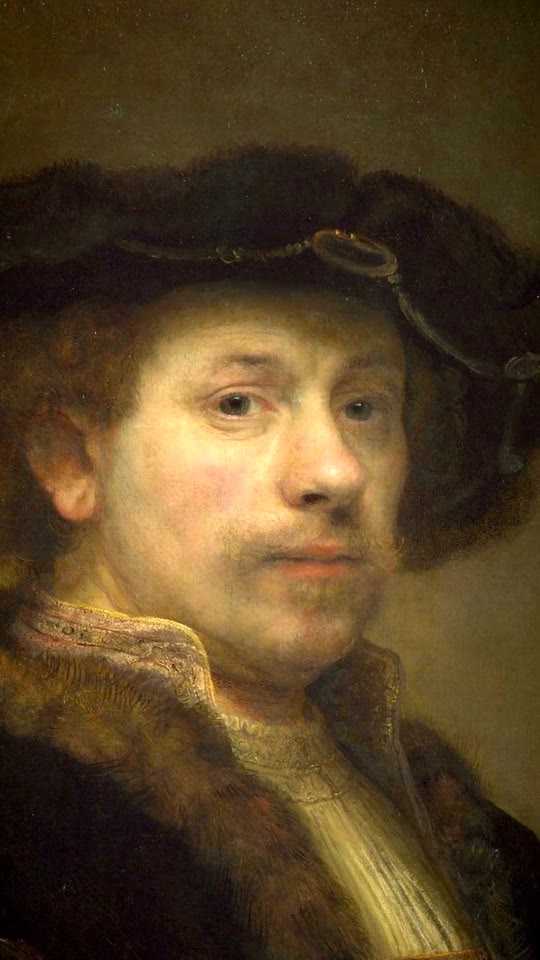
“Rembrandt paints them at home.”
Leonore van Sloten, a curator at the Rembrandt House Museum, says he did not paint it outdoors, in the courtyard of his house. She found no dust or insects in the paint, as there would be if he had. She proposes the first floor at the back of the house.
Rembrandt did not paint Night Watch outdoors, NL Times, 25 February 2025
-
“The painting has thirty-four figures, all of them life-size.”
The count includes the two men and the child the city cut off in 1715. Dudok van Heel says the portraits were life-sized.
-
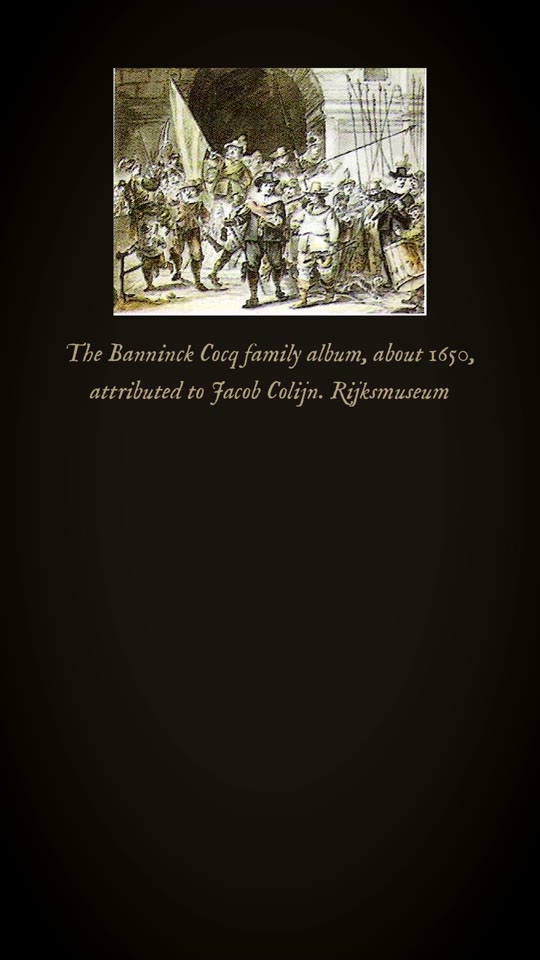
“Beside it, someone writes what the painting shows.”
The caption in the album’s Dutch: “Schets van de Schilderije op de groote Sael van de Cleveniers Doelen daerinne de Jonge Heer van Purmerlandt als Capiteijn, geeft last aen zijnen Lieutenant, de Heer van Vlaerdingen, om syn Compaignie Burgers te doen marcheren”. The Rembrandt Research Project says a scribe wrote the captions, and that the albums were finished in 1654. The translation in the film is ours.
-
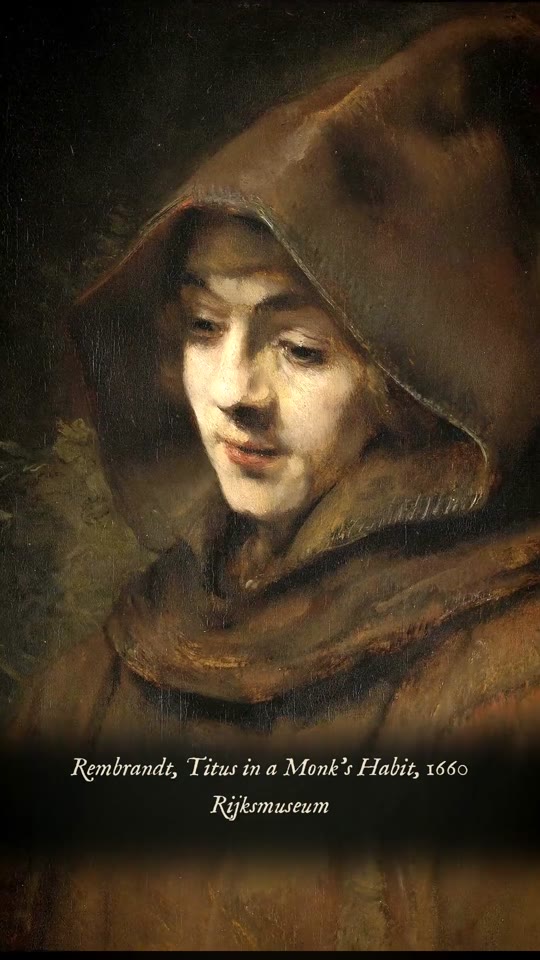
“Titus inherits part of what she leaves.”
The editors of the Rembrandt Documents say that, according to Saskia’s will, Titus had a substantial stake in her estate.
-
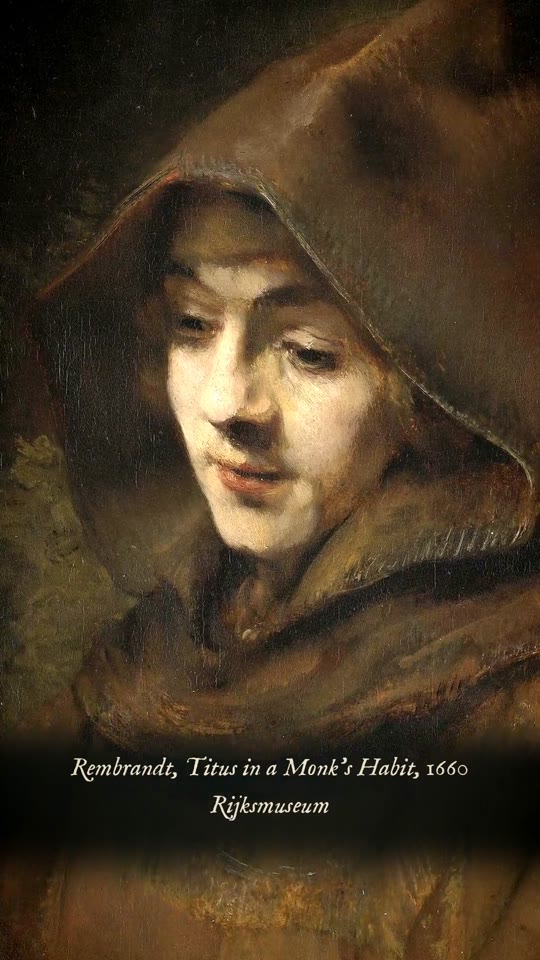
“So in 1659 his guardian wants to know what the men owed Rembrandt for the painting.”
Louis Crayers asked for the statements as the guardian of Titus. The notary was Nicolaes Listingh, and his records are in the Amsterdam City Archives.
-
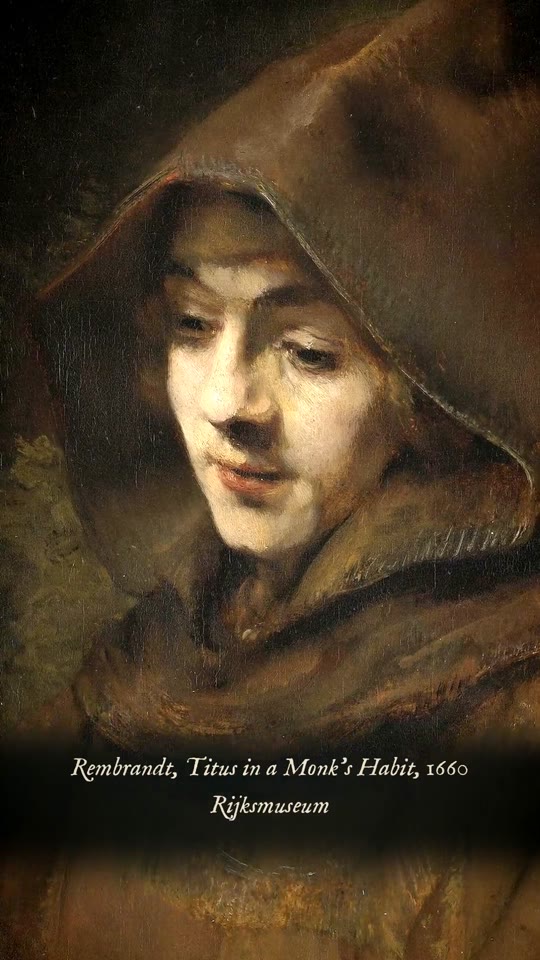
“So in 1659 his guardian wants to know what the men owed Rembrandt for the painting.”
The Rembrandt Documents say Titus’s guardian apparently wanted to know what the men owed Rembrandt on the day Saskia died, 14 June 1642. Dudok van Heel says the money could have been paid in advance.
-
“One of them, Jan Pietersz Bronckhorst, has the least prominent place in the painting.”
His words in the notary’s Dutch: “dat het ijder van noch aff heeft, van schilderijen wel heeft gekost dooreen de somme van hondert guldens, d’een wat meer en d’ander wat minder, nae de plaets, die sij daer in hadden”. “Van noch aff heeft” means as far as he remembers. The translation in the film is ours.
-
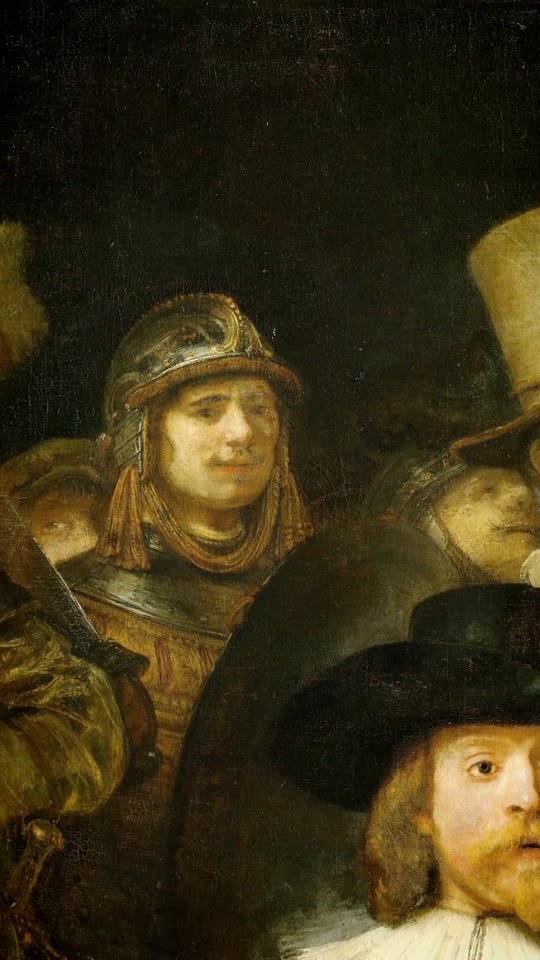
“One of them, Jan Pietersz Bronckhorst, has the least prominent place in the painting.”
Dudok van Heel thinks Bronckhorst may be the man with the white beard, the figure he numbers 7. On that reading he has the least important place.
-
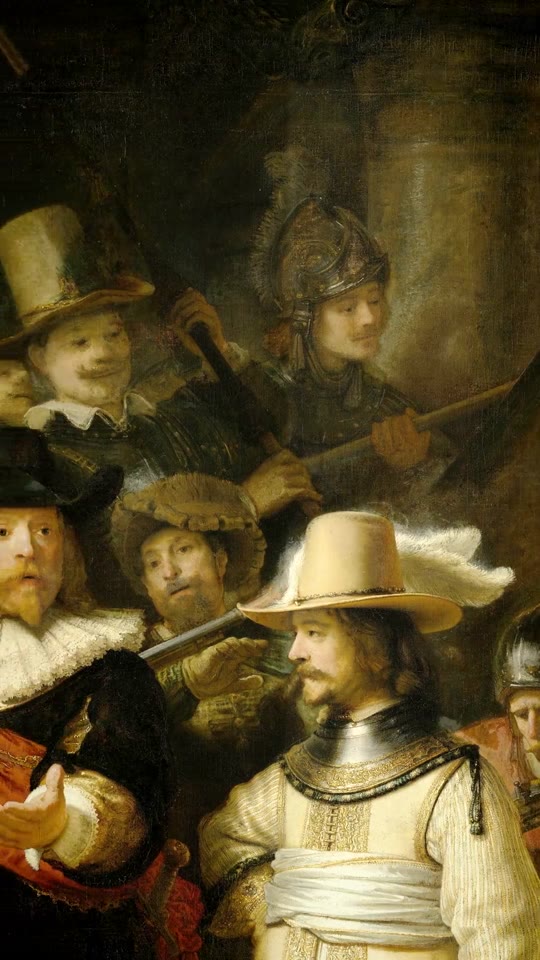
“A hundred guilders then buys about what fifteen hundred pounds buys now.”
On this price index, a guilder of 1642 buys what 13.29 euros bought in 2021. We changed that into pounds at the European Central Bank’s average rate for 2021, then brought it to September 2026 with the Office for National Statistics’ consumer price index. That gives about 14.75 pounds a guilder. The index measures prices only. By wages a hundred guilders was worth far more. The drummer in the painting earned forty guilders a year.
-
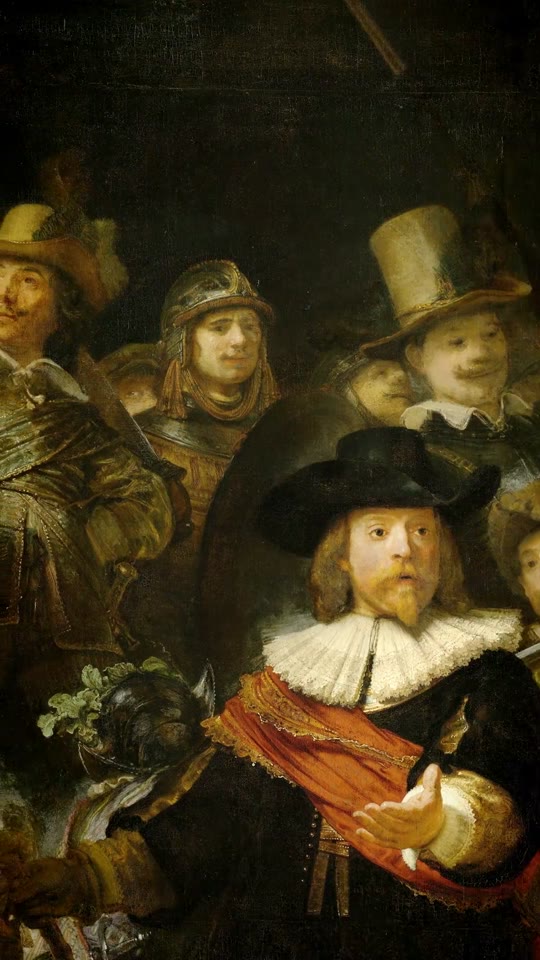
“The other man, Nicolaes van Cruysbergen, says the whole painting cost sixteen hundred guilders.”
His words: the painting “van schilderen wel heeft gekost de som van sestienhondert guldens”. He says he paid his own share of it. Dudok van Heel thinks the captain and the lieutenant paid more, so Rembrandt may have received around 2,600 guilders.
-
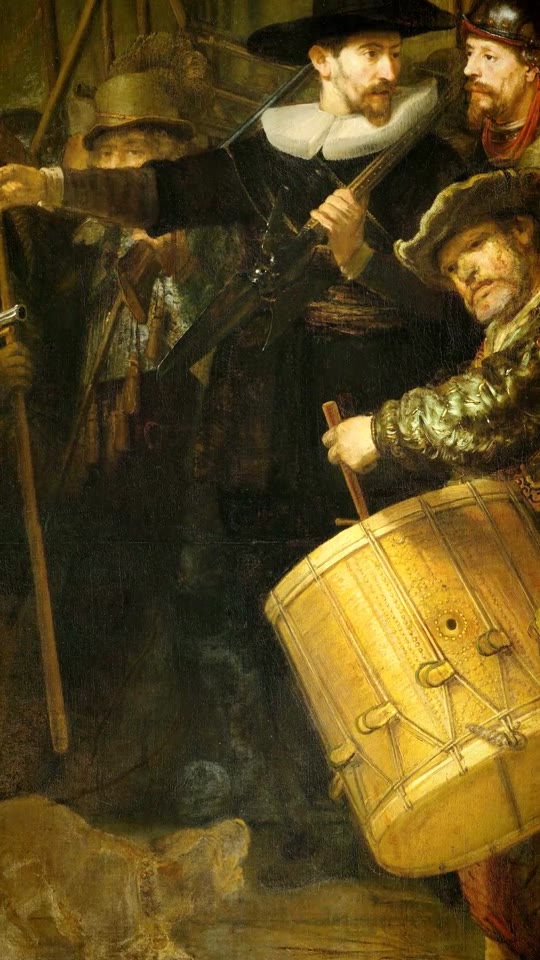
“The drummer, Jacob Jorisz, pays nothing.”
No document says what the drummer paid. Dudok van Heel reasons that the drummer could not afford a portrait, so he is not among the paying militiamen named on the shield.
-
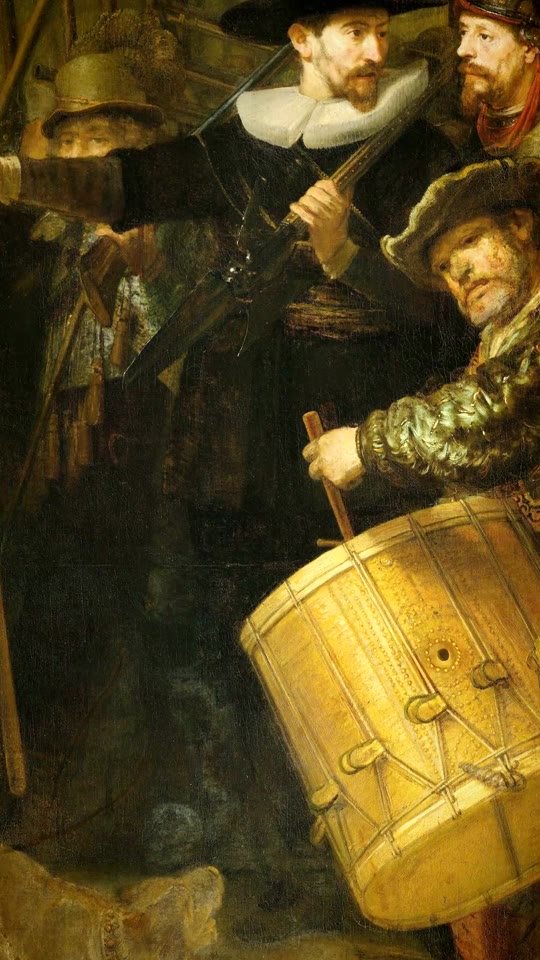
“The company pays him forty guilders a year.”
Dudok van Heel knows the drummer earned forty guilders a year, from a statement the drummer made on 30 July 1646.
-
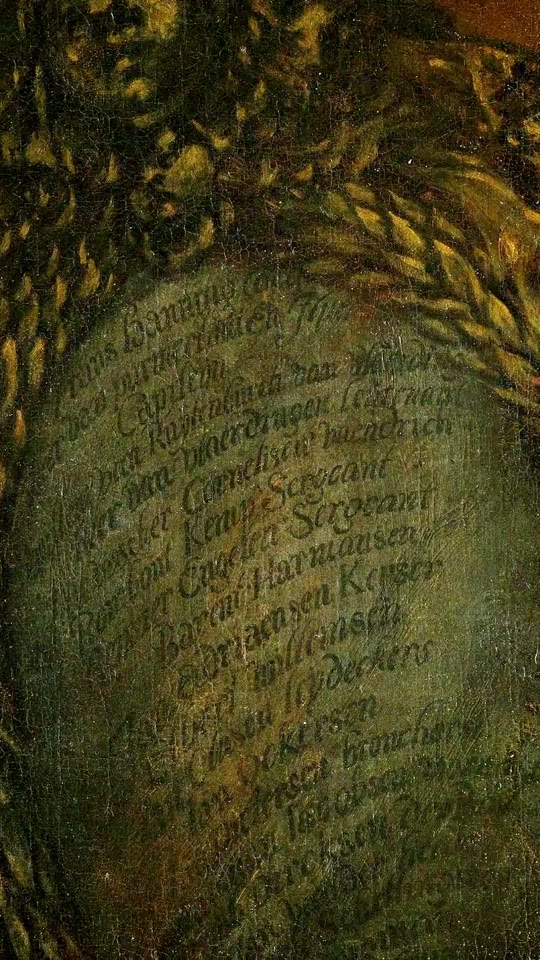
“Years later, someone paints a shield on the arch behind the captain.”
Dudok van Heel dates the shield to about 1653. The Rembrandt Research Project thinks it was there by about 1650. Paint samples show a layer of varnish under it, so it is “a later addition”. His name on it reads Jan brugman.
-
“Rembrandt paints Brugman as a musketeer, with a musket over his shoulder.”
Dudok van Heel: “With his bandoleer and charge cases, the firearm over his shoulder and the musket-rest in his hand, he is portrayed as a musketeer.”
-
“In 1642 Jan Brugman is twenty-eight.”
Dudok van Heel gives his baptism in the Oude Kerk, Amsterdam, as 6 July 1614.
-
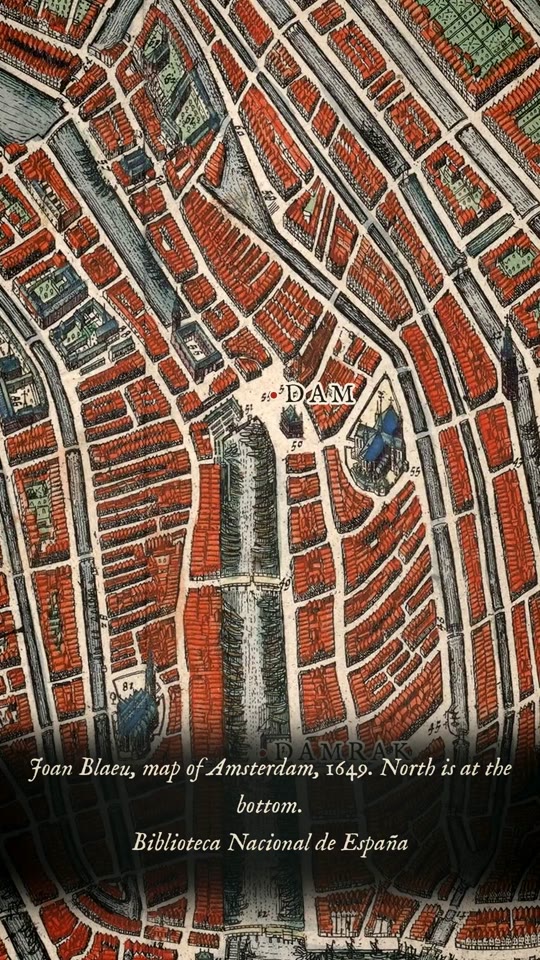
“In 1631 they pay the highest tax in District Two.”
Dudok van Heel says that in the register of taxes for 1631 the Brugman family had the highest assessment. The register assessed what each household was worth. He lists Brugman’s mother at 180,000 guilders.
-
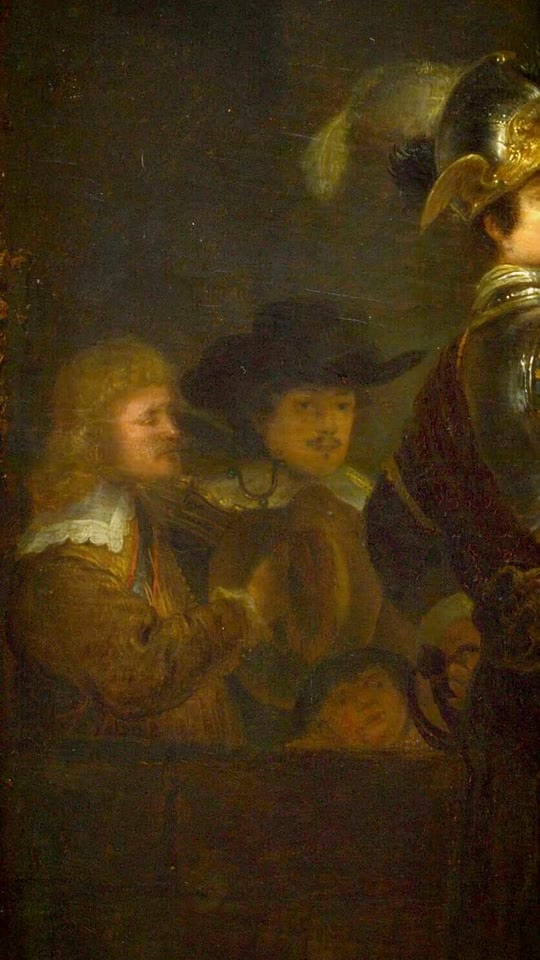
“In 1640 he inherits a fortune and buys a manor at Beverwijk, north of Haarlem.”
Dudok van Heel says the fortune Brugman inherited in 1640 let him buy a manor in Beverwijk. He does not give the year he bought it.
-
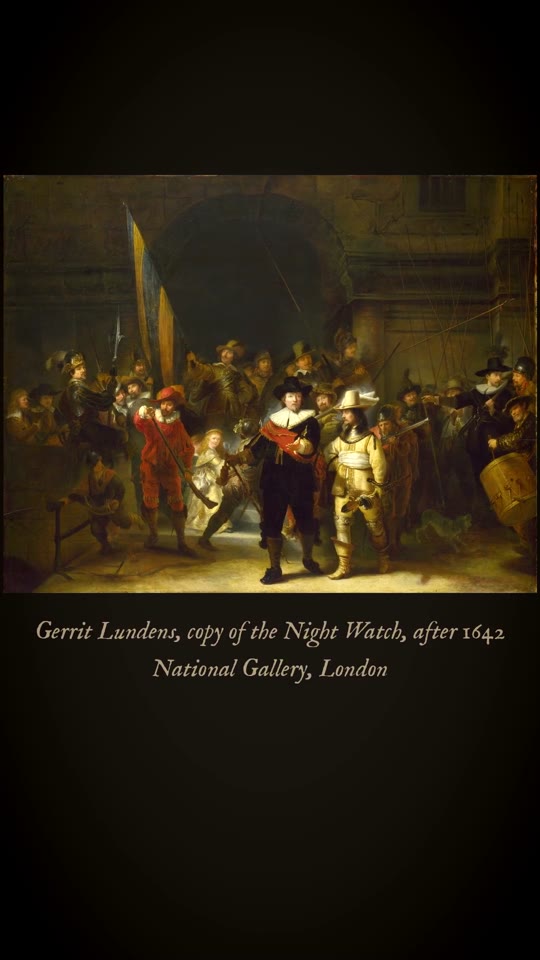
“Gerrit Lundens paints it on a small oak panel, some time after 1642.”
The National Gallery describes the panel as wood, probably oak. It measures 66.8 by 85.4 centimetres. The gallery says Banninck Cocq “probably” ordered it himself.
Gerrit Lundens, after Rembrandt, The Company of Captain Banning Cocq, National Gallery, London
-
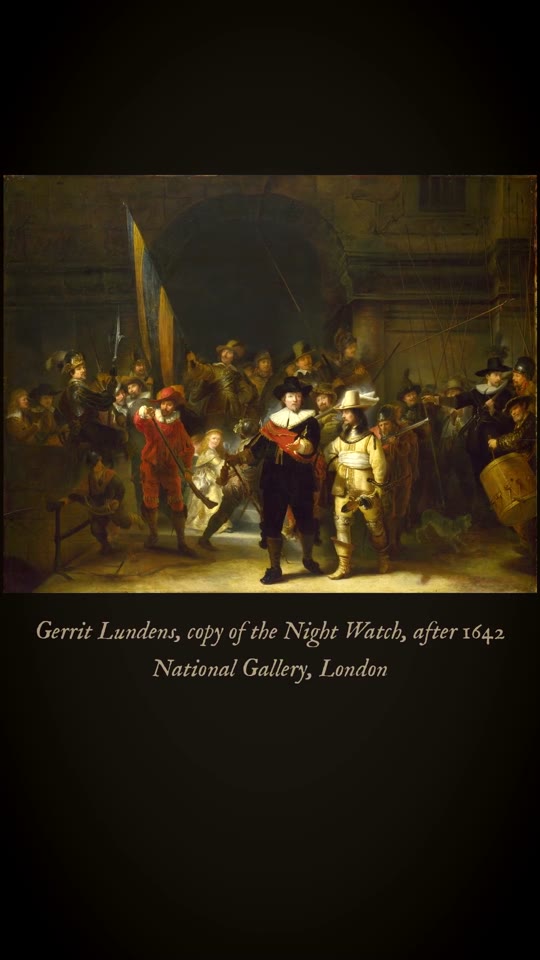
“Gerrit Lundens paints it on a small oak panel, some time after 1642.”
The Rijksmuseum calls the copy attributed to Gerrit Lundens, and dates it about 1642 to 1655. Its page for the copy says the painting was cut down on three sides. The National Gallery says it was cut down on all sides.
Copy of The Night Watch attributed to Gerrit Lundens, SK-C-1453, Rijksmuseum
-
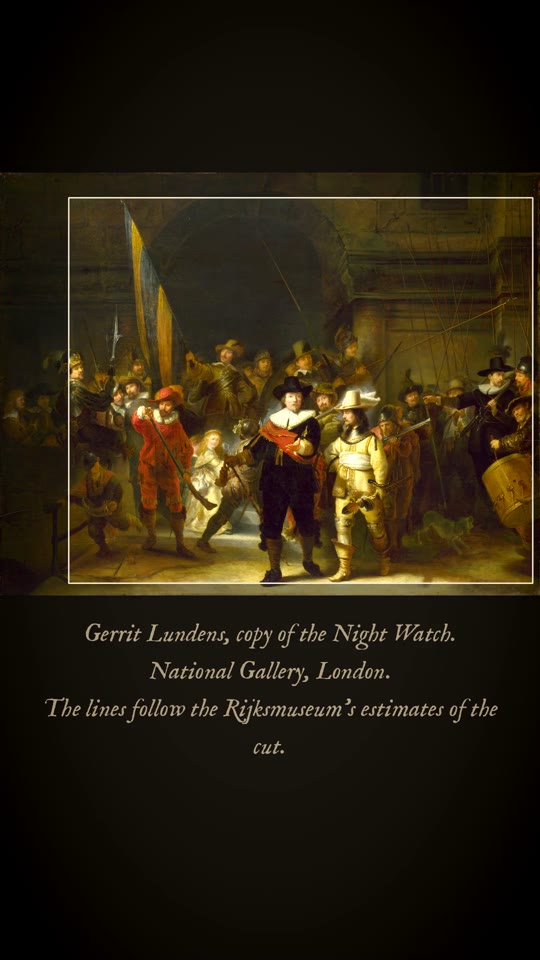
“Lundens paints everything the city later cuts off: the top of the arch, the balustrade, the edge of the step and the plume of a hat.”
The Rembrandt Research Project calls it a “mainly faithful (though not mathematically true) copy”. In the copy the steps run at a slant, there are fewer pikes, and the shield of names is missing.
-
“In 2009 the historian Bas Dudok van Heel matches the names on the shield to the men in the painting.”
His article in The Rijksmuseum Bulletin places every name on the shield in the painting.
-
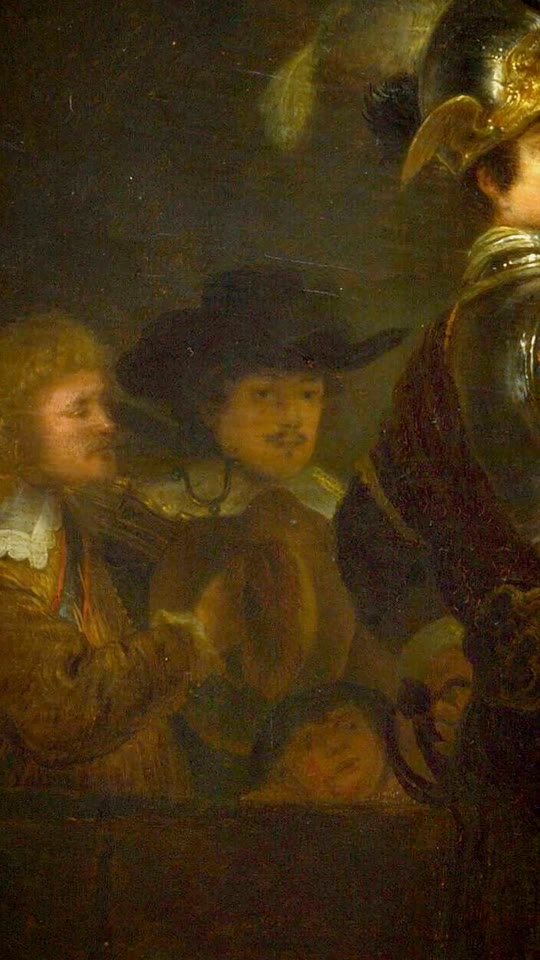
“Dudok van Heel thinks the man in black beside him is Jacob Dircksz de Roy, a Catholic cloth merchant aged forty-one.”
Nobody has named the child.
-
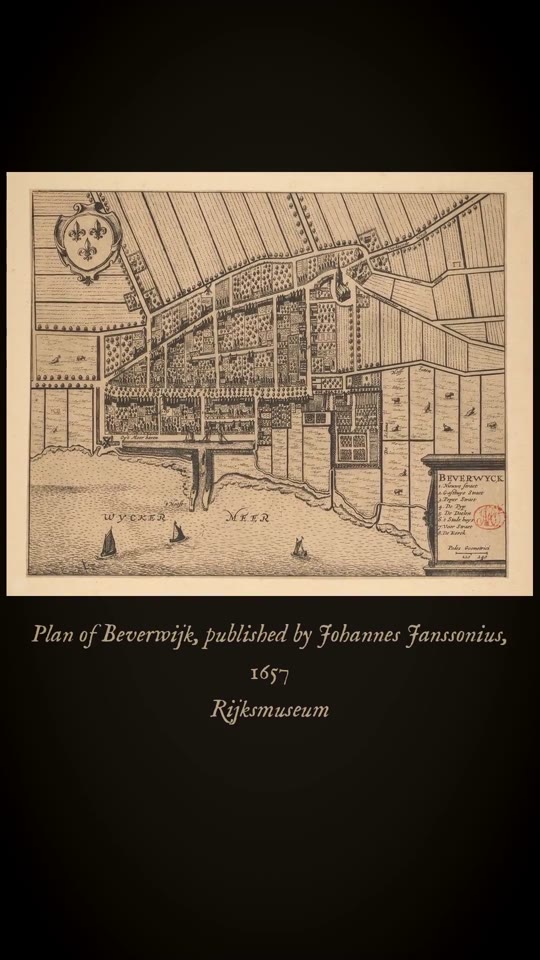
“In 2019 the museum in Beverwijk, Museum Kennemerland, sets out to research his life.”
Jeroen Zoetmulder, of the museum’s board, told NH Nieuws on 14 June 2019: “We willen Jan een gezicht geven.” We want to give Jan a face.
Beverwijker die op De Nachtwacht stond, krijgt een gezicht, NH Nieuws, 14 June 2019
-
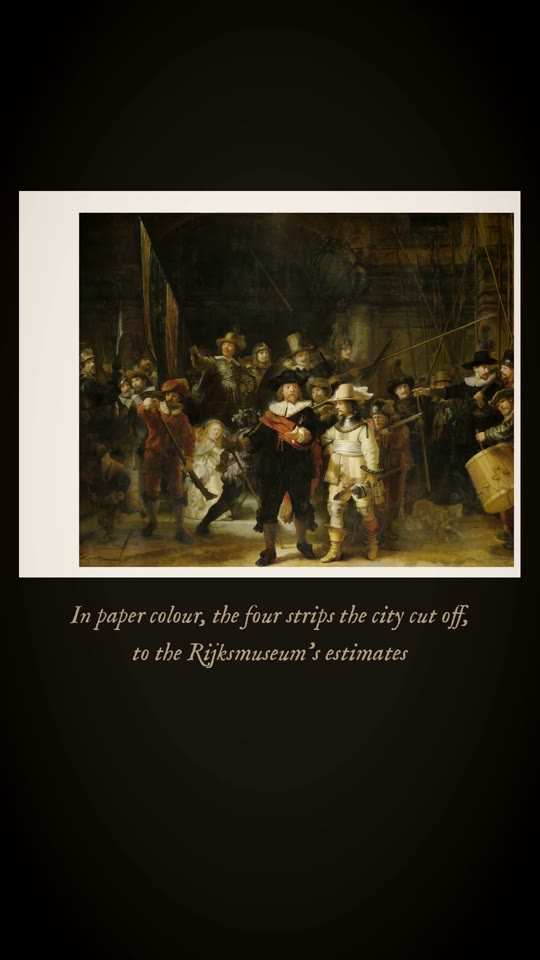
“On the twenty-third of June, it hangs the panels round the painting.”
The museum’s press release of 23 June 2021 says it placed the panels round the original “temporarily”. It does not give the day they went up.
-
“The National Gallery in London owns the copy, and has lent it to the Rijksmuseum since 1958.”
The Rijksmuseum’s own page for the copy, SK-C-1453, says it is on display in the Night Watch Gallery.
Copy of The Night Watch attributed to Gerrit Lundens, SK-C-1453, Rijksmuseum