The Brontës’ Tiny Books
A film about the little books the Brontë children wrote for twelve wooden soldiers, and the diary papers Emily and Anne wrote as grown women.
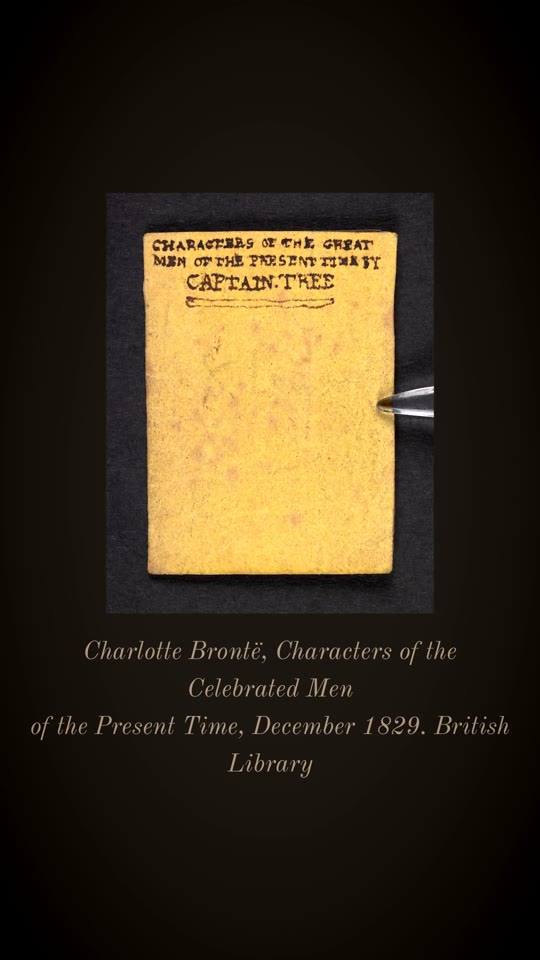
In June 1826 Patrick Brontë brought his son Branwell a box of twelve wooden soldiers. Branwell and his sisters Charlotte, Emily and Anne wrote magazines, stories and poems for them, in books a few centimetres tall.
Twenty years later, the three sisters published their poems, and then Jane Eyre, Wuthering Heights and Agnes Grey.
We made this film from the little books and the family’s own pictures.
The magazine the Brontë Society bought in 2019 is now in the collection of the Brontë Parsonage Museum, the family’s home in Haworth. The museum’s website
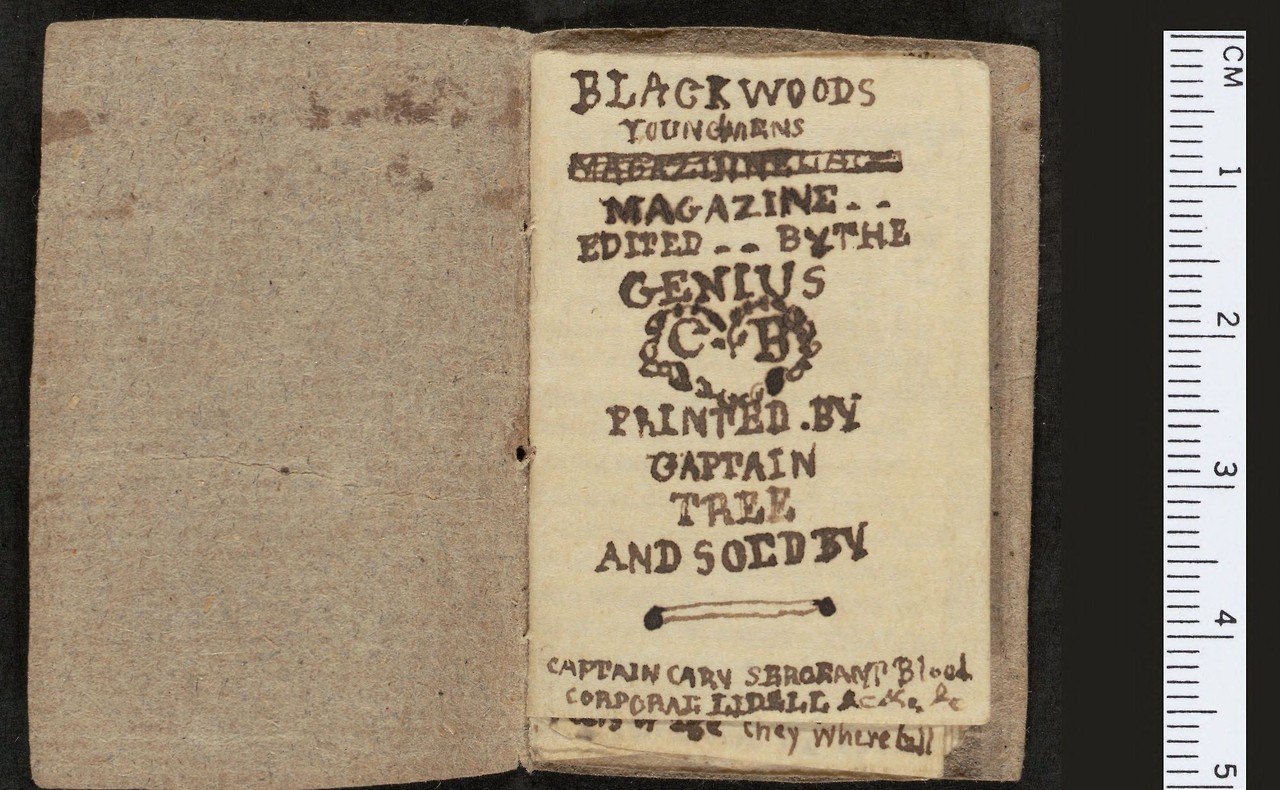
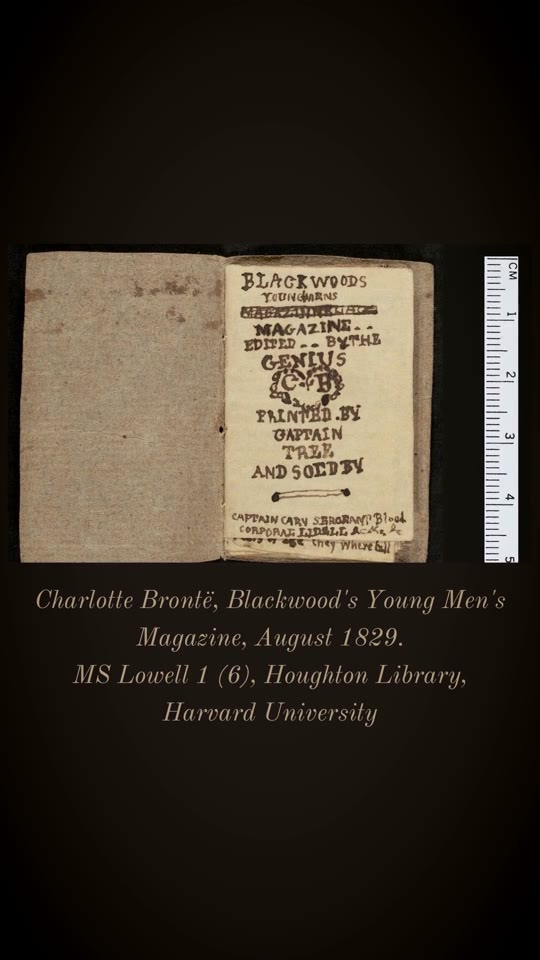
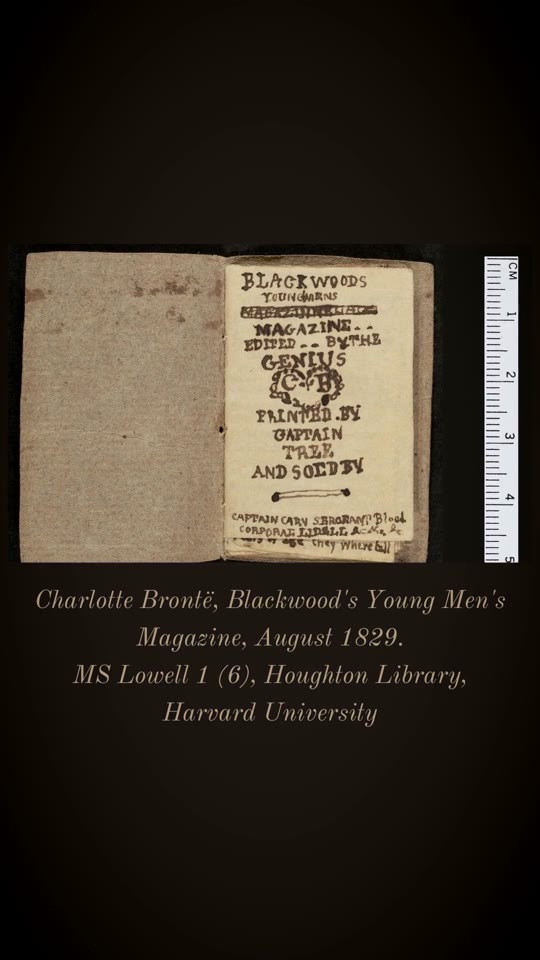
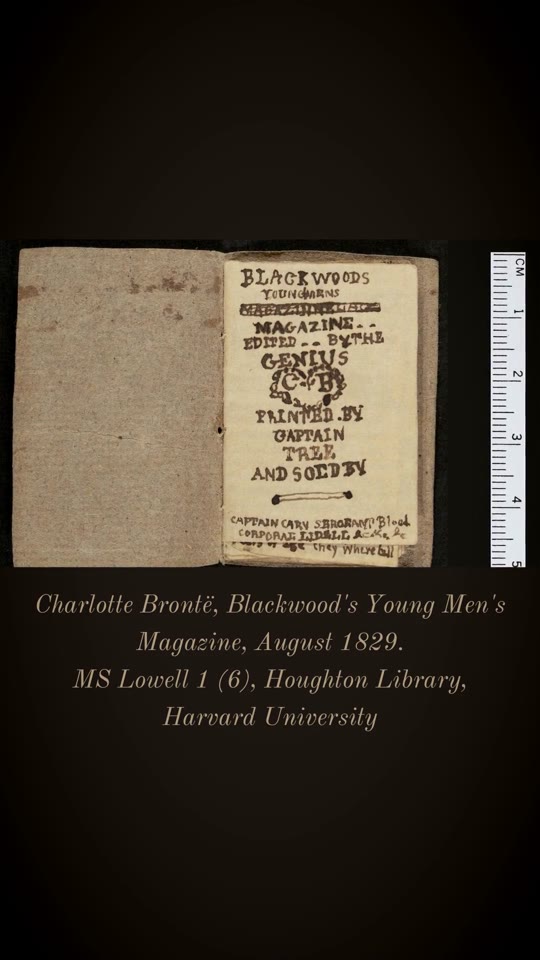
Charlotte Brontë, Blackwood’s Young Men’s Magazine, edited by the Genius C.B., ink on paper, Haworth, August 1829. 19 pages, 5.3 by 3.4 centimetres. Houghton Library, Harvard University, MS Lowell 1 (6).
Download the film (MP4, 83 MB) and its captions (WebVTT). The work is in the public domain: its page on Wikimedia Commons.

In the film
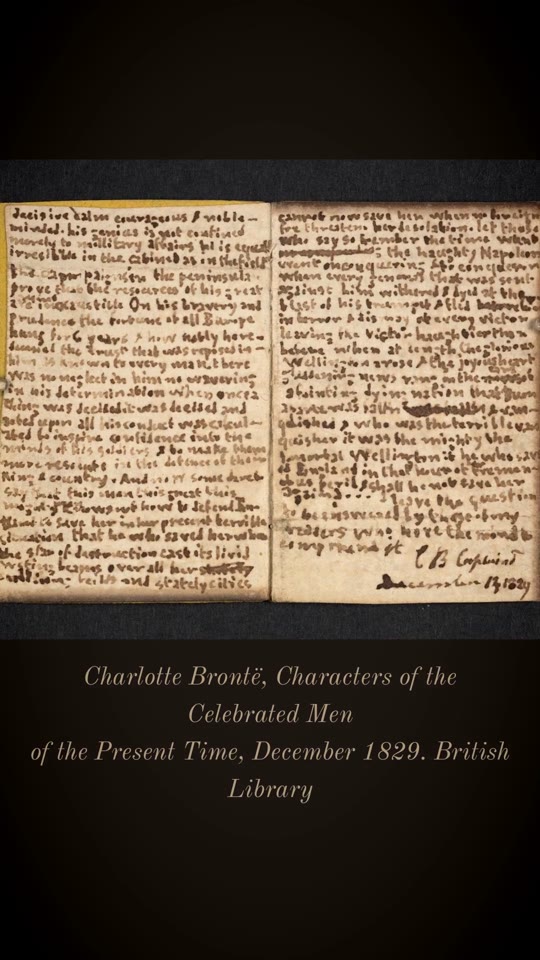
“In 2019 the Brontë Society pays six hundred and sixty-seven thousand pounds for just one.”
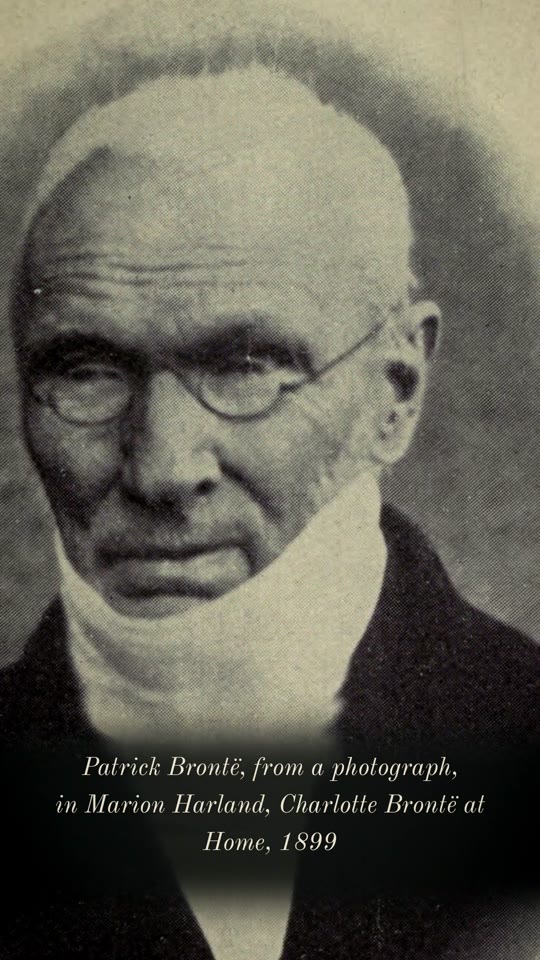
“One night in June, their father comes home from Leeds with a box of wooden soldiers for Branwell.”
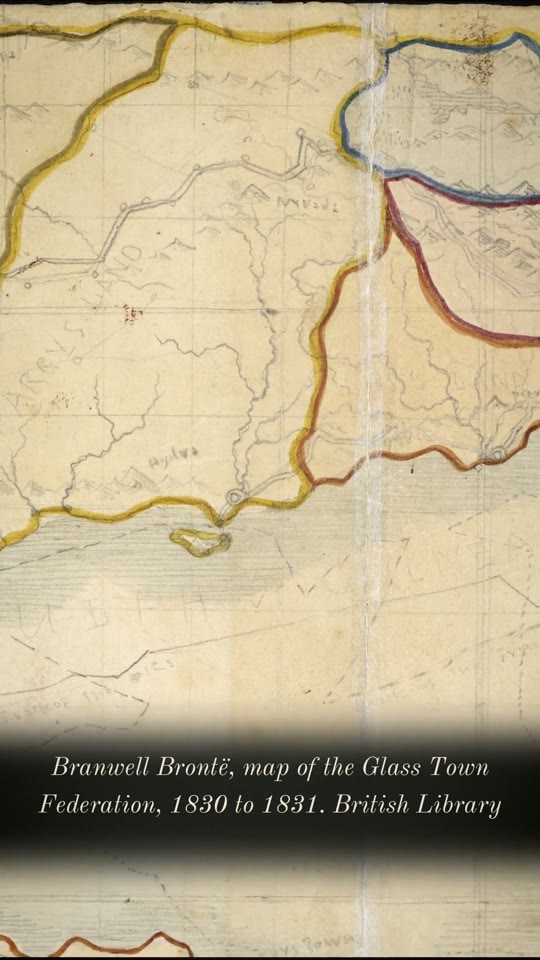
“Its capital is Glass Town.”
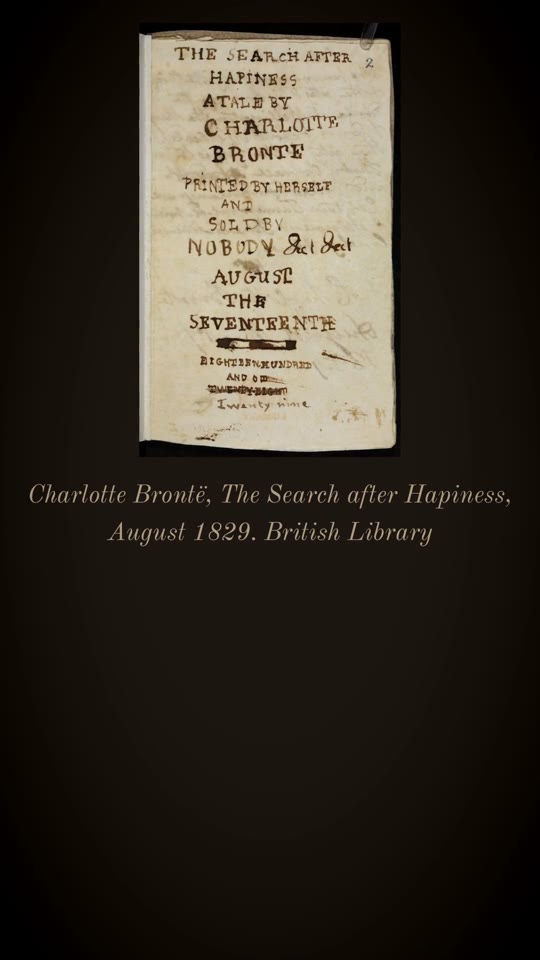
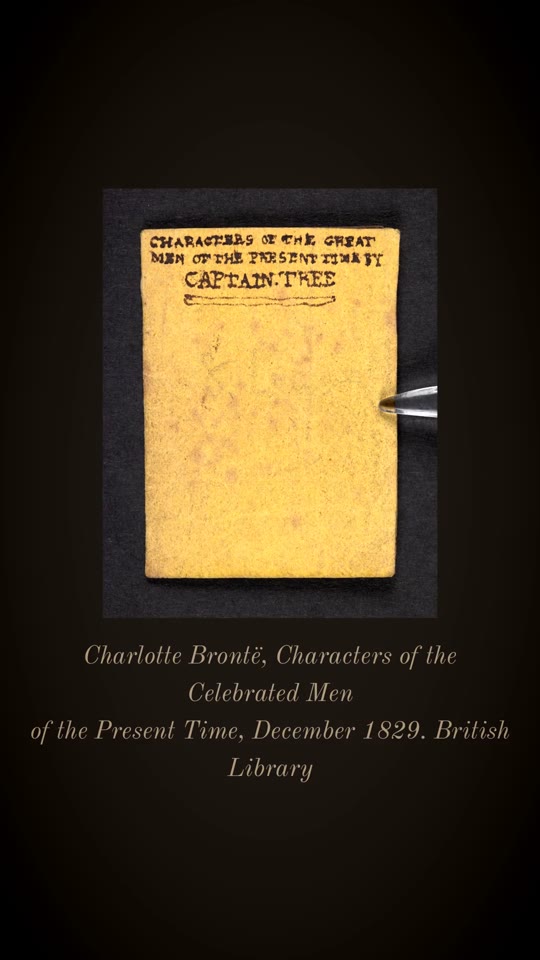
“On one title page, she adds a line like a real printer’s.”
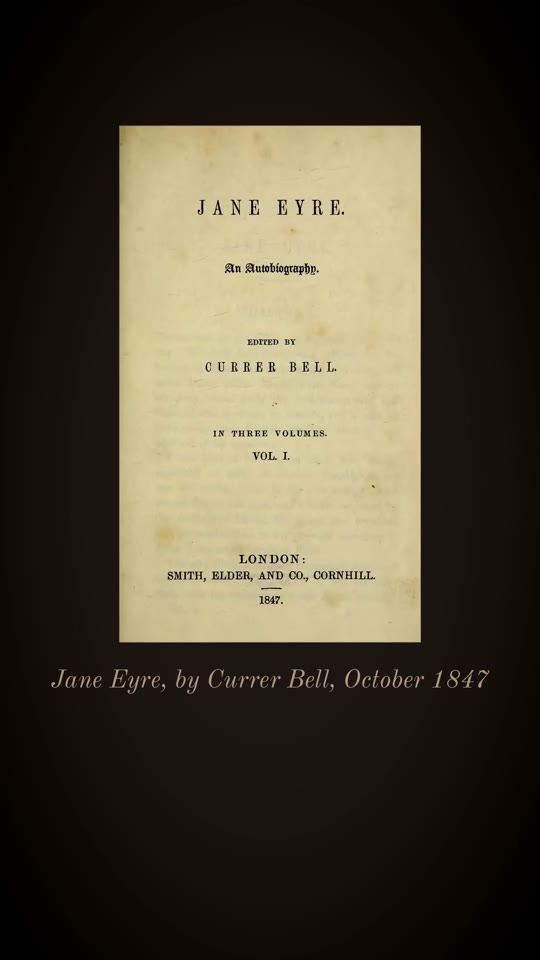
“In October 1847 Charlotte’s Jane Eyre comes out.”
“A fire burns in his head, and his bed curtains catch fire.”
Notes and sources
Each note takes a line from the film and gives its source. How we checked all 73 claims in the film.
-
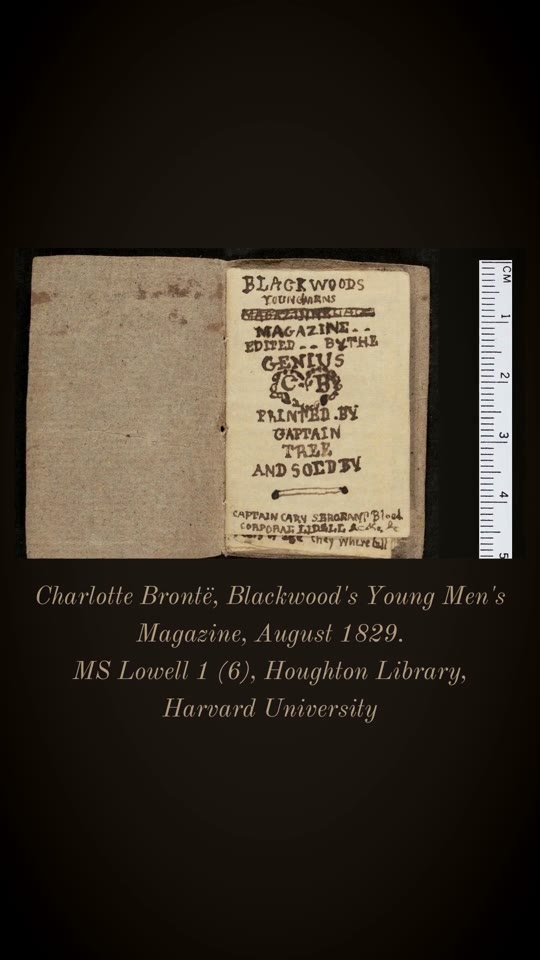
“This is a magazine, just over five centimetres tall.”
Harvard’s Houghton Library catalogues it as Blackwoods young mens magazine, edited by the Genius C.B., Haworth, August 1829: 19 pages, 5.3 by 3.4 centimetres.
-
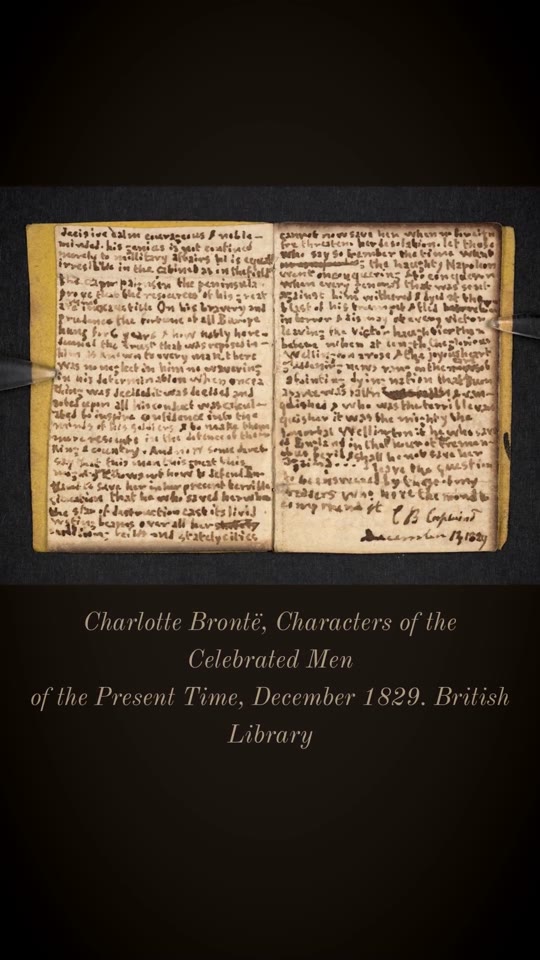
“She writes a whole series of them.”
The BBC, in 2011: the Young Men’s Magazine ran to six hand-written editions.
Paris museum wins Bronte bidding war, BBC News, 15 December 2011
-
“In 2019 the Brontë Society pays six hundred and sixty-seven thousand pounds for just one.”
The society bought a different little book from the one on screen: one of six issues of The Young Men’s Magazine that Charlotte wrote in 1830. The hammer price was €600,000. With the buyer’s premium the total was €780,000, or £666,790.
Rare Charlotte Bronte book coming home after museum's auction success, BBC News, 18 November 2019
-
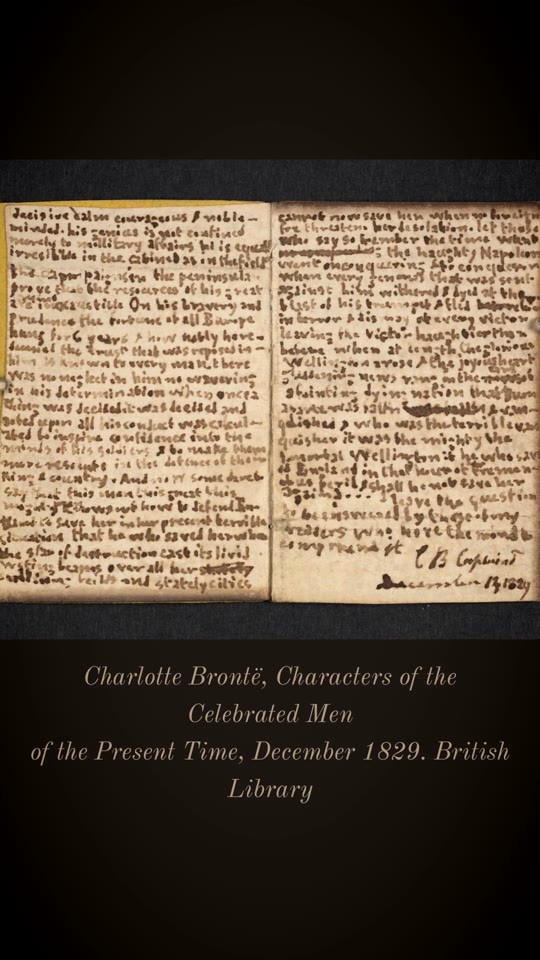
“In 2019 the Brontë Society pays six hundred and sixty-seven thousand pounds for just one.”
Fine Books & Collections, reporting the sale, called it the fifth of the six, and said nobody had known where the second was since about 1930. When the book was sold in 2011, the BBC called it the second issue.
Charlotte Brontë's 'Little Book' Will Return Home to Haworth, Fine Books & Collections
-
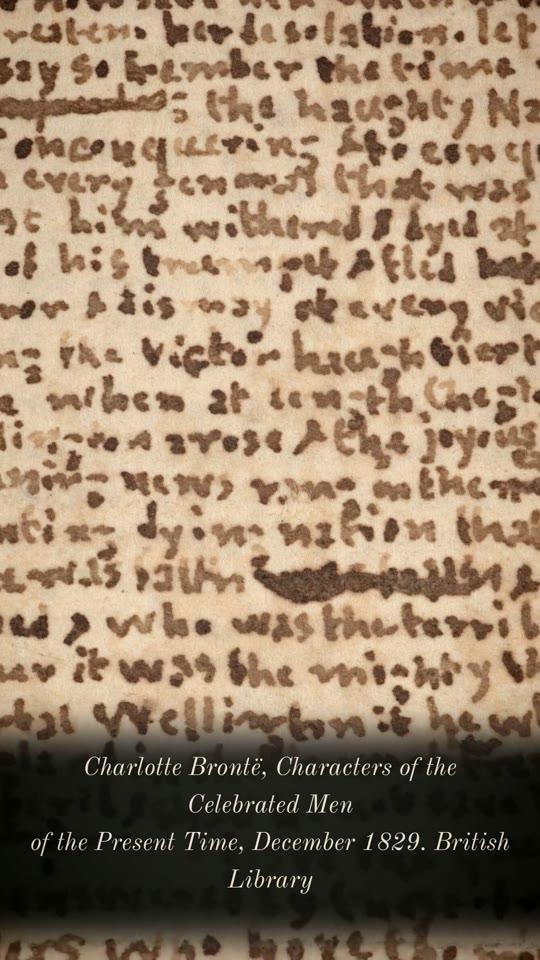
“Their first readers are twelve wooden soldiers.”
The Harvard Gazette says the children made their world “for and around Branwell’s toy soldiers, which were both the protagonists of and audience for the little books”.
-
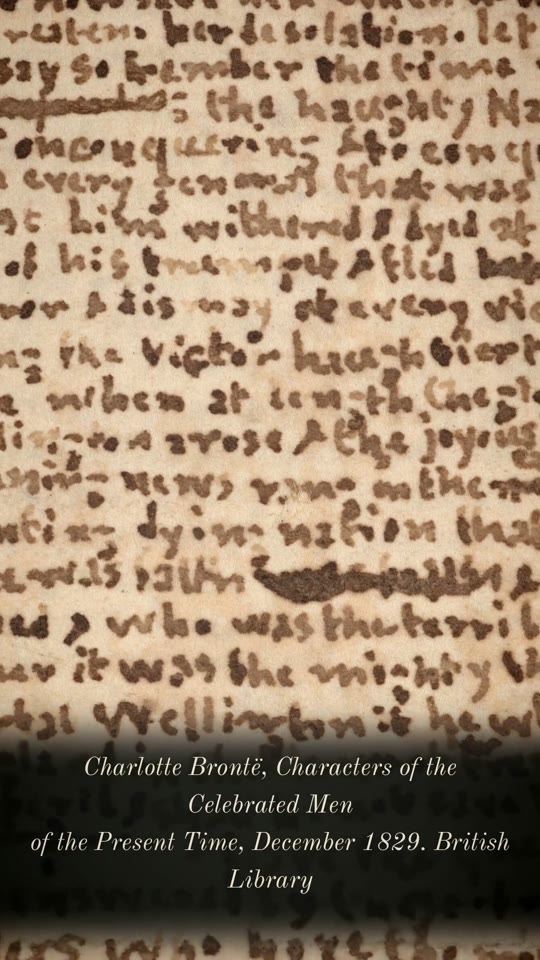
“Their first readers are twelve wooden soldiers.”
Charlotte’s school friend Mary Taylor remembered the magazine differently: “No one wrote in it, and no one read it, but herself, her brother, and two sisters.” Elizabeth Gaskell quotes her.
Elizabeth Gaskell, The Life of Charlotte Brontë, 1857, volume 1, Internet Archive
-
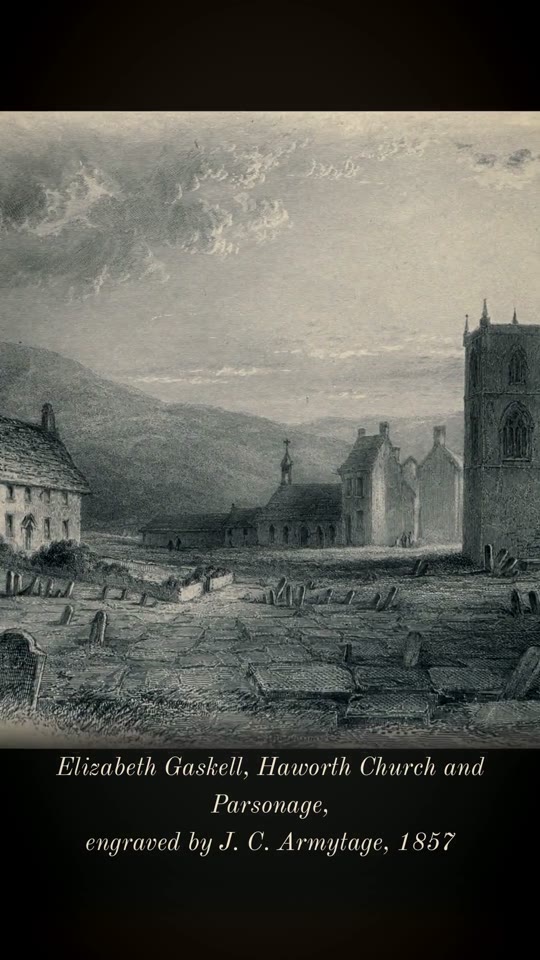
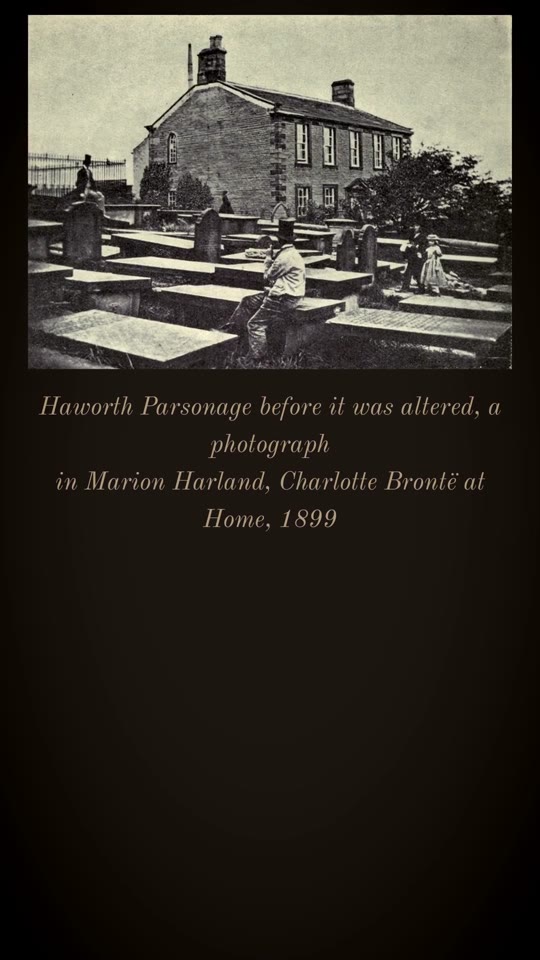
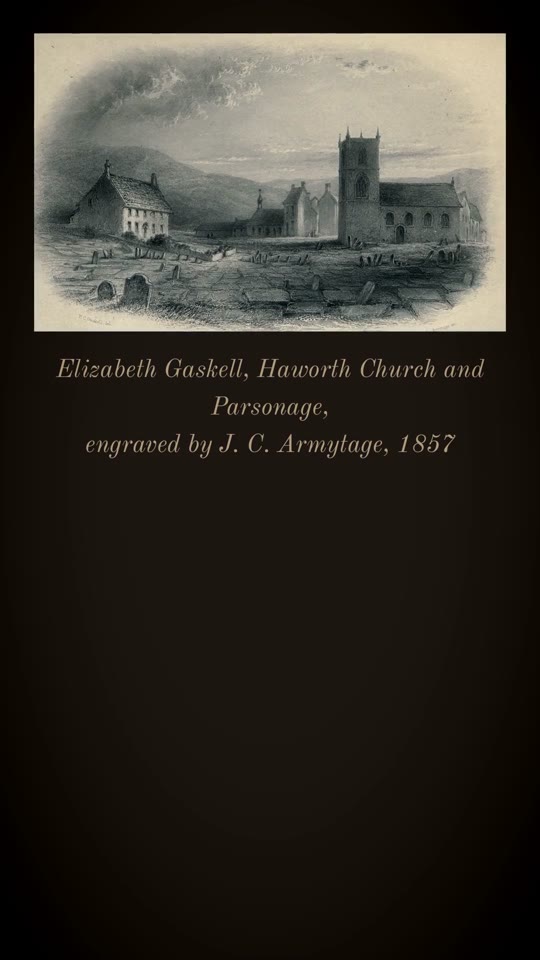
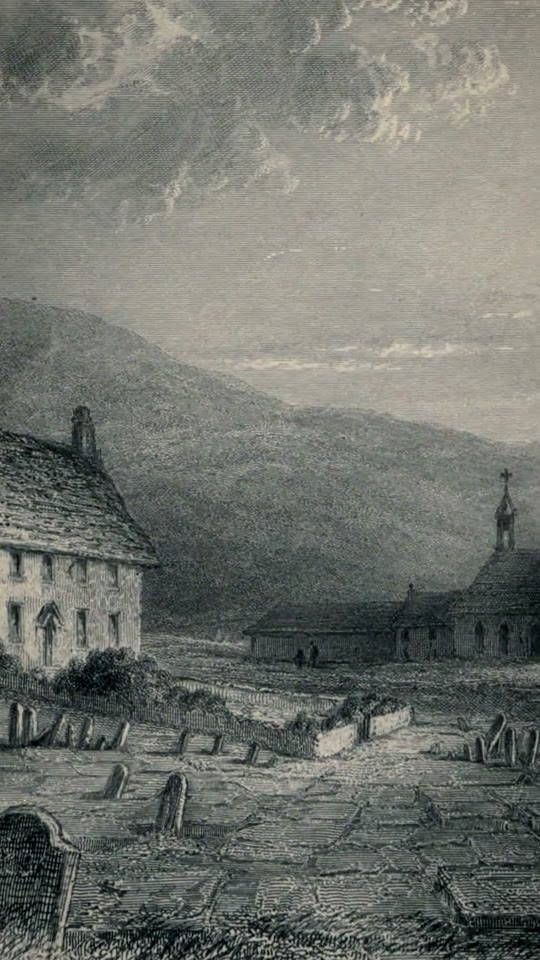
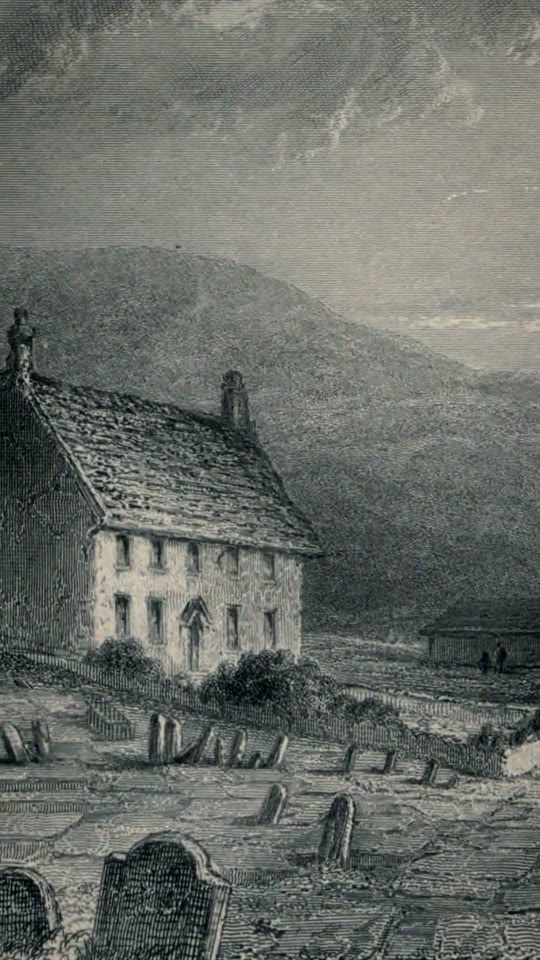
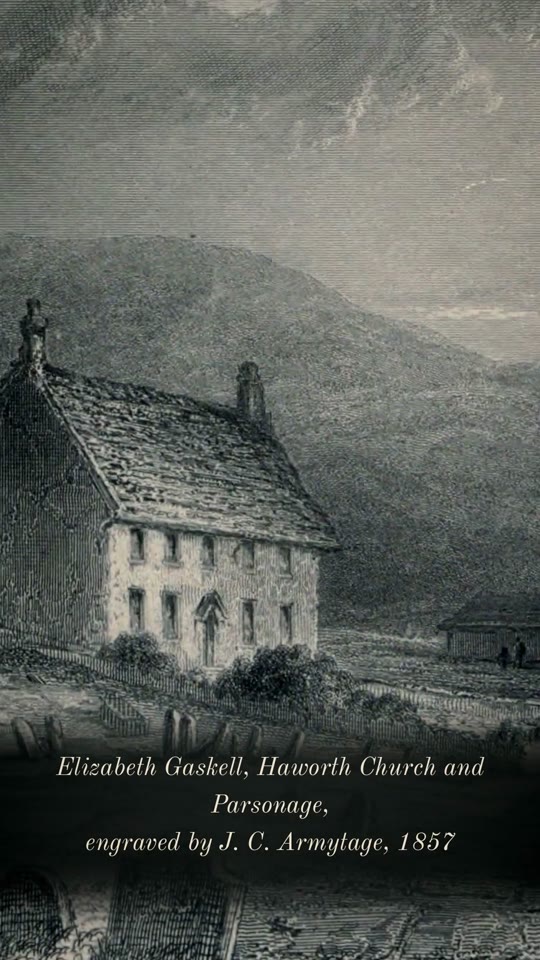
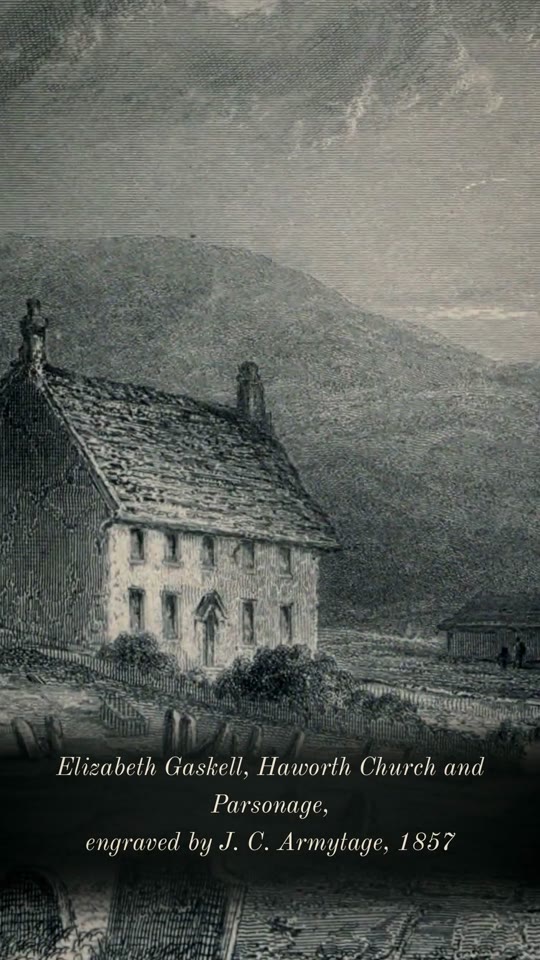
“Haworth is a village on a steep hillside in the West Riding of Yorkshire, with moors rising behind it.”
Gaskell, on the road up from Keighley: Haworth is “situated on the side of a pretty steep hill, with a back-ground of dun and purple moors, rising and sweeping away yet higher than the church”.
Elizabeth Gaskell, The Life of Charlotte Brontë, 1857, volume 1, Internet Archive
-
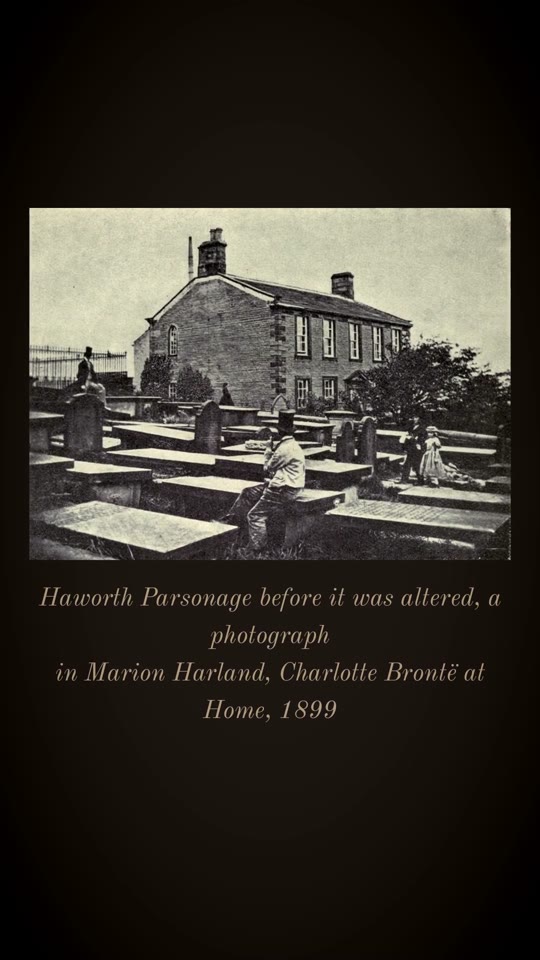
“Their mother and their two elder sisters have died.”
Their mother, Maria, died on 15 September 1821. The eldest daughters, Maria and Elizabeth, died on 6 May and 15 June 1825. The family’s tablet in Haworth church records all three.
Elizabeth Gaskell, The Life of Charlotte Brontë, 1857, volume 1, Internet Archive
-
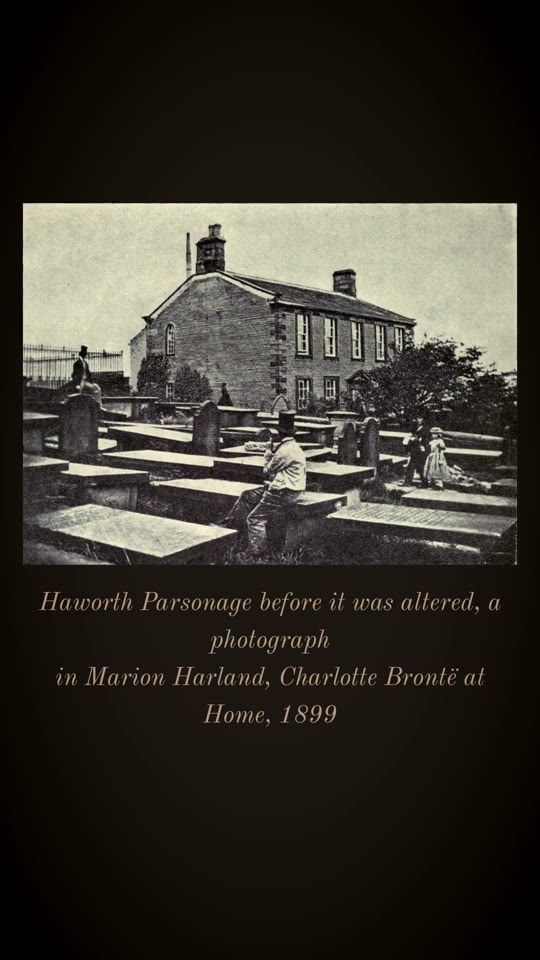
“Charlotte is ten. Anne, the youngest, is six.”
Anne’s paper of 1841 gives their ages four years on, in July 1845: Anne 25 and a half, Emily 27, Branwell 28 and a month, Charlotte 29 and a quarter.
Clement Shorter, The Brontës: Life and Letters, 1908, volume 1, Internet Archive
-
“One night in June, their father comes home from Leeds with a box of wooden soldiers for Branwell.”
Charlotte, in 1829: “Papa bought Branwell some wooden soldiers at Leeds; when Papa came home it was night, and we were in bed.” She dates the play of the Young Men, as the children called the soldiers, to June 1826.
Elizabeth Gaskell, The Life of Charlotte Brontë, 1857, volume 1, Internet Archive
-
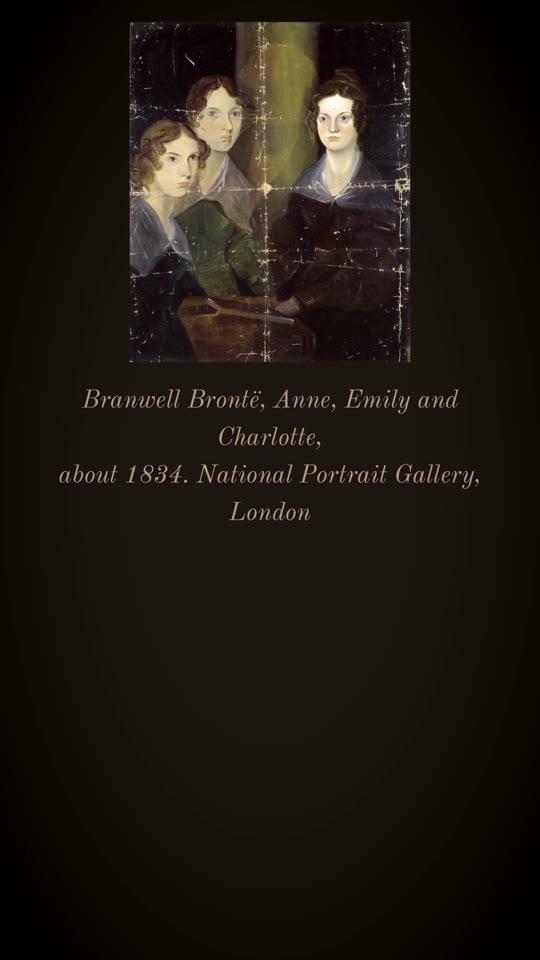
“Three years later, Charlotte writes down what happens the next morning.”
The words on screen are Charlotte’s as Elizabeth Gaskell printed them in 1857. Melissa Banta, in the Harvard Library Bulletin in 2014, quotes the passage from Christine Alexander’s book The Early Writings of Charlotte Brontë, in different words: “I snatched up one and exclaimed, ‘This is the Duke of Wellington! It shall be mine.’” It ends: “He was called ‘Waiting Boy’. Branwell chose ‘Bonaparte’.”
-
“Its capital is Glass Town.”
Branwell drew the map of Glass Town, which the children also called Verdopolis, and folded it into his History of the Young Men, of 1830 and 1831.
-
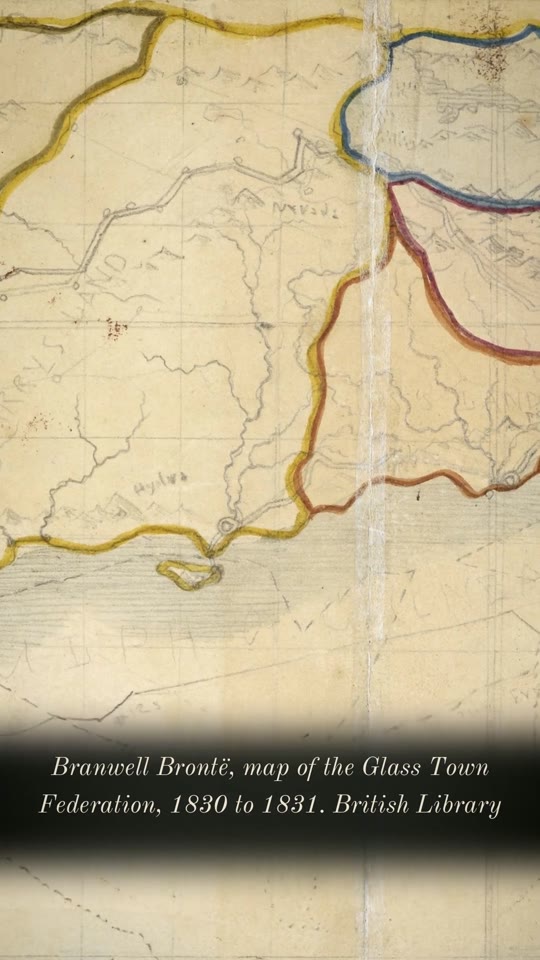
“The four children rule it as the Genii, spirits with magic powers.”
In a letter to the editor of one of the little magazines, Charlotte writes of “the four high princes of the Genii”, who “by their magic might” can “reduce the world to a desert”.
Elizabeth Gaskell, The Life of Charlotte Brontë, 1857, volume 1, Internet Archive
-
“One night in December 1827, the four sit by the kitchen fire with Tabby, the servant.”
Tabby came to the parsonage in about 1825 and stayed thirty years. Gaskell calls her “a thorough specimen of a Yorkshire woman of her class, in dialect, in appearance, and in character”.
Elizabeth Gaskell, The Life of Charlotte Brontë, 1857, volume 1, Internet Archive
-
“Each child picks an island, and the men who will rule it.”
Branwell chose the Isle of Man, Charlotte the Isle of Wight, Emily Arran and Anne Guernsey. Charlotte’s chief men were the Duke of Wellington and his two sons, Christopher North and Co., and Mr. Abernethy.
Elizabeth Gaskell, The Life of Charlotte Brontë, 1857, volume 1, Internet Archive
-
“Then the clock strikes seven, and they have to go to bed.”
Charlotte: “Here our conversation was interrupted by the, to us, dismal sound of the clock striking seven, and we were summoned off to bed.”
Elizabeth Gaskell, The Life of Charlotte Brontë, 1857, volume 1, Internet Archive
-
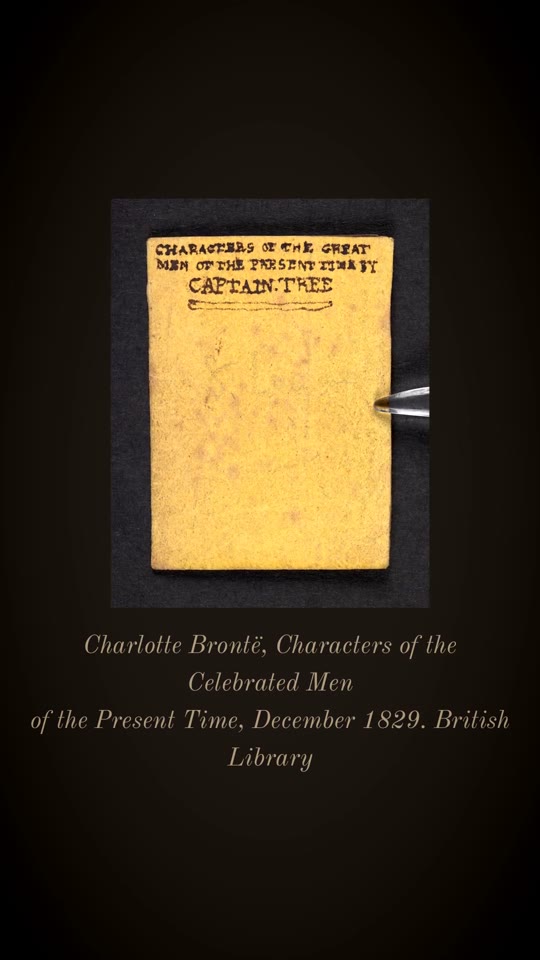
“A neighbour lends them Blackwood’s, a magazine from Edinburgh.”
Charlotte, in 1829: “Mr. Driver lends us it, as likewise ‘Blackwood’s Magazine,’ the most able periodical there is.” She does not say who Mr Driver was. The family also took two Leeds papers.
Elizabeth Gaskell, The Life of Charlotte Brontë, 1857, volume 1, Internet Archive
-
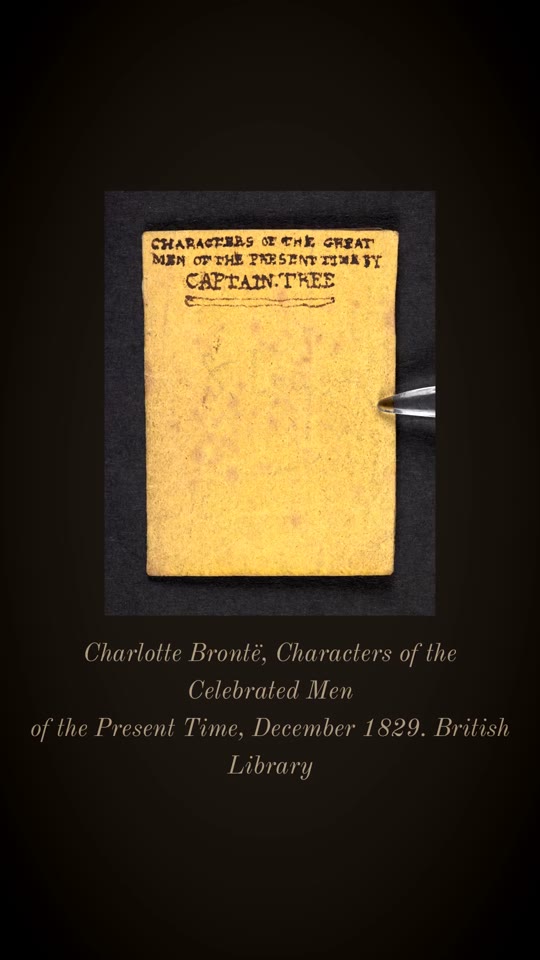
“In January 1829 Branwell starts a magazine like it, for the soldiers, at their size.”
Harvard’s library has Branwell’s “Magazine” of January 1829, and his Blackwood’s Magazine of June and July 1829.
-
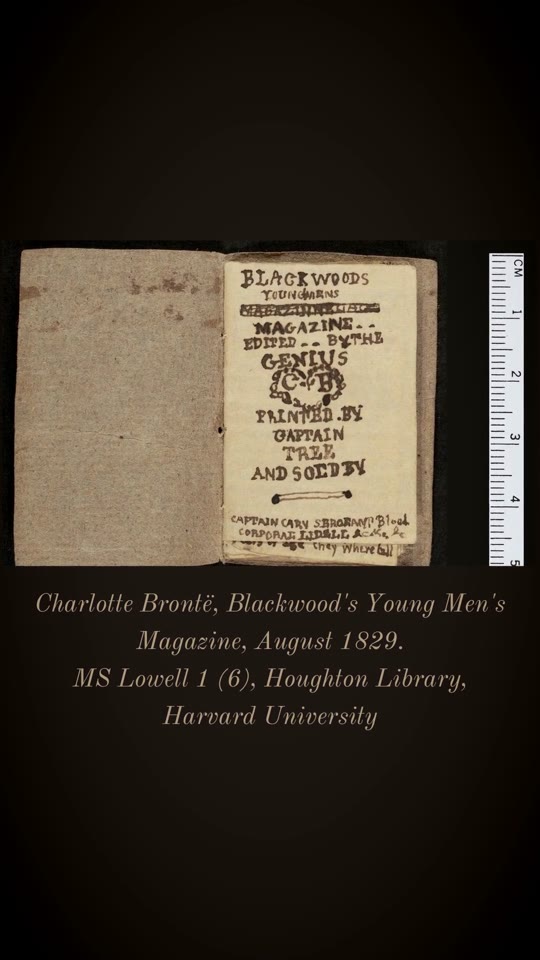
“That August, Charlotte takes it over as editor.”
Her title page of August 1829: “Blackwoods Young Mens Magazine, edited by the Genius C.B., printed by Captain Tree and sold by Captain Cary, Sergeant Blood, Corporal Lidell &c &c”.
-
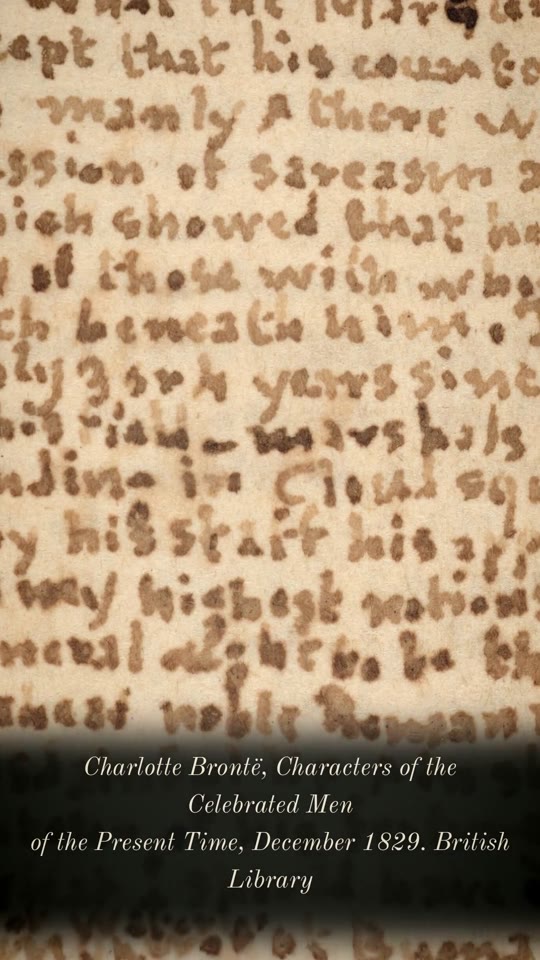
“They write in tiny letters that look like print.”
Gaskell, who saw a packet of them: “an immense amount of manuscript, in an inconceivably small space ... in a hand which it is almost impossible to decipher without the aid of a magnifying glass”.
Elizabeth Gaskell, The Life of Charlotte Brontë, 1857, volume 1, Internet Archive
-
“By August 1830, Charlotte has written twenty-two little books, in about fifteen months.”
Her own catalogue, dated 3 August 1830, ends “Making in the whole twenty-two volumes.” Gaskell counts sixty to a hundred pages a volume, “all written in about fifteen months”.
Elizabeth Gaskell, The Life of Charlotte Brontë, 1857, volume 1, Internet Archive
-
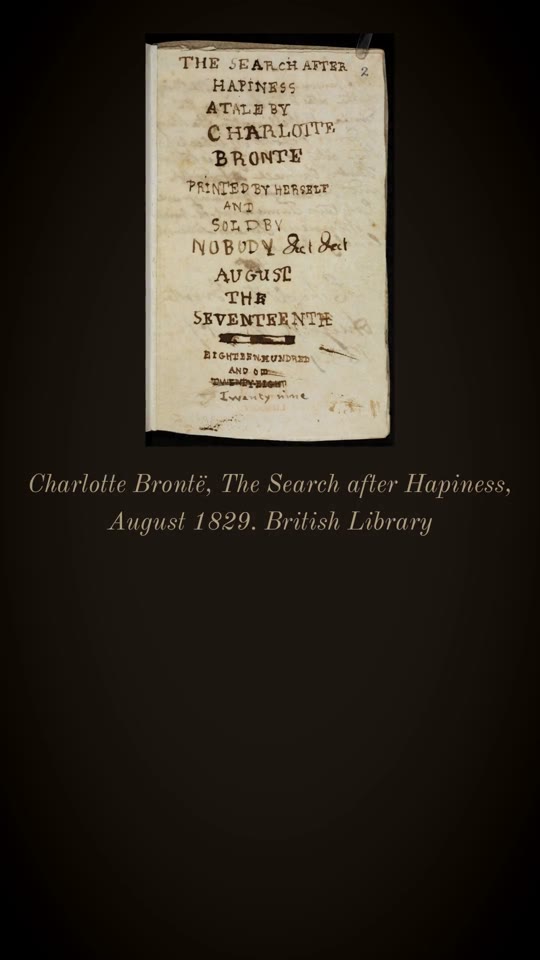
“On one title page, she adds a line like a real printer’s.”
The Search after Happiness, 17 August 1829. Its title page reads “Printed by herself and sold by nobody”. It was first printed in 1925.
The Search after Hapiness, by Charlotte Brontë, Ashley MS 156, British Library
-
“In 1831 Charlotte goes away to school.”
In January 1831 she went as a pupil to a school at Roe Head, less than twenty miles from Haworth.
Elizabeth Gaskell, The Life of Charlotte Brontë, 1857, volume 1, Internet Archive
-
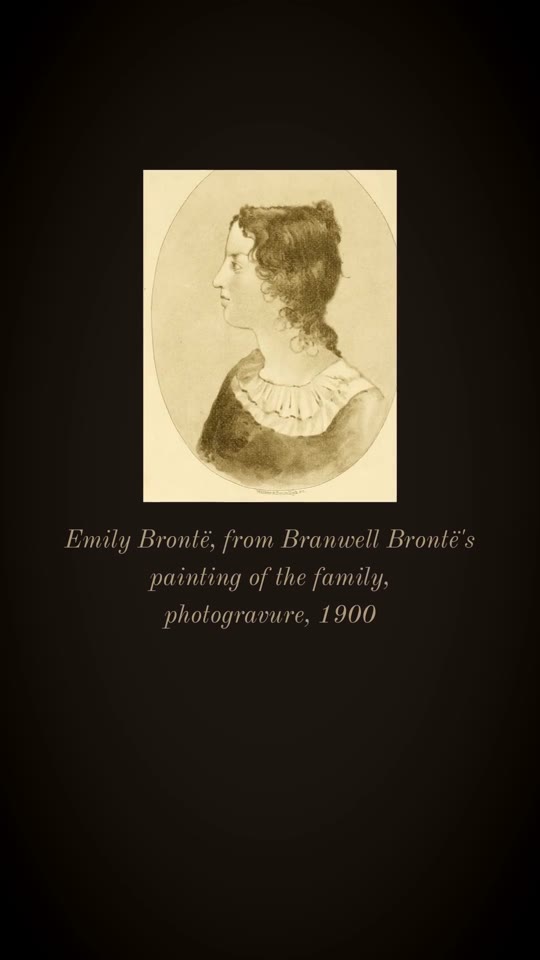
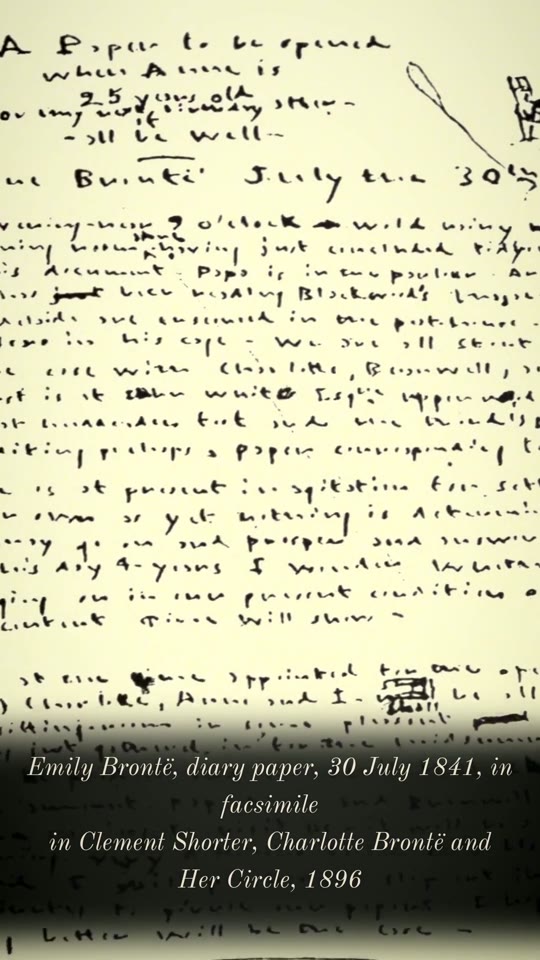
“Emily and Anne make up a country of their own, called Gondal.”
No source we could open says when Gondal began. The first mention we found is in Emily’s diary paper of 24 November 1834. Both sisters signed it. Among the news of the kitchen Emily wrote: “The Gondals are discovering the interior of Gaaldine.” Nick Holland’s transcription corrects her spelling.
Nick Holland, The First Diary Paper Of Anne and Emily Brontë, annebronte.org, 25 November 2018
-
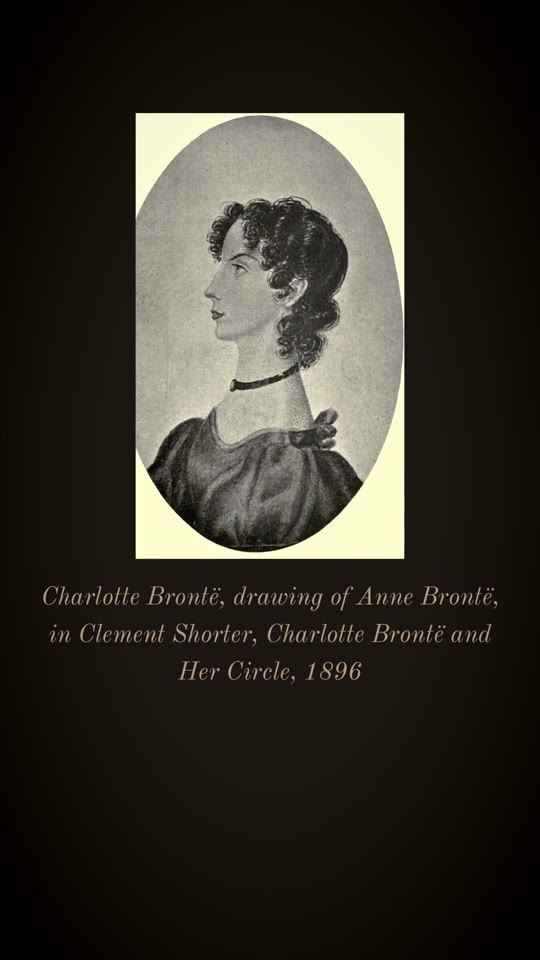
“They are still writing about it as grown women.”
Emily, in 1845: “The Gondals still flourish bright as ever.” Anne, the same day: “We have not yet finished our Gondal Chronicles that we began three years and a half ago.”
Clement Shorter, The Brontës: Life and Letters, 1908, volume 1, Internet Archive
-
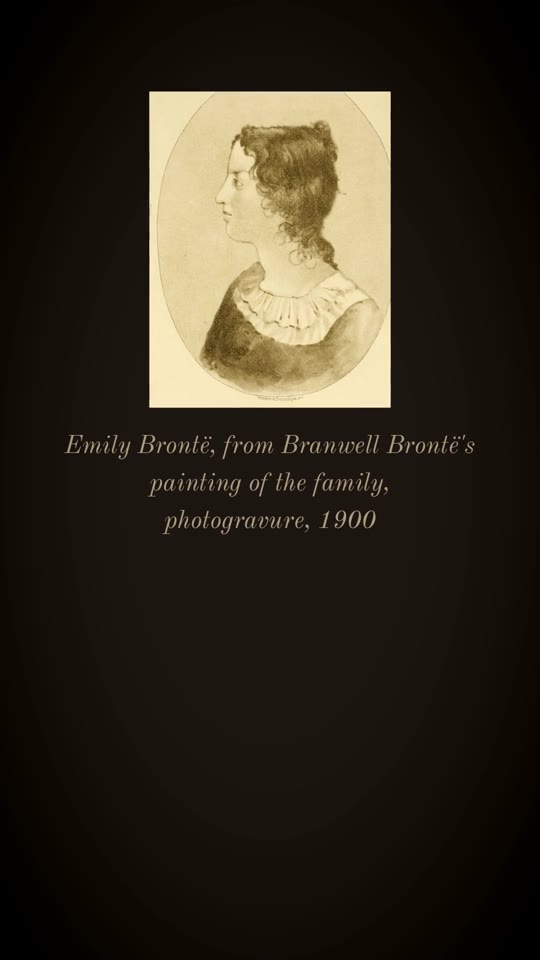
“In the autumn of 1845, Charlotte finds a notebook of Emily’s poems, and thinks they are good.”
Charlotte, in her Biographical Notice of Ellis and Acton Bell, written in 1850 for a new edition of Wuthering Heights and Agnes Grey: “One day in the autumn of 1845, I accidentally lighted on a MS. volume of verse, in my sister Emily’s handwriting ... I thought them condensed and terse, vigorous and genuine.” Gaskell quotes it.
Elizabeth Gaskell, The Life of Charlotte Brontë, 1857, volume 1, Internet Archive
-
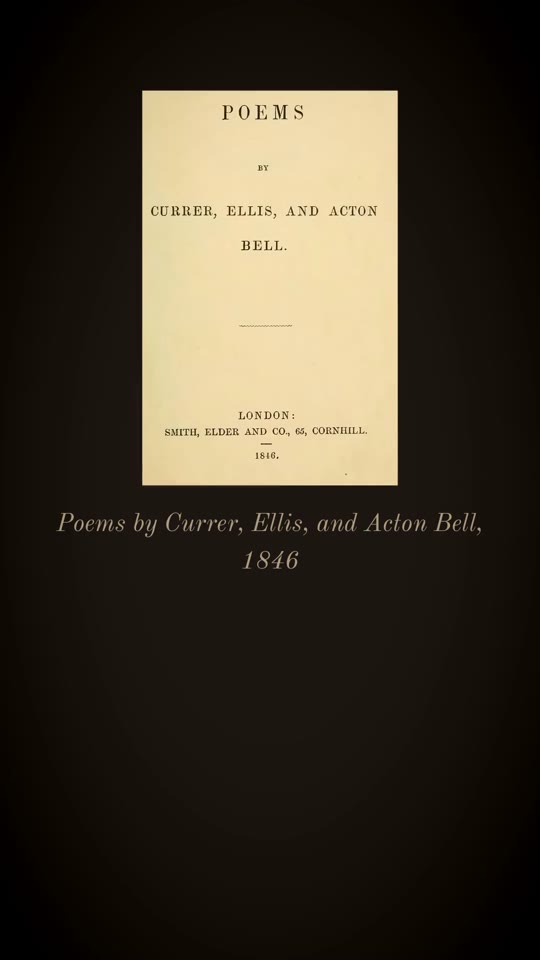
“In 1846 the three sisters publish their poems together.”
Aylott and Jones published it in 1846. In 1848 Smith, Elder took over the unsold sheets and gave them a title page of its own, still dated 1846. That is the title page in the film.
Clement Shorter, The Brontës: Life and Letters, 1908, volume 1, Internet Archive
-
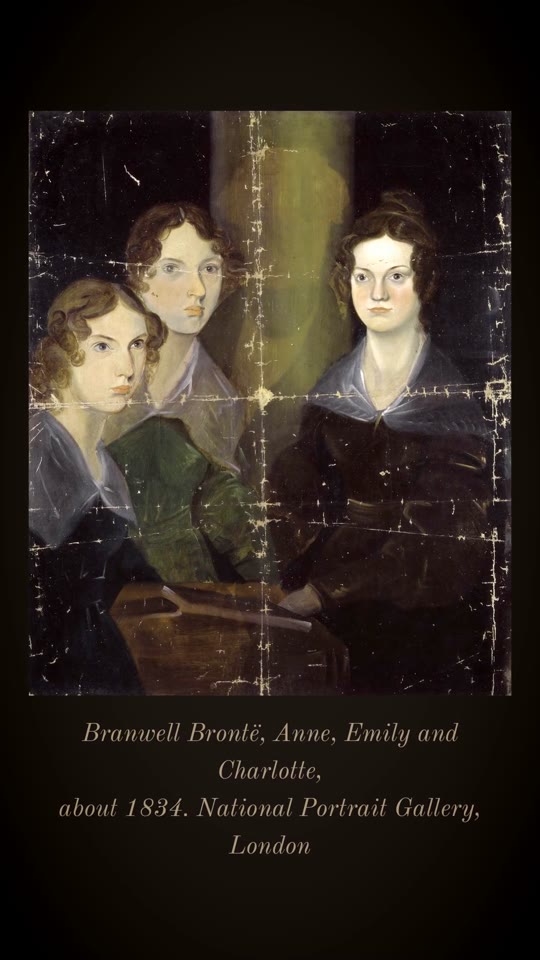
“They don’t want readers to know they are women.”
Charlotte, in 1850: “we did not like to declare ourselves women, because ... we had a vague impression that authoresses are liable to be looked on with prejudice.”
Elizabeth Gaskell, The Life of Charlotte Brontë, 1857, volume 1, Internet Archive
-
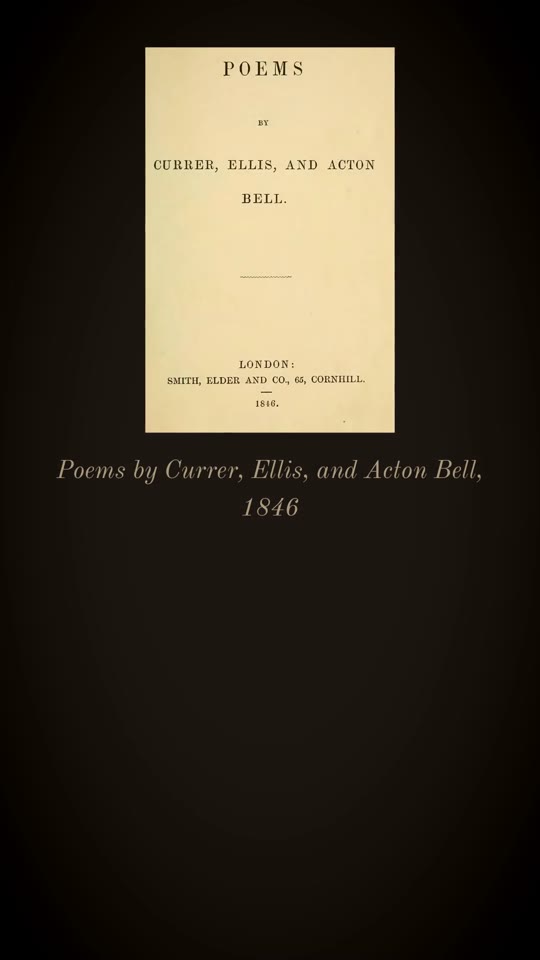
“So they call themselves Currer, Ellis and Acton Bell.”
Charlotte, in 1850: “we veiled our own names under those of Currer, Ellis, and Acton Bell; the ambiguous choice being dictated by a sort of conscientious scruple at assuming Christian names, positively masculine.” Each name keeps its sister’s first letter.
Elizabeth Gaskell, The Life of Charlotte Brontë, 1857, volume 1, Internet Archive
-
“A year later, Charlotte sends a copy to the writer Thomas De Quincey, and tells him how it has sold.”
Her letter to De Quincey is dated 16 June 1847. Shorter prints it in The Brontës: Life and Letters, volume 1, page 329.
Clement Shorter, The Brontës: Life and Letters, 1908, volume 1, Internet Archive
-
“In October 1847 Charlotte’s Jane Eyre comes out.”
Smith, Elder published it on 16 October 1847. That December Charlotte wrote that Thomas Newby, the publisher of Wuthering Heights and Agnes Grey, “has sent the authors their six copies”.
Clement Shorter, The Brontës: Life and Letters, 1908, volume 1, Internet Archive
-
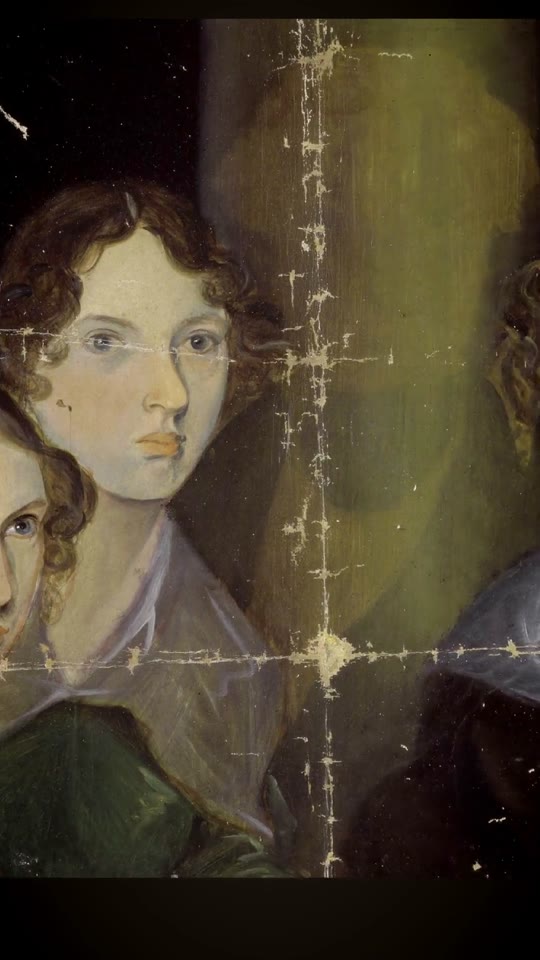
“Branwell dies in September 1848.”
Branwell died on 24 September 1848, and Emily on 19 December 1848.
Elizabeth Gaskell, The Life of Charlotte Brontë, 1857, volume 1, Internet Archive
-
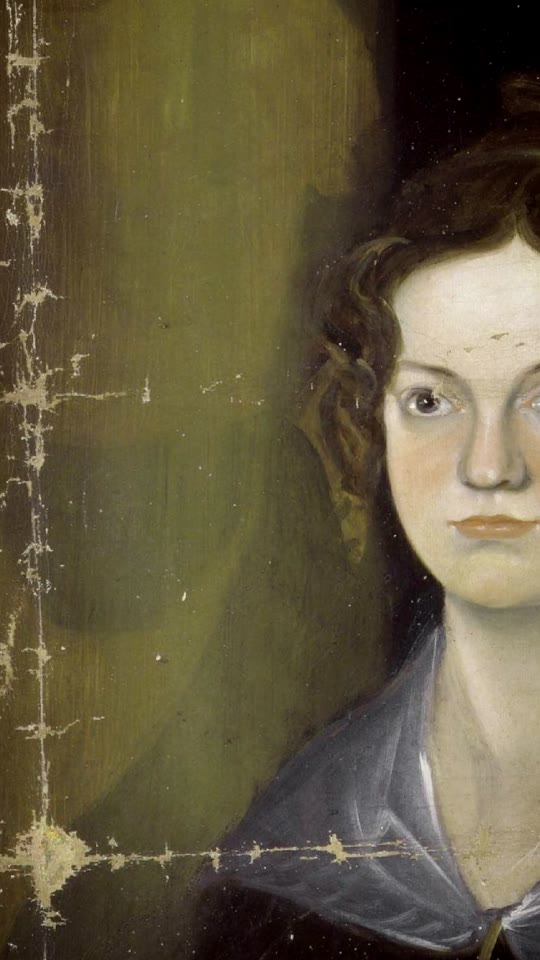
“Emily dies in December, and Anne the next May. Charlotte dies in 1855.”
Anne died at Scarborough on 28 May 1849. Charlotte died at Haworth on 31 March 1855.
Elizabeth Gaskell, The Life of Charlotte Brontë, 1857, volume 2, Internet Archive
-
“After Charlotte dies, her husband sells the little books.”
She married Arthur Bell Nicholls, her father’s curate, on 29 June 1854. Harvard says he sold the little books to a collector, who gave them to the poet Amy Lowell; Lowell’s gift came to Harvard in 1925.
-
“After Charlotte dies, her husband sells the little books.”
Clement Shorter first visited Nicholls in Ireland on “March 31st, 1895”. Shorter wrote that it was “exactly forty years to a day after Charlotte died”, and that “Mr. Nicholls placed all the papers in his possession in my hands.”
Clement Shorter, Charlotte Brontë and Her Circle, 1896, Internet Archive
-
“After Charlotte dies, her husband sells the little books.”
The sources disagree on when Shorter got the papers. Melissa Banta, at Harvard, writes that “In 1892 Clement King Shorter” went to Nicholls and bought the little books for the collector Thomas Wise. Shorter’s own account dates his first visit to Nicholls to 1895.
-
“Harvard’s library has nine.”
Harvard has nine of the roughly twenty little books known to survive.
-
“The Brontë Society bids for it, but a museum in Paris pays more.”
Sotheby’s sold it in London on 15 December 2011 for £690,850 to the Musée des Lettres et Manuscrits, against an estimate of £200,000 to £300,000.
Paris museum wins Bronte bidding war, BBC News, 15 December 2011
-
“In 2019 the magazine is for sale again, in Paris.”
In 2014 regulators shut down Aristophil, the company behind the Paris museum. Its founder, Gérard Lhéritier, denies all the accusations against him.
Rare Charlotte Bronte book coming home after museum's auction success, BBC News, 18 November 2019
-
“More than a thousand people give money, and this time the Brontë Society buys it.”
Judi Dench, the society’s president, led the appeal.
Rare Charlotte Bronte book coming home after museum's auction success, BBC News, 18 November 2019
-
“More than a thousand people give money, and this time the Brontë Society buys it.”
More than 1,000 supporters gave over £85,000 through the society’s first public appeal. The society also had a grant from the National Heritage Memorial Fund, and support from the Friends of the National Libraries, six trusts and Maggs Bros.
Charlotte Brontë's 'Little Book' Will Return Home to Haworth, Fine Books & Collections
-
“A fire burns in his head, and his bed curtains catch fire.”
The BBC: the story “describes a murderer driven to madness after being haunted by his victims, and how ‘an immense fire’ burning in his head causes his bed curtains to set alight”. Experts at the Brontë Parsonage Museum call this part “a clear precursor” of a scene in Jane Eyre.
Rare Charlotte Bronte book coming home after museum's auction success, BBC News, 18 November 2019
-
“The magazine is back at the parsonage now, with four others from the same set.”
Charlotte wrote six numbers of The Young Men’s Magazine in 1830. Five survive, and the Brontë Parsonage Museum has all five.
Rare Charlotte Bronte book coming home after museum's auction success, BBC News, 18 November 2019